

Can culture and design change the world?
What is art? It’s the 21st century after all, and art, as dynamic as it is, changes its purpose throughout time. We are no longer living in the age of social realism, where art was a means of freedom of expression reflecting issues of the state, gender equality, poverty, etc. During that time, there was a need for a space to voice some unheard cries of oppression, and art was a powerful means to do it.
But now it’s the 21st century, a digital age of YouTube youth and blogger superstars. Everybody is an artist now; all you need is P15 for one hour of Internet access and a thick face. Everyone’s’ creative license is just as genius as the next, but nothing’s truly original.
For Clara Balaguer, president of The Office of Culture and Design, art today has become the largest unregulated market in the world where people launder money. In the same way, it can be used to create social change, help people and, heck, even make money in the process. For her, “Art needs to have a purpose. You need to give back through what you do.”
The Office of Culture and Design, a cute little space in the hipster convention of The Collective, is really a working “office.” It provides services through Culture Consultancy, which aims to fund cultural projects grounded in social aspects; and Design Consultancy, which aims to inject culture and design into corporate needs, as a branding opportunity. There is a fine line between culture and design, and Clara believes both actually go hand in hand. “There is a business of design, there is a business in art. That’s why all the major economies in the world are investing heavily in contemporary art because they see its market value economically, and politically as well.”
While “Art can change the world” may seem like an overused, idealistic mantra, today there is a lot of science and sound meaning behind it. Clara looks to China as an example of a country whose investments in modern art and good design have changed the way the world sees the country. No longer is China stereotyped as the politically communist behemoth. Instead, it’s developed an image of self-motivated growing and aesthetic beauty, inviting more countries to visit, work with the government, and support its development.
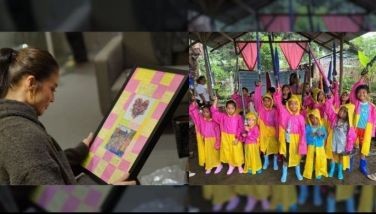
 The Zamboanga Hace Project: As a means to try to solve political and economic unrest in Zamboanga, The Office of Culture and Design’s cultural project Zamboanga Hace features a four-part applied art workshop to students in Zamboanga.
 “I think here in the Philippines, the power of art and the power of good design are very underestimated. There are so many aspects of design that are so underutilized.” Clara says it’s not that the Philippines does not have the money to invest in creating good monuments of design, because everywhere we turn massive cranes are constantly developing something. But she says, “How come all the buildings that we have here are mediocre? Is there any investor here that wants to build a truly monumental building? Where is our Frank O. Gehry? Every metropolis has one.” Design in the Philippines is so limited to fashion, she says, that other forms of art and design become overlooked, and in the process we lose out in the race.
Good design and art can uplift our third world status. And though a somewhat uncomfortable idea (like a Marxist would be uncomfortable eating breakfast with an elite capitalist), Clara says such efforts of contemporary art to change the social situation of a people has actually been achieved in Bilbao, Spain. “The Guggenheim set up a museum in Northern Spain where there was a lot of terrorist activity. Basically they were trying to see whether they could change anything and, actually, the building changed the city into a big tourist destination; and 12 or 13 years later they’re signing a peace treaty with the terrorist group in that zone.” Whether this change can be credited to the creation of that museum, Clara cannot be sure, but she says that people do talk about something called the “Guggenheim effect,” which is basically about “how a large contemporary art center changed the social makeup of the city.”
Taking this “cultural cooperation” concept to the Philippines, Clara and The Office of Culture and Design present the Zamboanga Hace Project: a four-series applied art workshop conducted in Zamboanga among 80 students of the Western Mindanao State University. With this project, Clara says they wanted to find out if the values of contemporary art can stabilize zones of political or economic conflict. “Basically there is some political and economic conflict in Zamboanga, and we’re trying to prove whether teaching art and showing contemporary art can actually lead people to change the way they think.”
The Office of Culture and Design brought in five top-notch contemporary artists from around the Europe to conduct a two-day workshop with the students, tackling different fields of art. The first is a Digital Photography workshop conducted by Biel Capllonch (Spain), which occurred last October 2010. Then Miquel Polidano (Spain) taught the students Vernacular Typography where he used inspiration of different local signage’s to create our own Pinoy typography. The last two workshops are expected to happen in the middle of this year which include an Independent Film workshop by Carlos Casas (Spain) and a workshop on Networking and Provocation called “How to survive as a young artist in a foreign city” by Miguel Figueroa (Puerto Rico) and Rita Lino (Portugal).
 Pinoy Typography: Miquel Polidano, an artist from Spain teaches the students to make their own typography inspired by different font types found in the streets.
 But aside from just encouraging and inculcating creative knowledge among students to help achieve change, Clara also says that the artists will then “make a collection of work that we can use as an export product and basically that’s kind of our seeding campaign.” A person fond of many metaphors, Clara likens the five artists to five brand ambassadors for Zamboanga, whose works of art will hopefully get Zamboanga recognized in the news for more than just social unrest.
Tackling culture, design and social aspects into hand, The Office of Culture and Design has surely taken art to a level that reaches, affects and speaks more to the people. But Clara makes it clear that while their vision seems altruistic in nature, they are not a non-government or non-profit organization.
“Some people think I’m an NGO, and I don’t like the word ‘non-profit.’ Why can’t I make money, helping people? If you can make money selling prostitutes, selling cigarettes, or building houses for rich people, why can’t I make money doing what I love? And what I love is helping people, but I like nice things too. And I don’t think those two things are mutually exclusive.”
* * *
The Office of Culture and Design is located at 7274 Malugay Street, Makati City.