Expensive electricity

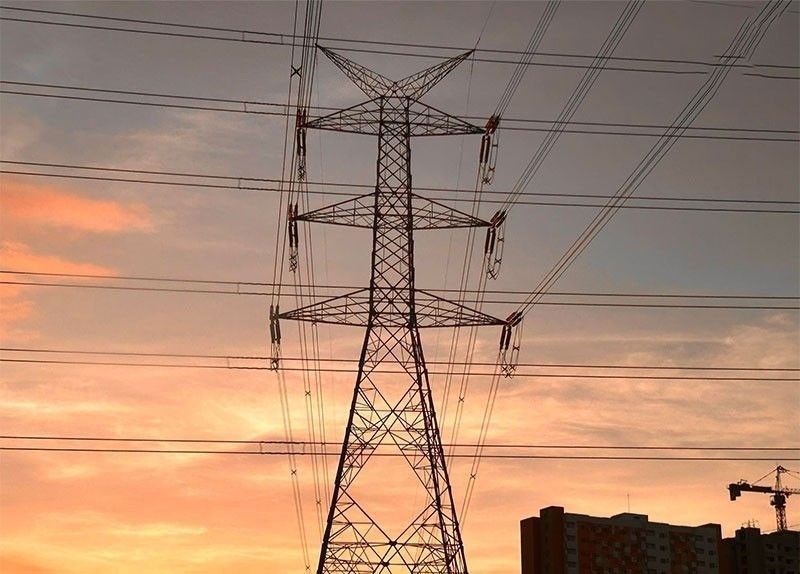
Our power system, the high cost of electricity and the unreliability of supply, are often cited as a primary deal breaker with potential foreign investors in our manufacturing sector. Even local investors have cited this problem, in addition to red tape, as reasons why they remain uncompetitive in the export market.
The growing availability of renewable energy has not resulted in lower power rates. Competitive auctions have driven down the raw production cost of solar and wind generation to historic lows of P3 to P4.50 per kWh. But industrial manufacturers still face punishing end-user rates exceeding P12 to P14 per kWh.
This is not the case for our neighbors. ASEAN countries competing with us for foreign investments, subsidize their power rate. Our government, on the other hand, has saddled it with so many add-on charges from renewable energy allowances, universal charges to cover Napocor losses, a subsidy for rural electrification and VAT.
The Philippine Chamber of Commerce and Industry through George Barcelon, its chairman and director for energy and power, urged the government to consider subsidizing power rates like our ASEAN neighbors to be able to compete for investors and export sales.
Barcelon urged a change in mindset to think of these subsidies as a form of investment and not as a cost with no payback. He also proposed the adoption of measures like zero rating of the value added tax (VAT) on the sale of electricity to consumers.
In the olden days (pre-EPIRA), the government tried to reduce the power bills of industrial users (such as steel mills, cement plants, etc.) by allowing them to connect directly with Napocor when Napocor held a monopoly on power generation.
Because they bypassed local utilities, these industries did not pay distribution wheeling charges, retail margins or system loss charges. They bought power at pure wholesale cost, resulting in a significantly lower per-kWh rate compared to the rest of the grid.
When EPIRA was passed in 2001, it forced industrial users back into the grid.
Afraid that losing direct Napocor rates would drive foreign investors away, the government utilized the Philippine Economic Zone Authority to create low-cost power bubbles. Historically, the average power rate inside PEZA-managed ecozones hovered around P6 per kWh, while commercial and residential rates outside the fence was P10 per kWh or higher.
Last week, it was reported that PEZA has entered into a deal with Ricky Razon’s Primelectric Holdings to look into the prospect of building dedicated electricity distribution systems within the country’s economic zones.
Energy Secretary Sharon Garin also suggested that Pax Silica should build its own dedicated power generation facilities.
That sounds like what Vietnam did. Vietnam’s Direct Power Purchase Agreement (DPPA) framework — gives its manufacturing sector an edge by allowing factories to buy cheap, green energy directly from private renewable developers.
Rather than waiting for the state utility, Electricity of Vietnam, to build out infrastructure, Vietnam circumvented its grid bottlenecks to serve multinational manufacturing requirements.
The Private Wire track (Physical DPPA) allows heavy manufacturing plants to completely bypass the national grid. A private renewable energy generator can connect its wind or solar farm directly to a nearby industrial factory or industrial park via privately built, owned and operated transmission lines.
Industrial parks can negotiate their electricity rates entirely in private. Factories get 100 percent price certainty and complete insulation from state tariff increases. It also provides security for factories that cannot afford grid fluctuations.
Vietnam has also expanded DPPA eligibility to industrial park retailers. Industrial zones can now build integrated rooftop solar systems, internal private grids and battery storage networks to sell power directly to the factories inside their perimeter, operating as highly localized, private, green utility microgrids.
Vietnam’s DPPA gives its factories an edge by allowing them to physically unplug from the state monopoly via private wires — a regulatory freedom that slashes industrial power costs to a fraction of Philippine rates.
Actually, PEZA is already teaming up with developers to provide renewable energy directly inside the ecozones to keep those localized rates low and globally competitive.
And instead of fighting the microgrid trend, Meralco and other distribution utilities are actively partnering with PEZA. DUs like Meralco are either being paid wheeling/standby charges or are building the microgrids themselves.
An industrial locator drawing 90 percent of its daily energy from the internal solar microgrid still has to pay a Demand Charge to the national grid operator (NGCP) or the franchise distribution utility to guarantee availability of back-up power when RE falters.
We have to rewrite the regulatory rules governing our power sector to formalize changes to cover ecozones other than PEZA.
The ERC must introduce a “Special Economic Zone and Industrial Park Exemption” to legally reclassify industrial manufacturing enclaves (like PEZA zones) as neutral, open-access territories.
The new policy would create a “Merchant Point-to-Point License.” This would allow a private renewable energy developer to build, own and operate physical medium-to-high voltage lines to connect a wind or solar farm directly to an industrial factory.
We also need a rule to explicitly state that if a factory does not touch the DU’s transformers or the NGCP’s transmission lines, it is 100 percent exempt from all regulated pass-through charges, including universal charges, feed-in tariff allowances and system loss charges.
We need a new legal entity class: the “Industrial Microgrid Operator.” This would allow private industrial park developers to build internal smart grids and localized Battery Energy Storage Systems to manage the power fluctuations of their private wire networks completely free from mandated ERC rates.
Congress must amend EPIRA to legally redefine rules for the modern green economy and bring down power costs for business.
But in the end, our most urgent problem is still inadequate supply. Not sure EPIRA caused it or can solve it.
Boo Chanco’s email address is [email protected]. Follow him on X @boochanco.


- Latest
- Trending