Airlines ask government: Waive airport fees as peso weakens
MANILA, Philippines — As the peso gets weaker, the country’s biggest airlines are asking airport operators to suspend terminal fees, as Filipinos now pay double the cost to fly.
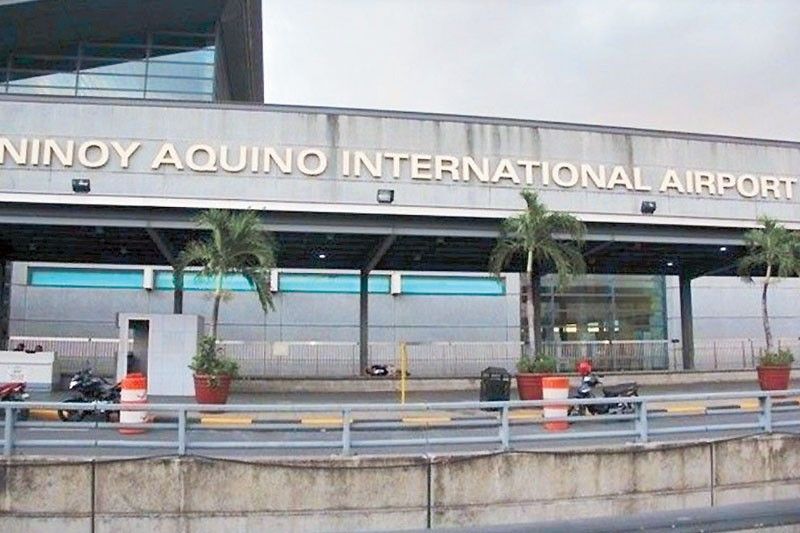
The Air Carriers Association of the Philippines (ACAP) is appealing to returning transport chief Vince Dizon to waive airport charges at major hubs like the Ninoy Aquino International Airport (NAIA).
ACAP executive director Jose Enrique Perez de Tagle said carriers are now struggling to survive, as they try to deal with elevated jet fuel prices and a fragile peso.
Last week, the peso crossed the 64-per-dollar mark to drop to its weakest value ever.
For airlines, this means the peso they get from bookings has become weaker in funding dollar-based costs like aircraft repair, jet fuel and spare parts.
Jet fuel prices have also doubled since Feb. 28, following the US-Israel attacks on Iran that pushed the oil-producing Middle East into a geopolitical crisis. Jet fuel rates average $196.7 per barrel as of Oct. 23, nearing the $200-per-barrel mark.
This is why ACAP, made up of Cebu Pacific, Philippine Airlines (PAL) and AirAsia Philippines, is asking for relief from airport fees for both carriers and passengers.
“The waiver or reduction of airport charges would indeed provide some relief to help our airlines withstand the ongoing crisis, especially if primary hub airports are involved – NAIA most of all, as well as Cebu, Davao and Clark,” Perez de Tagle told The STAR.
“A waiver or reduction of passenger service charges could also provide relief for our passengers who are also affected by high costs and weaker peso,” he added.
At the NAIA, passenger service charges (PSC) have ballooned to P950 from P550 for international guests and to P390 from P200 for domestic travelers since 2025.
The PSC is one of many fees that went up under a privately run NAIA.
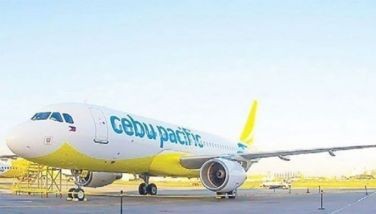
Cebu Pacific president and chief commercial officer Alexander Lao is urging airport operators to be more considerate.
Cebu Pacific is bleeding from the peso’s weakness, as it gets 70 percent of revenue locally, but pays 70 percent of costs in dollars.
“As you can imagine, our costs have gone up, and so we would have to pass on those increases,” Lao told The STAR.
Cebu Pacific’s flying costs have grown by half to P30.88 billion as of June, from P20.59 billion a year ago, as jet fuel prices harshly dragged expenses.
PAL chief operating officer Carlos Luis Fernandez said the airline is partly shielded thanks to its dollar-based pricing, as it covers higher costs by collecting fuel surcharge from passengers.
“Our fares are dollar-based and priced in line with the market. Fuel cost movements are reflected through the fuel surcharge, which follows (Civil Aeronautics Board) levels,” Fernandez told The STAR.
Airlines paid more for their aircraft handling, including airport fees, in the first half. Cebu Pacific shouldered an eight-percent hike in aircraft servicing to P8.64 billion, and PAL spent two percent more at P11.21 billion.
Pressure is piling up on carriers to seek cost-saving efforts, with Cebu Pacific and PAL suffering net losses of P5.91 billion and P1.84 billion, respectively.
Based on data from the Civil Aeronautics Board, air passenger traffic grew by just one percent to 32.7 million in the first half, from 32.3 million a year ago.
During the same period last year, air passenger traffic rose by nine percent, lifted by double-digit expansion in domestic travel, which is flatly moving in 2026.









- Latest
- Trending