Security guards are public figures in libel cases — Supreme Court
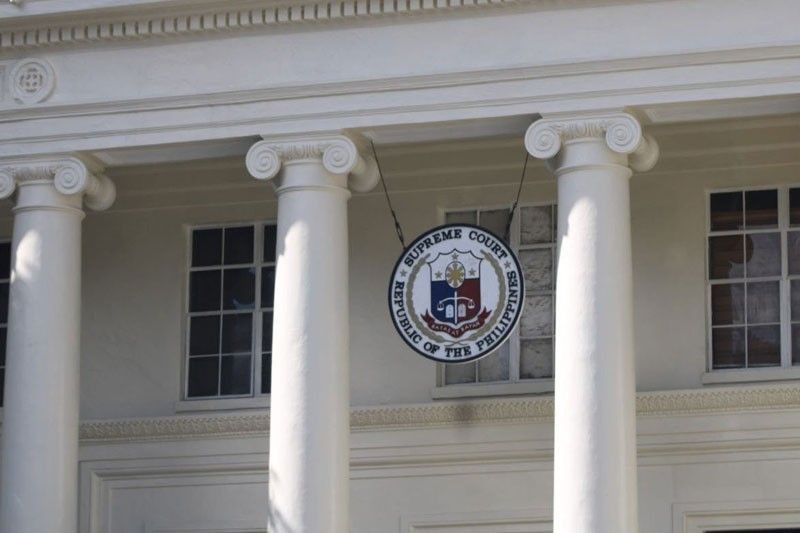
MANILA, Philippines — The Supreme Court has declared that security guards are considered "public figures" in matters concerning their professional conduct, placing them within the scope of qualified privileged communication in libel cases.
The high court, in its August 2026 ruling penned by Supreme Court Associate Justice Marvic Leonen, made this clarification as it acquitted a barangay captain and a managing editor of criminal libel, reversing their previous convictions by the Regional Trial Court and the Court of Appeals.
The consolidated cases stemmed from two articles published in September 2014 in the tabloids Hataw and Police Files.
The articles were authored by Ligaya Santos, who was then serving as a barangay captain in Manila. Gloria Galuno, the managing editor of Hataw, was also charged.
The complainant, Alvin Velasquez, was a security officer and detachment commander of Tower A at the Gotesco Twin Tower Condominium.
Santos wrote the articles heavily criticizing Velasquez, calling him "barumbado" (ill-mannered), "arogante" (arrogant), "bastos" (rude), and "hunghang" (foolish).
The dispute arose when Santos summoned Velasquez to the barangay hall to settle a complaint filed by a condominium employee.
Velasquez refused the invitation and stood his ground, prohibiting his subordinate from leaving his post without an official subpoena.
Irked by the refusal, Santos published the columns, prompting Velasquez to file libel charges after claiming that the articles damaged his reputation and cost him a promotion.
While the prosecution argued that Velasquez was a private individual and therefore shielded from such public scrutiny, the Supreme Court disagreed.
Ruling
The high court ruled that a private complainant's status does not automatically exclude them from being considered a "public personage".
Citing jurisprudence, the high court said that a public figure includes anyone who adopts a profession or calling that gives the public a legitimate interest in their doings, affairs, and character.
“There is no denying that Velasquez is not a public official. However, by virtue of his profession as a security guard, the Court deems that he is considered a public figure due to his direct interaction with the public," the high court said.
"Security guards, by nature of their role, engage with the public daily and are entrusted with the responsibility of safeguarding lives and property. Their position inherently involves a level of public exposure, which justifies treating them as public figures in matters related to their professional conduct,” it added.
Because Velasquez was deemed a public figure involved in a matter of public interest, the articles written about him are protected under the doctrine of fair comment and classified as qualified privileged communication, according to the Supreme Court.
For a public figure to successfully prosecute someone for libel, the burden of proof shifts to the prosecution to prove "actual malice," meaning the author made the statement knowing it was false or with reckless disregard for whether it was false.
The Supreme Court found that the prosecution "miserably failed" to prove actual malice.
The high court noted that Santos's use of unflattering words like "barumbado" and "bastos" were merely expressions of her opinion, reasonably inferred from Velasquez's refusal to cooperate with barangay authorities.
“While the Court does not condone the use of foul language, the terms used to describe Velasquez are simply expressions of the author's opinion, reasonably inferred from the situation. As such, the statements unquestionably qualify as qualified privileged communication and can be actionable only if proven to have been made with actual malice,” the Supreme Court said.
Chilling effect
In the decision, the Supreme Court also reiterated its concerns over the "chilling effect" of criminal libel, especially in the digital age, where casual commentary can easily be penalized.
The Court emphasized that the state's interest in protecting individual reputations is better served through civil liabilities, such as damages under the Civil Code, rather than the "heavy hand of the State" and the threat of imprisonment.
"Unlike criminal libel, which threatens imprisonment and exerts a chilling effect on speech, civil remedies focus on repairing harm rather than punishing expression," the Court said.
According to the high court, existing libel laws are increasingly wielded by those with financial means to intimidate critics rather than genuinely repair reputational damage, creating a chilling effect in which people stay silent because of the prohibitive cost of defending themselves in court.
“In its present form, libel law operates less as a genuine mechanism for redressing reputational harm and more as a coercive means of deterring speech. Its use as an instrument of intimidation is particularly concerning when employed by those with the means to initiate legal action, thereby distorting the balance that the Constitution seeks to maintain. The result is a regime where individuals are discouraged from speaking out, not because their speech is unlawful, but because the cost of defending it is too high,” the high court said.








- Latest
- Trending