BCDA commits to no Pax Silica evictions until funds, rights secured

MANILA, Philippines — The Bases Conversion and Development Authority has told senators it would not displace residents, clear farmland, or relocate communities for the US-backed Pax Silica hub in Tarlac until funds are secured and residents' rights are respected.
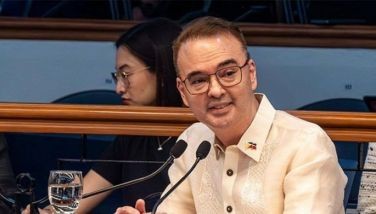
This commitment — made amid mounting criticism of the lack of transparency on the aims and design of the hub, as well as harassment of its critics — was delivered through Sen. Bam Aquino, sponsor of the BCDA's proposed 2027 budget, during plenary debate of the proposed spending plan late Tuesday, November 24.
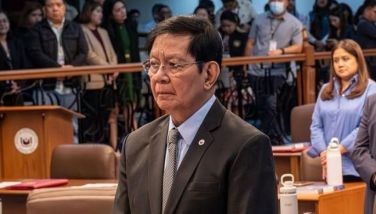
The BCDA was asked by Sen. Imee Marcos on which agency would fund the relocation of the Aeta and farming families living on the 1,620-hectare planned manufacturing hub in Capas town.
Aquino, relaying the BCDA's answer, said the agency had no estimate yet of what compensation would cost but that future investors in the zone would shoulder the cost.
During plenary debates on the budget, agencies can only answer questions through their designated sponsor on the floor.
"So the BCDA categorically commits that no resident will be displaced, no agricultural land will be cleared, and no community be relocated [until] funds are secured and their rights are acknowledged and respected," Marcos said.
"Yes, there's a commitment," Aquino said.
The Philippines joined Pax Silica, an initiative by the US government to secure supply chains for semiconductors, artificial intelligence and critical minerals and reduce reliance on China, in April.
The government has since set aside a 1,620-hectare "Economic Security Zone" inside New Clark City, on state land administered by the BCDA, which now calls it the Clark Advanced Manufacturing Park.
The plan has met opposition from the Aeta Hungey of Sitio Sapang Kawayan, who have sought recognition of their ancestral domain since 1994, and from farmers in neighboring Barangay O'Donnell.
Rights watchdog Human Rights Watch estimates the hub would displace hundreds of people and that available information indicated the BCDA had not obtained the community's free, prior and informed consent.
Who pays
The BCDA's proposed 2027 budget does not set aside specific funds for the Pax Silica site. However, upon questioning by Sen. Imee Marcos, it confirmed that it may use its corporate funds as "financial assistance" for those that may be displaced.
Aquino, relaying BCDA's answer, said there is "P322 million allocated for financial assistance... This is not particularly in the areas affected by Pax Silica. This is in all BCDA areas."
"But if ever there would be assistance to the families there, it would be coming from this budget... It's in their corporate funds," Aquino said.
Asked whether the BCDA had estimated what it would cost to compensate families for the loss of homes, farmland, crops and livelihoods, and whether P322 million would be enough, Aquino said there was no estimate yet.
However, it would ultimately be the private firms setting up shop, or the "locators," who have to shoulder the cost of transferring residents to a new location and compensating them for any loss of livelihood and income.
It is the locators who would fund the financial support programs, while the BCDA would handle consultations and "social preparation," Aquino said.
This did not sit well with Marcos, who questioned whether this amounted to leaving residents' welfare to private companies. "Eh kung 'yung commercial entity lang ang papasok, sinong lalaban para sa kanila?" she asked. (If only a commercial entity comes in, who will fight for them?)
Aquino said the BCDA would handle residents' concerns while investors paid for the physical development of the site.
Changing numbers of affected. Senators have also flagged the changing numbers of how many actual residents would be affected by the industrial zone.
Aquino said the BCDA's official figure now stood at 198 families, down from close to 400 cited at a Senate hearing in August, while the latest reports place it nearer 1,000.
He said an independent body such as the Department of Social Welfare and Development or the National Commission on Indigenous Peoples (NCIP) should help identify who would be affected.
Quitclaims and relocation
Marcos also told BCDA that senators have received reports from residents who notices to vacate and had been asked to sign quitclaims and waivers for the development of the hub.
Aquino said the BCDA denied asking individuals to sign a quitclaim and was still in talks with affected residents. Marcos said the evidence should be taken up at another hearing.
Human Rights Watch reported this month that farmers in Sitio Binyayan had been offered about P300,000 per hectare and given 10 to 30 days to respond.
Marcos also cited estimates that the hub would need 3 gigawatts of electricity, about 16 percent of Luzon grid capacity, a figure the BCDA itself has used. Aquino said the BCDA acknowledged the figure but planned to generate power on site rather than draw from the grid.
"No power plants are made in two years. Everything takes about five years," Aquino said, adding that this meant investors would likely not locate in the zone for about five years.
Shifting plans
Aquino, though sponsoring the budget, himself criticized the agency's changing descriptions of the project. "Nagsimula 'yan with data center, marami hong umalma... And then suddenly in the hearing wala nang data center. Naging manufacturing pero hindi rin malinaw kung anong klase," he said. (It started as a data center and many objected to that... Then suddenly at the hearing there was no data center. It became manufacturing, but it was not clear what kind.)
"It is important that things are clear to the public and not just to those directly involved, but to all of us. What exactly are we getting ourselves into?" Aquino said in mixed English and Filipino.
"It should be clear to us what the agreements and negotiations entail, and we need to understand exactly what we are entering into here with the United States," he added.
Marcos called for a second Senate hearing on the project and said a follow-up to the first inquiry was long overdue.
The Senate voted in September to constitute itself as a committee of the whole, presided over by Senate President Sherwin Gatchalian, to take up the resolutions filed on Pax Silica.








- Latest
- Trending