Philippines, Japan, South Korea form 'strategic triangle,' says US general
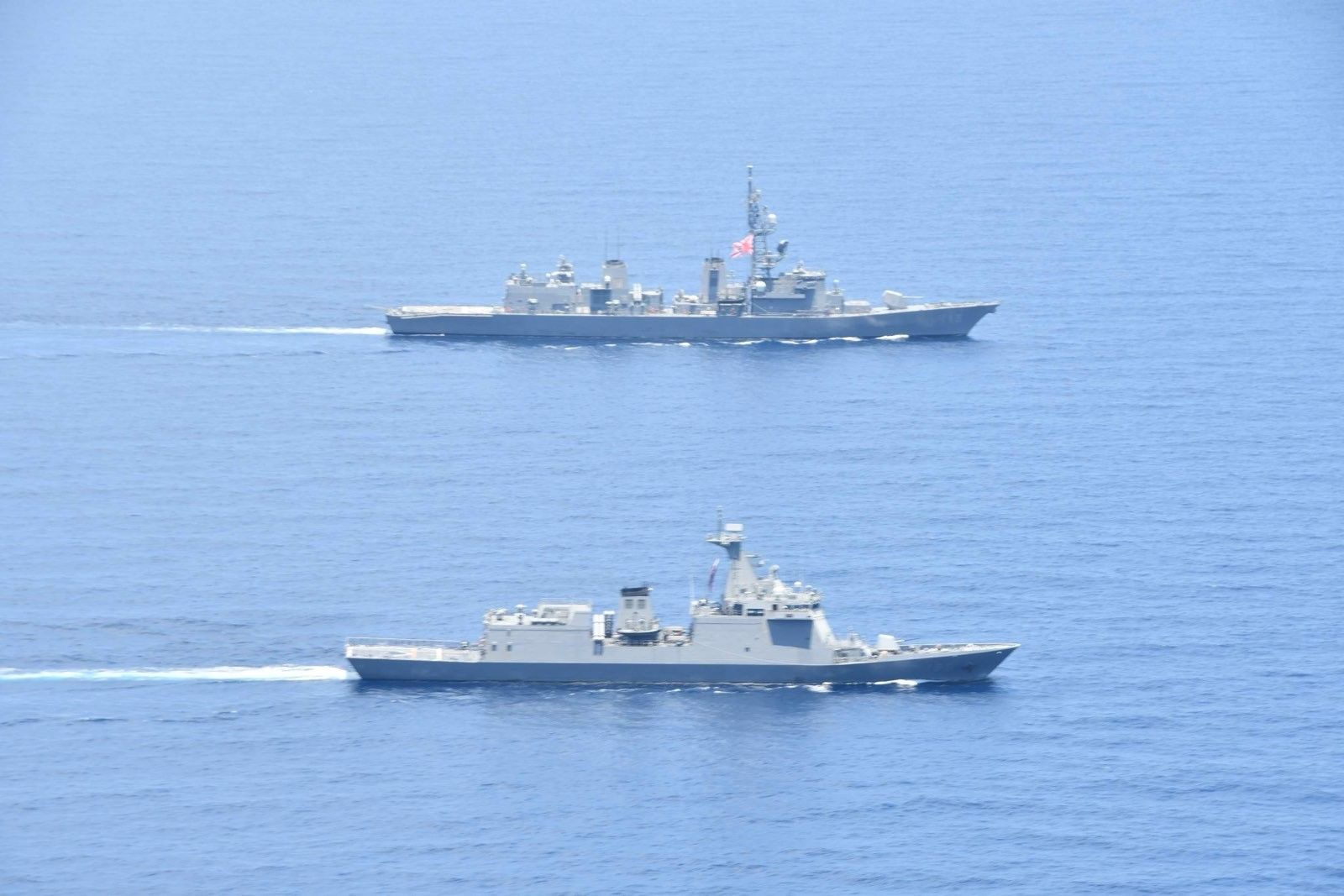
MANILA, Philippines — The Philippines, Japan and South Korea make up a "strategic triangle" in the Indo-Pacific that gives the United States and its allies major operational room in the region, according to a senior American military commander.
Gen. Xavier Brunson — who leads United Nations Command, Combined Forces Command and United States Forces Korea — based his assessment on an unusual map that flips the region so that east is at the top. He said the change in orientation makes the three allies' positions line up in a clearer way.
In a commentary on November 16, Brunson said the Philippines serves as the southern point of this unofficial triangle as the archipelago sits near major sea routes that connect the Pacific and Indian Oceans.
Japan lies along important maritime chokepoints, while South Korea sits at the northern end and serves as a "pivot" location.
"When these three mutual defense treaty partners are viewed as vertices of a triangle rather than isolated bilateral relationships, their collective potential becomes clear," Brunson said.
All defense allies of the US, the Philippines, Japan and South Korea can allow Washington to have better awareness of the going-on's in the region and provide "coordinated responses across all domain," Brunson said.
"The geometric clarity of this relationship, visible primarily through east-up mapping, suggests opportunities for enhanced trilateral cooperation that may not be immediately apparent from traditional perspectives," he added.
Brunson said the east-up perspective also changes how proximity is understood. Under this view, he said, US forces in Korea appear closer to regional flashpoints than often portrayed — 158 miles from Pyongyang, 612 miles from Beijing, and about 500 miles from Vladivostok.
He argued that these distances show the peninsula functioning as a "strategic pivot," with American positions such as Camp Humphreys and Osan Air Base sitting within reach of multiple contingencies. From what he calls a "Beijing perspective," those bases appear as nearby capabilities rather than distant outposts.
The Philippines has aggressively courted security agreements with Japan, South Korea and other regional powers as China's navy and coast guard continue to swarm the South China Sea. China's fleet, the world's largest navy and coast guard combined, vastly outnumbers the Philippines' aging patrol ships and warships.
The Philippines and Japan signed last year a troop access agreement that will allow both nations to deploy troops on each other's soil and conduct more joint exercises. That agreement, the Reciprocal Access Agreement, took effect this year.



- Latest
- Trending