Sotto: Use money for contact tracers to treat COVID-19 patients instead

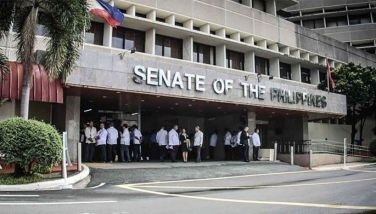
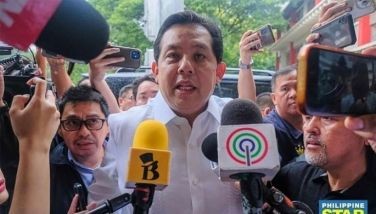
MANILA, Philippines — The projected multibillion-peso funding for the hiring of additional contact tracers — crucial to the Test, Trace, Treat strategy against COVID-19 — should instead be used to procure medicine and equipment for the treatment of those who have contracted the disease, Senate President Vicente Sotto III said Monday.
In a statement, Sotto said the Department of Health should be more prudent on how the country’s funds for the fight against the new coronavirus are being used.
“It will be wiser and more practical to divert the P11.7 billion for the treatment of patients. We need funds to treat our sick kababayan,” Sotto said.
“The DOH does not need to hire new people to do contact tracing. It can coordinate with other government offices and tap displaced employees to carry out the task at no additional cost to the government,” he added.
Last week, DOH officials estimated that the country needs P11.7 billion to hire 95,000 additional contact tracers to meet the ideal ratio set of one contact tracer for every 800 people. To date, there are only some 38,000 individuals tasked with tracking down the close contacts of patients who have been infected with COVID-19.
Research teams from the University of the Philippines and University of Santo Tomas have, in separate studies, said that the Philippines needs to conduct more tests and do better contact tracing to avoid a surge in COVID-19 cases.
Health Undersecretary Maria Rosario Vergeire earlier said that the agency is working with the Department of the Interior and Local Government for the hiring of more contact tracers.
“We are expecting that DILG will be the ones to manage this so the local government units will hire, train, and deploy the contact tracers,” she said.
‘Neophyte’ tracers
The Senate president also cautioned against hiring people who are not trained for the job.
The DOH proposed that a contact tracer must be an allied medical professional or at least a graduate or a student of an allied medical course.
“If the DOH hires people who have no experience in investigation, then the program is practically useless. The people they will hire will just ask black and white questions and get answers that will not yield the needed information to help the government track down people who might have contaminated the virus,” Sotto said.
Hiring “neophyte” contact tracers “will only delay the process,” he added.
In April, Finance Secretary Carlos Dominguez III said a hiring spree of contact tracers will boost the government’s effort to stop the local transmission of the highly-contagious disease and provide employment opportunities.
Dr. Socorro Escalante, WHO acting representative to the Philippines, earlier said that the government’s slow contact tracing efforts were hampering the country’s fight against COVID-19.
The Philippines has so far reported 18,086 coronavirus cases, with 957 deaths.






- Latest
- Trending