The letters should speak for themselves

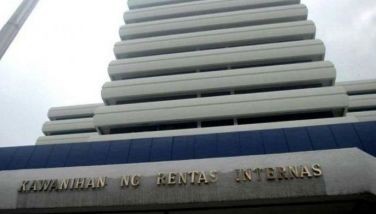
According to the Department of Energy, Solar Philippines Power Projects Holdings Inc. (SPPPHI), founded by Rep. Leandro Leviste, was slapped with P24 billion in penalties for failing to deliver the power it had committed to supply under more than 30 service contracts with the government.
However, Leviste’s camp insists that there was no P24-billion demand letter from the DOE to SPPPHI, nor was there any demand letter for that amount ever addressed to Leviste.
They say, however, that the DOE sent a letter dated Dec. 23, 2025, to Emmanuel Rubio, president of SP New Energy Corp. (SPNEC), which has been majority-owned and controlled by Meralco PowerGen Corp. (MGen) since 2024. At the time the letter was sent, SPNEC, which was also founded by Leviste, was no longer under the control of the Batangas congressman but was already under different ownership, control and management, making it clear that the DOE’s demand was directed at the company operated by MGen and not SPPPHI or Leviste, they pointed out.
Leviste founded SPNEC, a renewable energy company. MGen Renewable Energy Inc. now owns 57.33 percent while SPPPHI retained an 11.51-percent share.
SPNEC spokesperson Christer Gaudiano, in answer to these claims, however, explained that MGen, which acquired its controlling interest in SPNEC at the end of 2023, received the DOE letter but that DOE is only required to send the letters to the address on its records because of the disclosure that MGen is the new controlling shareholder of SPNEC with Rubio as president.
Gaudiano said that SPNEC was furnished a copy of the letters regarding projects of the Solar Philippines group. “Of the eight letters in the transmittal, only one was addressed to SPNEC and concerned a project it acquired from Solar Philippines. The other seven letters were addressed to Solar Philippines’ multiple subsidiaries and addressed through Leandro Leviste and Hazel Lafuente.”
Gaudiano added that Solar Philippines is a separate and distinct entity from SPNEC. “For its project, SPEC was cited for not having fulfilled its financial commitment, which was made by the original project proponent, Solar Philippines,” he noted.
These facts can be verified by anyone holding the letters. If SPNEC’s account is wrong, the defense can produce the letters and settle the matter in a day.
The letters, however, can speak for themselves.
Defense opens an even bigger mystery
A defense is supposed to close holes in a case. Sara Duterte’s defense, however, may have opened a bigger one.
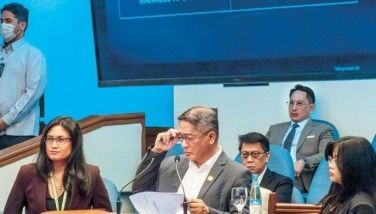
During the Senate impeachment trials, an official of the Bank of the Philippine Islands (BPI) confirmed to defense counsel Atty. Michael Poa that former president Rodrigo Duterte could transact independently on their joint account while Sara could not transact without her father’s consent or signature.
Legally, that distinction matters. It challenges any simplistic argument that because Sara’s name appeared on an account, every movement of money through it must necessarily have been hers.
But once the defense makes that argument, it inherits the questions that follow.
If Sara did not control the transactions, who did? If tens of millions of pesos moved through accounts bearing her name, what was her actual relationship to those funds? And if she had limited authority over the account, why was the financial arrangement structured that way in the first place?
These are not accusations of wrongdoing. They are questions created by the defense’s own theory.
And the underlying facts involve serious money.
A BPI official testified that a peso time deposit was opened in January 2010 with P40.65 million. After several rollovers, it had reached P41.72 million by February 2011. The proceeds eventually went into a BPI Julia Vargas branch settlement account bearing the Duterte names and were subsequently used to purchase a manager’s check.
There was also testimony about another BPI account under Rodrigo Duterte’s name “in trust for” Sara Duterte.
Perhaps every peso involved has a legitimate origin and purpose. Perhaps there is a straightforward explanation for every account, every financial arrangement and every transaction.
Then give it. That is where political accountability differs from courtroom tactics.
A lawyer’s job is to attack the evidence presented against a client. If the prosecution cannot establish that Sara personally authorized a particular transaction, her lawyers are entitled, even obligated, to hammer that weakness.
But public accountability cannot always end where legal strategy does. Filipinos are entitled to ask not merely whether prosecutors can satisfy every element of a case, but whether the financial circumstances surrounding their highest officials make sense.
There is nothing inherently improper about parents and children having joint accounts. Nothing is inherently suspicious about time deposits, manager’s checks, or trust arrangements. But when multiple accounts, tens of millions of pesos and public officials appear in the same evidentiary trail, “you cannot prove she personally made the transaction” cannot become a substitute for explaining the transaction.
That distinction matters because Philippine politics has become remarkably skilled at turning unanswered questions into supposed vindications.
An allegation is made. Lawyers identify a technical weakness. Supporters declare the entire issue demolished. Everyone moves on without ever answering what actually happened. That should not happen here.
The prosecution must prove what it alleges. It cannot substitute insinuation for evidence. If it claims the P41.72 million is connected to another P55 million and ultimately to insurance policies, it must establish that connection with competent evidence.
But the defense should also recognize the consequence of its own strategy. The more forcefully it argues that Sara could not independently control the account, the louder the next question becomes: Who was controlling it?
And if the answer is Rodrigo Duterte, that still does not establish wrongdoing. But it makes the source, purpose and ultimate destination of the funds legitimate subjects of scrutiny.
This matters more because the transactions now under review touch financial territory that has been politically controversial since 2016, when then-senator Antonio Trillanes IV accused Rodrigo Duterte of having undeclared wealth and raised questions about accounts at BPI Julia Vargas. Duterte disputed those allegations.
Ten years later, some of those questions have returned in a setting where witnesses testify under oath, and bank documents can be examined.
The Dutertes therefore have an opportunity to provide what political combat in 2016 never produced: a coherent explanation supported by records. If the money was legitimately earned, show its source. If the accounts were established for ordinary family financial planning, explain their purpose. If Sara had no involvement in particular transactions, establish who did and why.
The burden of proving an impeachable offense remains with those making the charge. That principle should never be diluted. But reasonable doubt should not be confused with an answer.
Sara Duterte’s lawyers may succeed in knocking down the prosecution’s explanation of what happened.
Their bigger danger is creating a mystery they cannot explain themselves.
The defense can explain why it wasn’t Sara. But sooner or later, someone still has to tell us what happened.
For comments, email at [email protected].





- Latest
- Trending