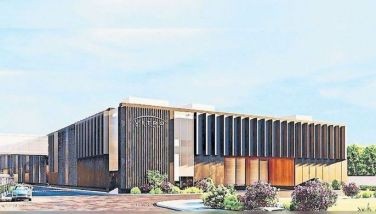
Philippines seen to secure new hyperscaler investment
SINGAPORE – The Philippines may announce a new hyperscaler investment as early as next year, the Department of Information and Communications Technology (DICT) said, as it ramps up efforts to improve power access, enhance connectivity and craft more attractive policies for global data center operators.
On the sidelines of the 2025 Singapore FinTech Festival, DICT Secretary Henry Rhoel Aguda said conditions for large-scale digital infrastructure projects are shifting after years of lagging behind regional peers.
He noted that hyperscalers have begun reassessing the Philippines as a viable location. “Connectivity will be fixed by next year,” he said. “We convinced them that if they choose the right location, their power will be cheaper.”
A hyperscaler is a large technology company that builds and operates massive data centers capable of supporting cloud computing, artificial intelligence and high-volume digital services. These facilities are designed to scale quickly, handle vast amounts of data and deliver computing power to businesses, governments and consumers.
Aguda said the government has set an ambitious target to raise data center capacity to at least one gigawatt, a scale comparable to Singapore. Current domestic capacity stands at only 200 megawatts.
“From 200 megawatts, our capacity should exceed one gigawatt. So, five times more,” he said. He added that expanding hyperscaler presence is essential as the region accelerates developments in artificial intelligence. “If we’re going to push AI in ASEAN, we really need hyperscalers.”
The DICT chief said he has already held discussions with several major players. “I already talked with Google, Microsoft and Amazon Web Services (AWS),” he said, noting that firms are still assessing timing and capacity plans.
“They’re studying it. I already explained to them that connectivity is now okay and power is now okay. That’s how it is, you really have to court them for investment. It’s moving forward. Maybe by next year, we’ll have one.” He added, “I’m confident that next year, somebody’s going to step up.”
Aguda said competition among firms could work to the country’s benefit. “Once one (hyperscaler) comes in, the rest will follow,” he said.
Alongside infrastructure efforts, the DICT is working with the private sector and foreign governments to support broader digital and AI initiatives.
Aguda said he had a scheduled meeting with Microsoft “to see what it will take for them to bring their AI in the Philippines in hyperscaler.” He is also coordinating with the Singaporean government. “We want to be partners with them in crafting AI policy across the region,” he said.
Beyond hyperscalers, Aguda said the DICT is in talks with lending platform JuanHand to develop financial products tailored for gig workers, especially motorcycle delivery riders and motorcycle taxi drivers.
The DICT chief also addressed ongoing work on digital finance and blockchain adoption. He said the Bangko Sentral ng Pilipinas (BSP)’s Project Agila pilot could pave the way for a central bank-backed stablecoin.
“The central bank-backed stablecoin will be the digital peso,” he said. Other privately issued stablecoins will serve different functions. “They complement one another. They shouldn’t be competing.”
Aguda added that stablecoins may eventually support government payments, especially for aid distribution. “Once you have a stablecoin, you can’t just track who the recipient is. You can also track what they are spending,” he said.
On the blockchain budget initiative, Aguda said lawmakers have already convened two to three technical working groups and may soon endorse the bill.
Meanwhile, the DICT is preparing a proof of concept to place the 2026 national budget on blockchain. “For us, it’s just to show that we can do it,” he said.





- Latest
- Trending