SC junks petitions vs Duterte’s ICC arrest
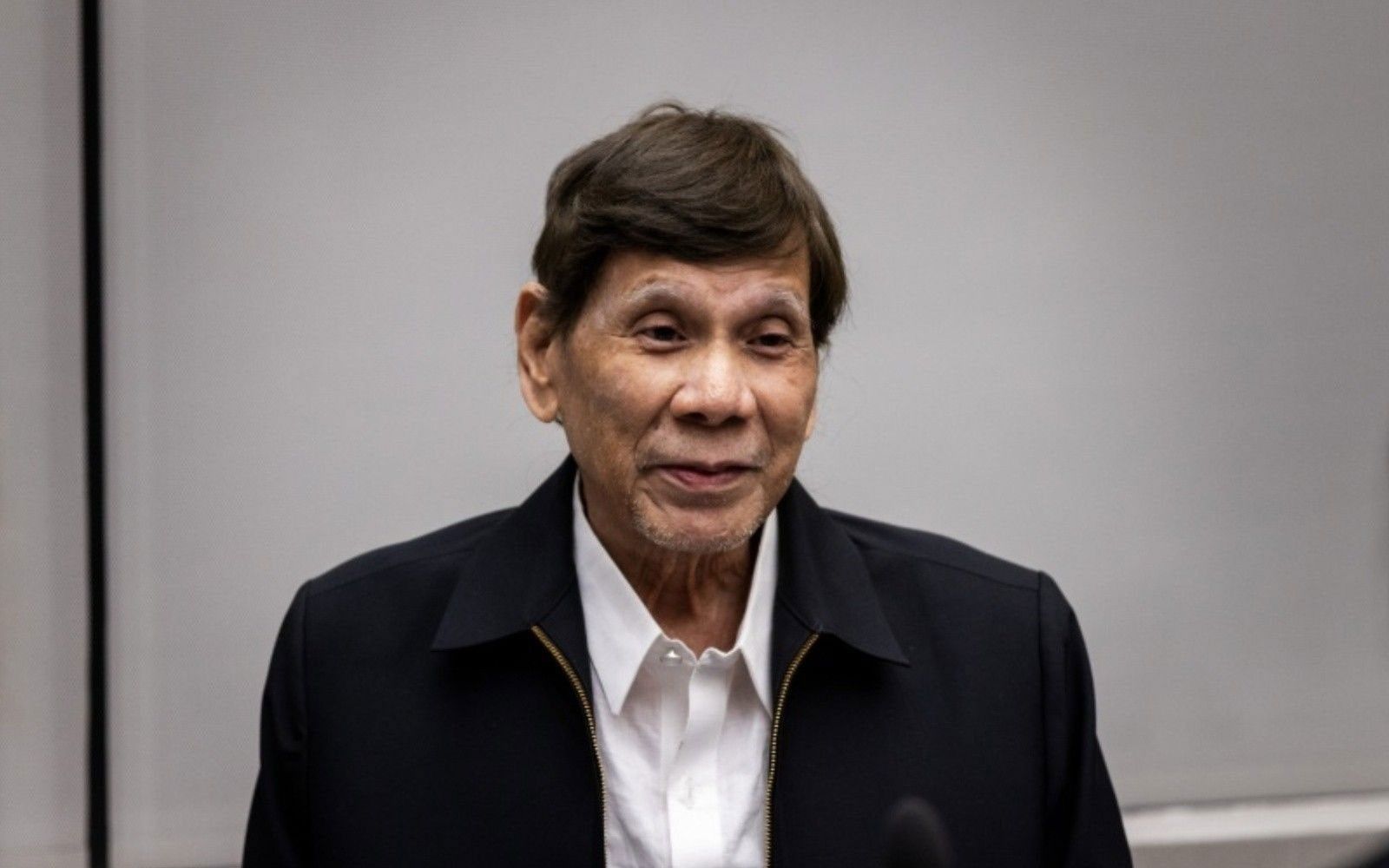
MANILA, Philippines — Saying the issue had become moot, the Supreme Court yesterday junked the petitions that challenged the International Criminal Court (ICC) order to arrest former president Rodrigo Duterte.
In a five-page statement, the high tribunal said Duterte’s arrest and turnover to the ICC rendered the consolidated petitions moot. The ruling did not dwell on the constitutionality of the issue.
The 41-page decision was penned by Supreme Court Associate Justice Japar Dimaampao, a Duterte appointee, and promulgated on Nov. 11, almost a week after Rodil Zalameda – whom Duterte also appointed to the SC as associate justice in August 2019 – was appointed Chief Justice by President Marcos.
It earned nine votes in favor and four against, while one was “out on official business.”
The ruling tackled the petitions for habeas corpus filed by Duterte’s children Davao City Rep. Paolo Duterte, Davao City Mayor Sebastian Duterte and Veronica Duterte a day after he was flown to The Hague, the Netherlands by virtue of the ICC arrest warrant on March 11 last year.
“The SC ruled that the petitions became moot because a writ of habeas corpus is a domestic remedy enforceable only within the Philippines. Since Duterte is now under ICC custody in The Hague, Philippine courts cannot enforce a writ affecting his detention or release,” it said.
It noted that Duterte has been participating in ICC proceedings on the crimes against humanity case against him, and that the Duterte children “were actively challenging it (his arrest) before the ICC.”
The high court also maintained that the writ of habeas corpus “could no longer be enforced against the Philippine officials” who implemented the ICC warrant against Duterte since they had no custody or control over him “regardless of whether these actions were lawful.”
On the Duterte children’s argument that the arrest of their father by the ICC was invalid since the country withdrew from the Rome Statute that instituted the ICC and at the same time “violated the Constitution, Philippine laws and international law,” the SC ruled such argument “must be pursued through the appropriate legal proceedings rather than through a petition for habeas corpus.”
“The SC emphasized that dismissing the petitions does not mean that Duterte’s arrest and transfer were necessarily lawful or that his constitutional rights were not violated. The ruling only addresses whether habeas corpus remains an available and enforceable remedy under the circumstances,” it noted.
SC Associate Justices Ramon Paul Hernando, Amy Lazaro Javier, who retired five days after the decision was promulgated, Henri Jean Paul Inting and Antonio Kho Jr. – all Duterte appointees – were named as dissenters in the majority decision.
In their opinions, Hernando declared, “Duterte’s surrender to the ICC violated constitutional rights, including due process, protection against unreasonable searches and seizures, freedom of travel and the rights of persons under custodial investigation,” while Lazaro-Javier said the petitions should not have been dismissed “since they challenge the actions of Philippine officials, not the ICC’s subsequent custody of Duterte.”
Kho said since the petitions had been dismissed because Duterte had been “surrendered” to ICC custody, “similar actions in the future could escape judicial review simply by being executed quickly.”
Inting maintained the ICC “may suspend or terminate proceedings if improper or unlawful procedures were used to carry out an otherwise lawful process, such as an ICC arrest warrant,” which the SC could rule under the doctrine of abuse of process.
Meanwhile, Senior Associate Justice Marvic Leonen, who voted to dismiss the petitions, wrote in his concurring and dissenting opinion that Duterte “was not given the opportunity to exercise his rights under the Rome Statute, particularly Article 59, which requires a person arrested under an ICC warrant to be brought before a competent judicial authority in the country of arrest.”
He added the SC ruling should have provided guidance to lawyers, court officials and law enforcers on enforcing similar measures under the Constitution, the Philippines’ obligations to the Rome Statute and Republic Act 9851 that the government used as basis for Duterte’s “surrender” to the ICC.
Associate Justice Alfredo Benjamin Caguioa argued that formulating such guidelines “would benefit only a select few, specifically the identified co-perpetrators of Duterte in the charges against him before the ICC.”
At present, fugitive Sen. Ronald dela Rosa is also a subject of an ICC warrant, which he has also assailed before the SC.
Associate Justice Ramon Villanueva highlighted the country’s obligation “to cooperate with other criminal law enforcement authorities” particularly the International Criminal Police Organization or Interpol despite having broken away from the ICC, as well as the compliance of law enforcers to carry out Duterte’s surrender to ICC through RA 9851.
Closed sessions
The defense team of Duterte has opposed a request for “sweeping” closed sessions in his upcoming trial on crimes against humanity before the ICC.
In an 11-page response, defense lawyer Peter Haynes said protective measures on witnesses should be granted only on exceptional basis and following a case-to-case assessment of its necessity.
“The defense does not oppose the use of private sessions where the prosecution can establish that witnesses are exposed to objectively justifiable risks and their answers may be identifying,” read the filing.
“It does object to the sweeping use of closed sessions – the most extreme of the catalogue of measures proposed by the registry – for 22 witnesses,” it added.
The ICC trial judges have yet to rule on the request. Duterte’s crimes against humanity trial is scheduled to begin on Nov. 30.
According to the defense, the prosecution failed to establish the “objectively justifiable risk” that applies to each of the witnesses it identified in its request.
“Prosecution must demonstrate how all the witnesses for whom it seeks protective and/or special measures face those risks. In this regard, ‘generic references to the social
context’ in the state, including to ‘the level of attention reserved to (the) trial by media, social media and ordinary citizens’ is not an appropriate factor to trigger the application,” it added.
The defense maintained that public anonymity may affect the court’s ability to fulfill its truth-seeking mandate, saying that “making a witness’s identity known to the public increases their commitment to tell the truth as well as their feeling of public accountability.”
It said the use of fully closed sessions “infringes upon the public nature of the proceedings and Mr. Duterte’s right to a public trial.”
“More broadly, the defense is concerned that deviations from public proceedings should not become the norm in these proceedings and does not agree that the public interest
in this trial justifies the proceedings being held out of public view,” it said.
Earlier, ICC acting prosecutor Mame Mandiaye Niang said there is an “objectively justifiable risk” for at least 55 witnesses whom they intend to present against Duterte during trial.
He requested that the court implement protective measures, including the conduct of closed sessions and the use of pseudonyms and face and voice distortion during testimonies.
The common legal representatives of the victims backed the request, saying the proposed protective measures for witnesses are necessary to minimize the risk from their participation.
“The requested protective measures, including the use of closed sessions for all the testimony, are necessary and justified,” the victims’ lawyers said.
“Although the protective measures requested by the prosecution would significantly limit the publicity of the proceedings, they are necessary and constitute the only appropriate measures,” they added.
Malacañang reacts
Malacañang said it respects the high court’s ruling and maintained that Duterte’s arrest complied with existing laws.
“The administration merely followed what is stated in RA (Republic Act) 9851 without abusing its authority. The administration also considered the previous pronouncement of the Supreme Court that the ICC has jurisdiction over criminal acts commit ted before the withdrawal of membership on March 17, 2019,” Palace press officer Claire Castro said in a text message. — Janvic Mateo







- Latest
- Trending