Fast-tracking ordered in creation of 200,000 jobs in Luzon Economic Corridor
MANILA, Philippines — In a bid to decentralize wealth from Metro Manila and spur nationwide economic growth, President Ferdinand Marcos Jr. has directed the Bases Conversion and Development Authority (BCDA) to accelerate the development of the country's next major economic hubs.
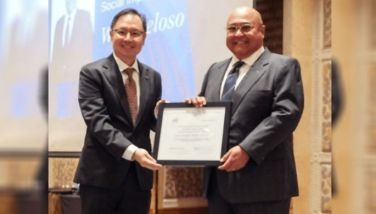
To spearhead this ambitious mandate, Marcos officially swore in Ariel Nepomuceno as the new president and chief executive officer of the BCDA, drawing from his extensive administrative track record as a former Customs Commissioner.
The directive comes at a critical juncture: BCDA investments have surged to P64 billion in 2025, with the agency logging P53.5 billion in investment commitments in the first seven months alone — a 64% year-on-year increase that signals mounting global investor confidence in the corridor's potential.
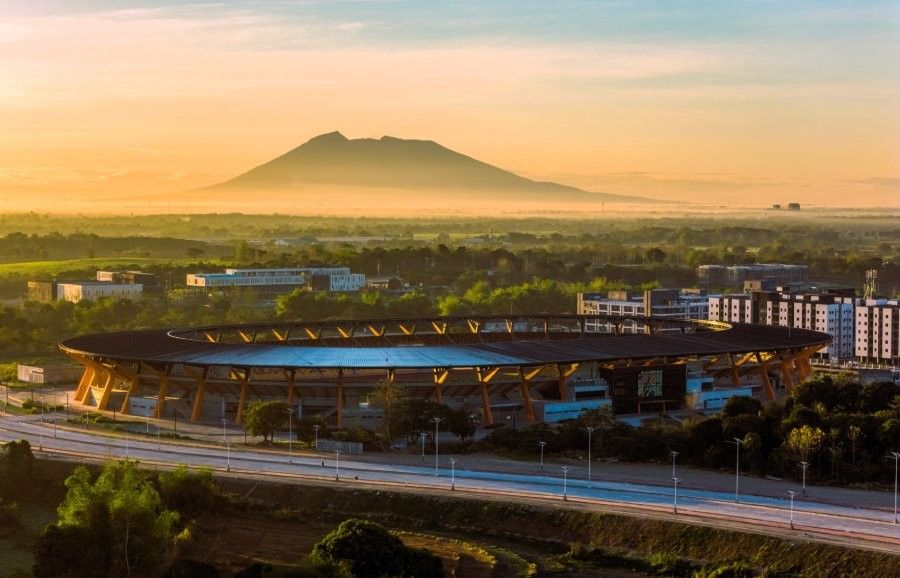
At the forefront of the administration's development agenda is New Clark City, the massive smart city envisioned as the next Bonifacio Global City. Under Nepomuceno's leadership, the BCDA is expected to advance the infrastructure and commercial appeal of the 9,450-hectare development, replicating the successful blueprint of Taguig's BGC — which the BCDA also helped develop from a former military base into one of Southeast Asia's most dynamic business districts.
The government hopes to attract a fresh wave of foreign direct investments and multinational corporate headquarters, with the Philippine Economic Zone Authority reporting that five ecozones in the Clark area already host 24 locators, P62 billion in investments, and more than 29,000 jobs.
The Luzon Economic Corridor (LEC), launched as a major trilateral initiative between the Philippines, the United States, and Japan, serves as the strategic backbone connecting Subic Bay, Clark, Metro Manila and Batangas — a region that accounts for roughly half of the country's GDP. Since its inception, the corridor has expanded from three founding partners to more than ten, with Australia, Canada, Denmark, France, Italy, South Korea, and Sweden formally joining in May 2026. The LEC stands as the first G7 Partnership for Global Infrastructure and Investment corridor in the Indo-Pacific, underscoring its geopolitical significance.
To catalyze this geographic shift, the BCDA has endorsed three flagship projects to serve as the corridor's backbone: the $3.2 billion Subic-Clark-Manila-Batangas Railway spanning 250 kilometers with construction commencing in 2027, the expansion of Clark International Airport into a full-service international gateway, and the development of the Clark National Food Hub to anchor agricultural supply chains. These initiatives aim to dramatically reduce logistics friction and lower the cost of transporting goods across Luzon, providing businesses with a world-class alternative to Manila's bottlenecked infrastructure.
The development footprint continues to expand with a proposed 100-hectare industrial park being developed by Science Park of the Philippines and Japan's Sojitz Corporation, while ACWA Power signed a $200 million renewable energy deal at the World Economic Forum in Davos to power the corridor's industrial zones with clean energy. These developments are part of a broader P100 billion pitch to Japanese investors for clean energy and advanced manufacturing facilities, positioning Central Luzon as a magnet for high-value semiconductor supply chain investments, AI research hubs, and next-generation logistics centers.
"Developing more economic hubs means creating more opportunities for investments, businesses, and jobs for Filipinos," the mandate emphasized.
--
Disclaimer: This is externally supplied material from a third party and is not a product of reporting or editorial work by the Philstar.com newsroom.





- Latest
- Trending