Security Bank trains more staff, develops AI agents
As digital push accelerates
MANILA, Philippines — Security Bank Corp. has trained more than 3,000 employees in agentic artificial intelligence and seen its workforce develop 3,100 AI agents, as the lender moves to embed the technology in daily operations without removing human oversight from decisions that affect customers.
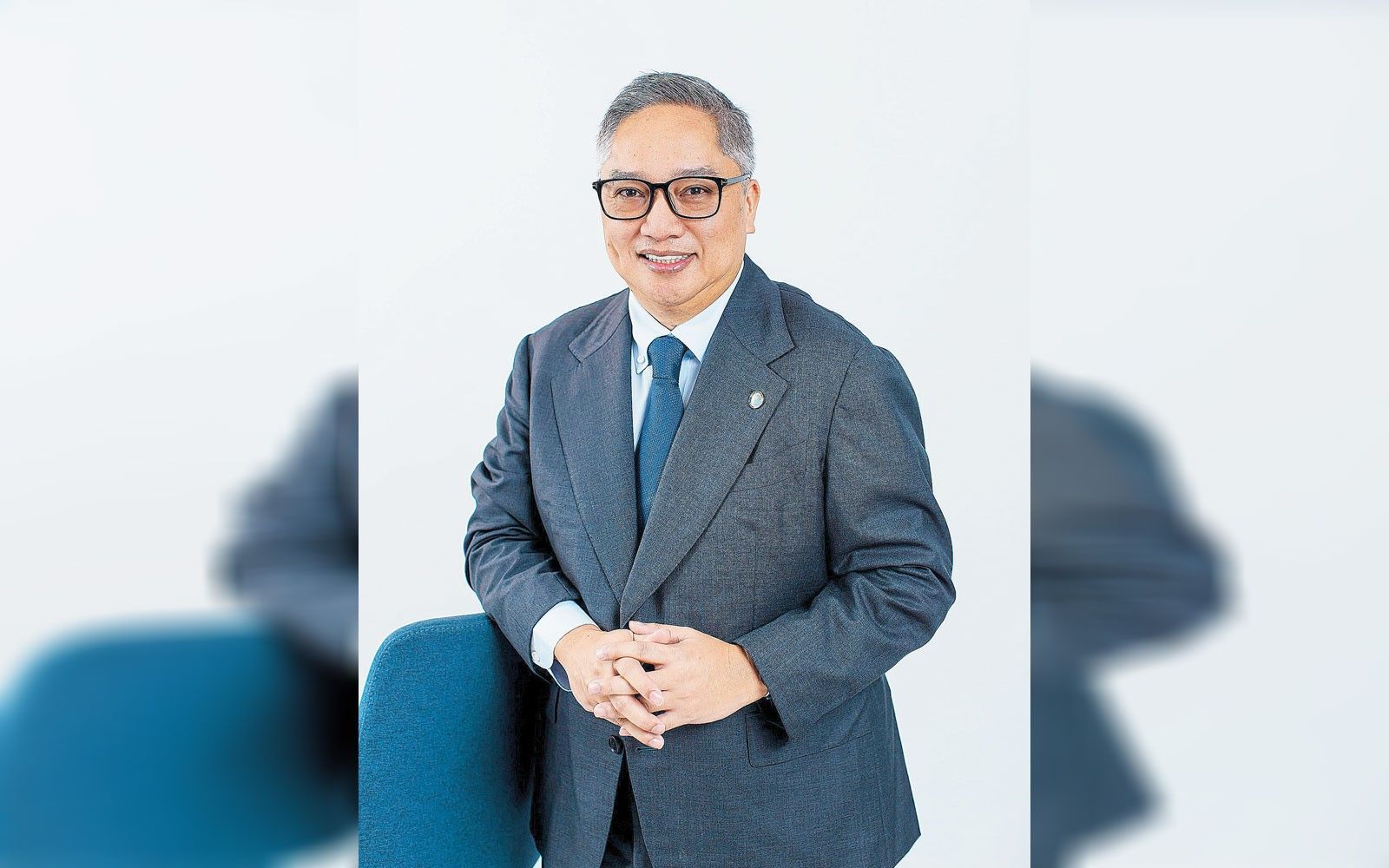
Security Bank chief digital and technology officer Patrick Meneses said the bank wants AI to handle more routine tasks, allowing employees to focus on customer service and decisions that require human judgment.
“We have already trained over 3,000 employees on agentic AI capabilities,” Meneses said in an interview with The STAR.
Agentic AI refers to systems that can carry out a series of tasks toward a goal, rather than merely responding to individual prompts.
At Security Bank, the effort extends beyond technology specialists to employees in business, operations, finance and risk.
Meneses said the bank has recorded 98 percent daily engagement among 1,210 employees with Copilot Premium licenses, while staff has developed 3,100 “low-level AI agents” for business and operational functions.
Yet in an industry built on trust, greater automation also raises questions about who remains responsible when decisions affect customers’ financial lives.
“My principle is fairly straightforward: AI can recommend, analyze and assist, but accountability cannot be delegated to an algorithm. At Security Bank, we always keep a human in the loop for our AI solutions,” he said.
From routine work to higher-value roles
The traditional debate over AI focuses too narrowly on the jobs it may eliminate, Meneses said. A more useful discussion is how employees’ responsibilities can change as machines become better at processing information.
“I don’t see the future as people versus AI. I see it as people with AI versus people without it,” he said.
Banking product managers, for example, devote considerable time to gathering information, reconciling figures, preparing reports and reviewing documents. Those are tasks AI can increasingly help handle.
That could free product managers to focus on customers and complex decisions.
“I think empathy is a real superpower in an AI world,” Meneses said.
To prepare staff, the bank is extending training beyond programmers and data scientists. Its introductory training covers how to write effective prompts, check the accuracy of AI-generated responses, classify information properly and recognize situations in which the technology should not be used.
Role-specific workshops, business-unit champions and employees called “Agent Makers” help spread adoption. Low-code and no-code tools offer ways to build solutions without advanced programming skills, while AI and data specialists receive deeper technical training.
“We don’t want AI capability to sit with a small number of data scientists or technologists,” Meneses said. “We want a relationship manager, operations officer, risk professional or finance analyst to understand how AI can make them better at what they already do.”
Meneses said critical thinking, curiosity, data literacy and judgment will remain essential.
“Knowing how to ask a good question becomes incredibly important when a machine can produce an answer in seconds. And knowing whether the answer makes sense may be even more important,” he said.
What customers should notice
For customers, the bank’s growing use of AI should not require them to understand algorithms or new software, according to Meneses.
The more meaningful test is whether everyday transactions become less frustrating, inquiries are handled more quickly and customers have to repeat information less often.
AI can help employees identify patterns and understand customer needs across large volumes of information. But Meneses stressed that these capabilities matter only if they translate into better service and more relevant advice.
“They should spend less time waiting. They should have to provide the same information fewer times. Interactions should be more relevant to their circumstances, issues should be resolved faster and customers should feel truly heard,” he said.
That emphasis on personal service becomes especially important when technology is involved in sensitive banking decisions.
In credit evaluation, for instance, AI may help analyze applications more quickly and consistently. But decisions that materially affect someone’s financial life still require transparency, oversight and clearly assigned responsibility, Meneses said.
He said the same principle applies to fraud detection, risk management, regulatory compliance and complaints handling.
“The higher the consequence of a decision for a customer, employee or the Bank, the stronger the requirement for human judgment and appropriate controls,” he said.
Security Bank has been developing its approach to AI governance for more than four years, according to Meneses. That includes assessing what data a system uses, whether its results can be explained, where people must review an output and how the system is monitored after introduction.
Rather than treating safeguards as a final check, he said responsible AI practices should be built into each stage of the technology’s development and use.
A human-led bank
Looking three to five years ahead, Meneses expects AI to become less visible as a standalone technology and more deeply integrated into ordinary banking operations.
For customers, that could mean simpler, more personalized and proactive service. For employees, it could mean less time spent preparing routine materials and more time interpreting information, making decisions and building relationships.
An operations employee who knows a process well, for example, might develop an AI agent to improve it without waiting for a conventional technology project.
“So my vision isn’t an AI-driven bank. It’s a human-led, AI-enabled bank, where technology allows our people to deliver a level of service, insight, and relevance that wasn’t possible before,” he said.



- Latest
- Trending