What’s the real score?

Our government is telling us that the economy is not that bad, pointing out that international credit rating agencies have maintained our investment grade rating.
But the real score on our economy shows a stark disconnect between such optimism and the current bruising reality on the ground.
Plainly, our macroeconomic numbers are worrisome.
GDP growth rate is 2.6 percent, a 16-year low. It has dropped sharply from earlier periods because of tepid investment and soft consumer spending.
Inflation is high at 6.1 percent, driven by volatile energy costs and food supply pressures. This keeps real wage purchasing power heavily depressed.
Unemployment rate is six percent, a four-year high. A contraction in industrial activity has triggered formal job losses, forcing workers into lower-quality jobs.
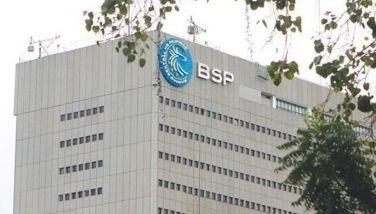
The BSP has raised interest rate to a suffocating five percent to curb inflation, but high borrowing costs are discouraging business expansion.
The Philippine peso (vs US dollar) is about 62.513, a record all-time low. A weak peso can’t even help OFW families because higher prices eat up any peso gains. Our electronics exporters don’t benefit much too because 80 to 90 percent of their raw materials are imported.
The debt-to-GDP ratio is at 63.2 percent, showing growing government dependence on debt to fund operations. This ratio is above the internationally accepted 60 percent threshold.
The stock market index fell below 6,000 in June. Foreign direct investment suffered a sharp 33.4 percent contraction, with a 64.7 percent decline in May alone, the lowest monthly total recorded in more than 11 years (since March 2015).
Household consumption grew by only 2.8 percent, unusual for our consumer driven economy. BSP’s consumer confidence is now at -42 points and business confidence is at -20.3 points. High everyday prices mean citizens are spending purely on necessities.
The industry sector contracted by 2.4 percent. High electricity costs and regulatory gridlocks have slowed local manufacturing and mining.
The balance of trade is at a deeply negative -$5.97 billion. We continue to import far more commodities than we export, putting continuous downward pressure on the peso. The BSP Governor said it is not possible to bring the exchange rate back to 60:$1 without more dollars coming in.
Technically, we are not yet in stagflation mode. While growth has sharply decelerated and inflation remains stubborn, the labor market has not entirely collapsed. We are enduring what economists call a“stagflation-lite” or “slowflation” episode.
But why are credit rating agencies still hopeful?
For one thing, these international credit rating agencies are focused mainly on whether we can pay our foreign debts. Our rules prioritizing debt payment overall other budget concerns is helping us keep our investment grade rating.
The rating agencies are convincing themselves that our current economic slowdown is a temporary cyclical setback caused by the massive flood control corruption scandal, rather than an economic dead end.
But credit rating agencies are savvy enough not to think the Philippine government will miraculously resolve its execution problems. They also do not ignore political risk.
Political risk is heavily factored into sovereign credit profiles, but it is measured basically by its direct threat to debt repayment. If political protests lead to an effective tax boycott, we will find our credit rating drop like a rock overnight.
Indeed, the ratings agencies have many caveats to their latest review of our creditworthiness.
As of August 2026, Moody’s Ratings explicitly warned that escalating political noise poses “a tangible threat to fiscal policy execution”(translation: tax collection).
Similarly, Fitch Ratings flagged the political noise as a “significant risk” that has actively frozen public asset disbursement.
Low expectations of our economic performance are already baked into the current rating, which explains why the Philippines is kept several notches below the coveted “A” band. They know our history of weak implementation and institutional deficits.
In short, the country’s economic “roof” is still structurally sound to protect the interests of global banks, but the people living inside are drowning in a flood caused by a severe, inflation-driven storm.
But the agencies are also subtly warning. In April, Fitch revised its outlook to negative from stable due to uncertainties over growth, while S&P Global lowered its outlook to stable from positive. Moody’s recently slashed its 2026 growth forecast while maintaining a stable outlook on the Philippines.
Inflation is the primary headwind stalling the domestic economy, and the depreciating peso acts as an immediate force multiplier that makes taming inflation harder.
According to the latest consensus from global think tanks, consumer goods prices in the Philippines are expected to remain sticky and elevated through the rest of 2026 and well into 2027. A return to the BSP’s ideal two to four percent target range is not expected until late 2027 or early 2028.
And everything is complicated by an expectedly severe “Super El Niño” threatening domestic harvests. The immediate threat of a “Super El Niño” is expected to peak in the fourth quarter, severely harming domestic rice production and forcing costlier imports.
At the same time, agricultural damage from the enhanced southwest monsoon and typhoons has reached P4.38 billion, according to the Department of Agriculture.
With the peso hovering near its historic lows of 62+, inflated logistics and grocery costs will mar our holiday season.
The Grinch that will steal our Christmas this year has another name: slowflation. We will likely be forced to downsize our noche buena spreads.The purchasing power of that 13th-month pay will also be significantly degraded.
The holiday bonuses will likely be diverted away from gifts and leisure and channeled instead toward paying off accumulated debts caused by shockingly outsized electricity bills and the high cost of food and transportation.
The sins of all our past presidents are coming home to roost. And the current one seems unable to realize the gravity of the economic problems we now face. Can’t believe he is still talking of P21 a kilo rice.
Boo Chanco’s email address is [email protected]. Follow him on X @boochanco




- Latest
- Trending