‘Renewable energy to shield Philippines from global trade shocks’
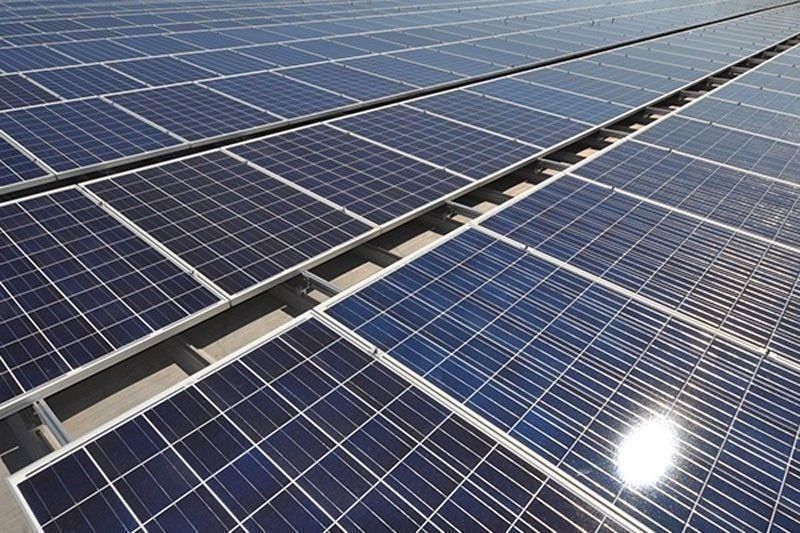
MANILA, Philippines — A stronger renewable energy (RE) push could provide the Philippines with a critical buffer against global trade shocks sparked by US President Donald Trump’s sweeping tariffs, according to experts.
Gerry Arances, executive director at the Center for Energy, Ecology and Development (CEED), said the Philippines could capitalize on its “over 300 GW (gigawatts)” of untapped RE potential to support its supply chain.
“This vast potential positions the country to attract significant debt-free investments from global partners seeking stable and expanding clean energy markets,” he said.
Policy shifts under the Trump administration, Arances said, highlight the urgent need for the Philippines and the rest of Asia to speed up their RE transition and cut reliance on volatile imported gas.
In its latest report, London-based energy think tank Ember said Asia is the “most exposed” to fossil import risks, with the continent’s import dependency expected to rise further.
And amid growing trade uncertainties, Asian countries like the Philippines are considering importing liquefied natural gas (LNG) from the US.
“We plan to procure LNG from Alaska to meet our growing needs to develop our energy sector,” Philippine Ambassador to the US Jose Manuel Romualdez said in February.
Experts, however, warned that locking in LNG deals with the US would not ease trade concerns, pointing to volatile prices, supply disruptions and policy uncertainties.
“US LNG prices are already uncompetitive with other sources of energy and are growing more expensive by the day,” said Sam Reynolds, research lead at the Institute for Energy Economics and Financial Analysis.
APAC Energy Consultancy founder Tim Daiss, meanwhile, said the move would just pose a “systemic risk” to the region’s energy transition push.
The Philippines and other regional peers, he said, should instead develop more green energy projects to power their respective growing economies.
By accelerating the clean energy transition, Ember senior policy analyst Muyi Yang said Southeast Asia could “future-proof” industries while advancing climate targets.
“The region’s vast, growing and increasingly affluent domestic market is a vital hedge against external volatility,” Yang pointed out.
Similarly, Christina Ng of the Energy Shift Institute said the region has the opportunity to pivot toward emerging markets such as Africa, the Middle East and South America, which have rising clean energy demand and lower trade barriers.
“If the region takes this moment seriously and diversifies, it won’t just weather the disruption; it will emerge more resilient and competitive. The region would become central to the global clean energy transition,” Ng said.
In the Philippines, the government wants to scale up the share of renewables in the country’s energy mix to 35 percent by 2030 and 50 percent by 2040 from the current 22 percent.



- Latest
- Trending