Rice and sugar prices stubbornly high

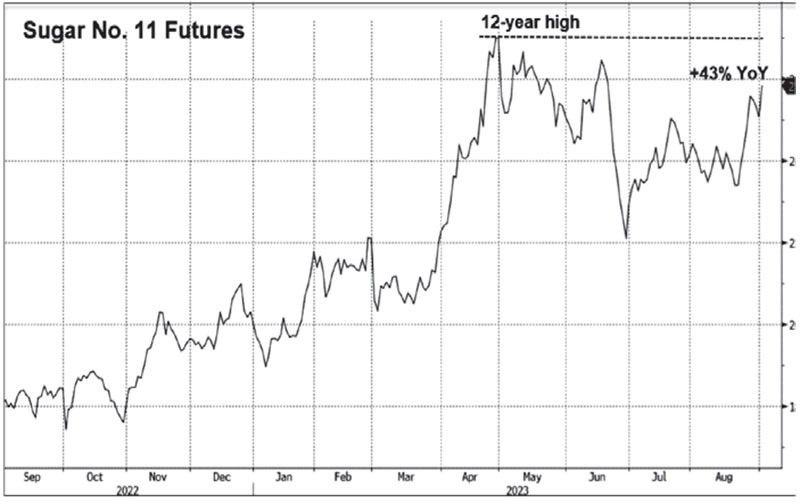
Rice and sugar prices in the Philippines remain stubbornly high. This follows a global trend of rising food costs driven by climate change, export restrictions, and rising protectionism. Despite a recent drop in headline inflation from its 14-year high in January, the Philippines still grapples with substantial food inflation rates. Rice and sugar, essential staples in the Filipino diet, witnessed price increases of 50 and 40 percent over the past year.
Climate change
Climate change has played a significant role. Severe droughts affecting India, Thailand, and Myanmar, along with devastating floods in China, have raised concerns about lower crop outputs in these major grain-producing countries. In the Philippines, the impact of adverse weather cannot be ignored. Typhoon Egay, which ravaged the country in July, inflicted substantial damage. According to reports from the Department of Agriculture, this accounted for P654.6 million or 17.7 metric ton of palay (unhusked rice) and P652.2 million or 38.6 MT of corn.
India’s role in export restrictions
India, the world’s largest rice exporter, has intensified restrictions on rice exports in recent months. After Russia withdrew from the Black Sea grain agreement on July 20, India limited non-Basmati white rice exports. This followed a previous ban on broken rice exports that took effect in September 2022. Additionally, India introduced a 20 percent duty on parboiled rice shipments. These measures impact roughly 80 percent of India’s total exports.
Rising protectionism
The rise of agricultural protectionism is another factor fueling food price inflation. Following India’s lead, Myanmar, the region’s fourth-largest rice exporter, suspended rice exports for two months. The UAE imposed a four-month moratorium on rice exports. Subsequently, Thai and Vietnamese exporters renegotiated sales contracts for higher prices. In response, major rice importers like the Philippines, Malaysia, and Indonesia have rushed to augment their rice stockpiles.
Rice surges to 15-year highs
These export bans have propelled rice prices to multi-year highs. As a result, the benchmark Thai and Vietnam white rice jumped to their highest prices since 2008.

Source: Bloomberg
Sugar prices follow suit
Similarly, sugar also faces export restrictions. India is set to implement a sugar export ban in October, the first such ban in seven years. Shipments from the world’s second-largest exporter for the season ending in September have already declined 45 percent. This pushed sugar prices to levels near their highest since 2011.
Source: Bloomberg
Phl enforces price caps
To combat surging food inflation rates, the Philippines has imposed price caps on rice to ease the burden on households. It set price limits at P 41 per kilo for regular-milled rice and P 45 per kilo for well-milled rice. Additionally, the government intensified inspections of rice warehouses to address concerns about hoarding and illegal importation. There are also considerations to extend reduced import tariffs on rice, corn, pork, and other essential commodities beyond this year.
Balancing relief and sustainability
The Philippines’ response to soaring rice and sugar prices exemplifies its commitment to providing immediate relief for its citizens by implementing price caps. However, it faces the challenge of balancing these short-term measures with the need for sustainable, long-term solutions. In an ever-changing global landscape, the nation has an opportunity to enhance food security and economic stability.
The stubbornly high prices of rice and sugar are a global phenomenon. As the nation navigates this complex matter, the government must take proactive steps to ensure the well-being of its citizens while laying the groundwork for a resilient and secure future.
Philequity Management is the fund manager of the leading mutual funds in the Philippines. Visit www.philequity.net to learn more about Philequity’s managed funds or to view previous articles. For inquiries or to send feedback, please call (02) 8250-8700 or email [email protected].


- Latest
- Trending