Poll: Another hike in BSP rates looms
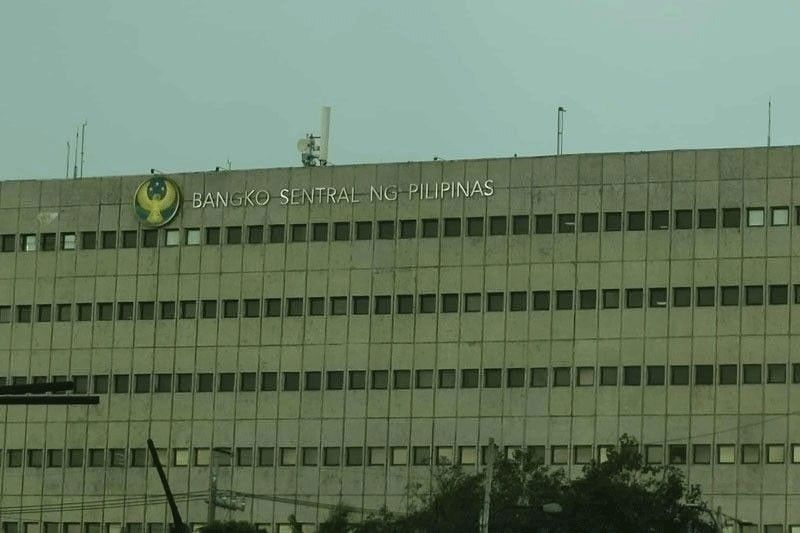
MANILA, Philippines — The Bangko Sentral ng Pilipinas (BSP) is widely expected to raise interest rates again this week as resurgent inflation, a weaker peso and growing risks from food and energy prices strengthen the case for further monetary tightening.
Twelve of 13 economists polled by The STAR expect the Monetary Board to raise the target reverse repurchase (RRP) rate, the BSP’s benchmark used to influence borrowing costs across the economy, at its Oct. 22 meeting.
Most are looking at a 25-basis-point increase to 5.25 percent, while Reyes Tacandong & Co. senior adviser Jonathan Ravelas and BPI lead economist Jun Neri expect a larger 50-basis-point move. Only one economist in the poll expects the BSP to stay on hold.
A quarter-point or a half-point increase would mark the BSP’s fourth rate hike this year after the benchmark rate was brought to five percent in August.
Inflation has emerged as the clearest argument for another increase after headline inflation accelerated sharply to 7.2 percent in September from 6.1 percent in August, moving further above the BSP’s two to four percent target range.
Core inflation, which strips out volatile food and energy items to give a better sense of underlying price pressures, also accelerated to 4.7 percent.
Ateneo Center for Economic Research and Development director Ser Percival Peña-Reyes said the latest readings raise the risk that high inflation becomes embedded in expectations.
“I am expecting a hike of 25 basis points. September inflation accelerated sharply, increasing the risk that inflation expectations become entrenched,” Peña-Reyes said.
He also cited the peso’s record weakness and elevated global oil prices as reasons for further tightening.
HSBC senior ASEAN economist Aris Dacanay likewise expects the BSP to raise rates by 25 basis points to 5.25 percent, despite still-soft domestic demand.
Dacanay said September inflation exceeded expectations, while inflation risks could intensify as the worst effects of El Niño have yet to emerge. HSBC expects inflation to average 7.3 percent in the fourth quarter, led by higher food prices.
“Growth continues to sputter. But the risk of inflation breaking out of its cage is too large to ignore,” Dacanay said.
He added that consumer and business inflation expectations remain elevated, increasing the importance of maintaining a hawkish policy stance.
The peso’s renewed depreciation is also adding pressure on the Monetary Board to act.
BPI’s Neri said the peso’s fall beyond 63 to the dollar strengthens the case for additional rate hikes both in October and December.
“The magnitude of the rate hike (this) week will likely depend on the behavior of the peso in the coming days. If the peso depreciates further and moves closer to 64, the BSP may consider a 50-basis-point hike on Thursday,” Neri said.
He said a larger increase could serve as a preemptive move against second-round inflation effects and a rapid deterioration in inflation expectations, particularly ahead of possible supply disruptions from El Niño.
Foreign exchange reserves are another consideration. Neri noted that gross international reserves have fallen by around $13 billion this year, while Moody’s Analytics associate economist Eugene Tan said reserves have dropped to their lowest level in just over three years.
“Tighter monetary policy would help shore up support for the currency,” Tan said.
Despite those risks, economists generally expect the BSP to keep the pace of tightening measured rather than resort immediately to more aggressive increases.
Metrobank chief economist Nicholas Mapa expects a 25-basis-point hike, saying the BSP remains mindful that monetary policy is less effective against inflation caused largely by supply shocks.
He said the central bank would likely “maintain measured pace of tightening and avoid overzealous hiking, sticking to a data driven approach to monetary policy.”
UnionBank chief economist Ruben Carlo Asuncion similarly expects a quarter-point hike, saying inflation remains the dominant concern following the September surge.
However, softer growth and domestic demand suggest the BSP “is likely to remain measured rather than aggressive in its tightening approach,” he said.
Chinabank chief economist Domini Velasquez also expects a 25-basis-point hike to 5.25 percent, but said the October increase could mark the end of the current tightening cycle as weak economic activity begins to weigh more heavily on the policy outlook.
Velasquez said a December move would likely depend on third-quarter economic growth and the BSP’s updated inflation forecasts. Chinabank expects infrastructure spending to underperform while softer household consumption and private investment could argue against further tightening.
She also said the peso’s depreciation is unlikely to be the main reason for another hike, noting that the currency weakened to around 62 to the dollar even after the BSP’s August increase, suggesting that higher interest rates alone have had limited impact on the exchange rate.
Meanwhile, Dacanay, Mapa, Security Bank chief economist Angelo Taningco, RCBC chief economist Michael Ricafort and Ravelas see scope for another increase by year-end, with several forecasting the benchmark rate to stay at 5.50 percent.
Taningco said another quarter-point hike in December may be needed to guard against a de-anchoring of inflation expectations amid El Niño risks, wage increases, transport fare hikes and persistently elevated oil prices.
By contrast, Asuncion, Pantheon Macroeconomics chief emerging Asia economist Miguel Chanco and PNB economist Alvin Arogo see the October increase potentially marking the end of the tightening cycle, unless inflation or oil prices worsen further.
“We think, though, that this will be the last increase, unless a new supply-side inflation shock arises,” Chanco said.
Arogo likewise expects a 25-basis-point hike to 5.25 percent, which “could mark the end of the current tightening cycle” if inflation eventually returns below four percent by the third quarter of 2027.
John Paolo Rivera was the lone economist in the poll expecting the Monetary Board to hold the policy rate at five percent on Oct. 22.
He said growth remains subdued even as inflation, peso depreciation, oil prices and food supply disruptions keep risks elevated.
Rivera also expects another hold in December, but said a 25-basis-point hike remains possible if inflation stays high, the peso weakens further or second-round price pressures intensify.





- Latest
- Trending