Remittance dry spell to worsen Philippines contraction — Fitch
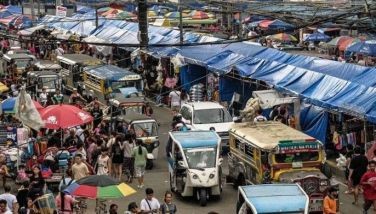
MANILA, Philippines — The Philippines is set for a deeper contraction this year, hurt by fresh lockdowns last month and a weakening of remittances from migrant workers displaced by the pandemic, Fitch Ratings said on Tuesday.
The debt watcher said gross domestic product (GDP) is expected to shrink by 8% this year, sharper than the previous projection of 4% drop. A return to growth is seen in 2021 and 2022 when expansion would likely hit 9% and 5.5%, respectively.
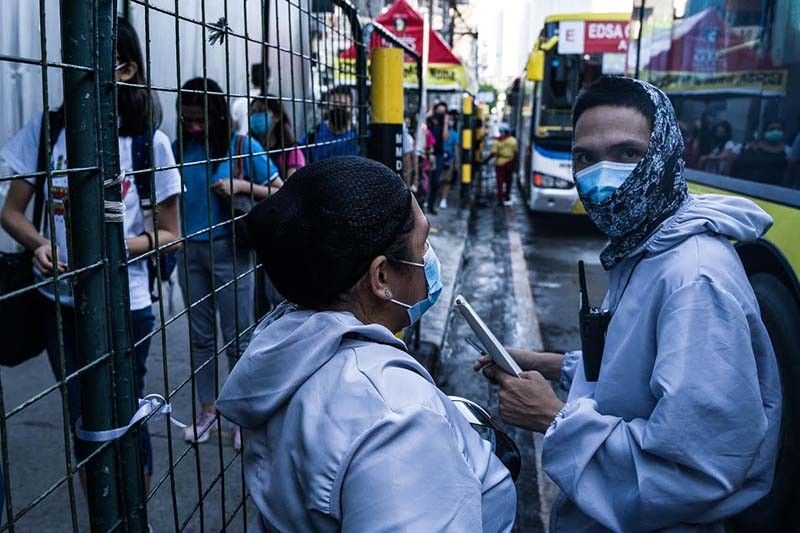
In one report, Fitch said President Rodrigo Duterte’s decision to lock down Metro Manila anew, even for just 15 days in August, “will depress economic growth by much more than we had anticipated” worsened by the government’s “difficulty in containing the virus.”
In another, Fitch also cited declining remittances as an “economic shock” that, combined with record-high jobless rates, would erode consumer purchasing power in a country where 70% of the economy is driven by consumption.
“In domestic economic shocks, family members working abroad can increase remittances to help mitigate the impact of sluggish domestic activity. The pandemic, however, represents a much more synchonised global economic shock than previous downturns,” Fitch said.
“This limits the potential support of the remittance channel,” it added.
While Fitch did not provide a specific outlook for remittance change this year— the agency did not also reply to request for comment— the contraction in GDP was already treading much worse than projected at 9% as of the first half. Cash remittance inflows, meanwhile, were down 4.2% on-year as of June, set for a 5% drop as per the central bank.
“Declining remittances may affect sovereign ratings through external finances and economic growth,” Fitch said. Fitch currently rates the Philippines BBB, an investment grade, with a “stable” outlook.
With the boost from remittances gone, Fitch said there would be more need for the government to deploy cash support to families affected by the pandemic. This, in turn, can put pressure on state budget seen to post a record-high deficit of 7.5% of GDP this year, before slowly narrowing to 6.9% and 5.8% of GDP in 2021 and 2022, respectively.
The Duterte administration, which has hesitated to roll out a bigger fiscal stimulus over fears of credit rating cut, sees public finances in a worse shape with deficit hitting as much as 9.6% of GDP in 2020, 8.5% next year and 7.2% in 2022.
“The Philippines entered the crisis with fiscal buffers, in light of a low general government debt-GDP ratio of 34.9% in 2019…However, these buffers are being eroded by the pandemic-related shock, although there is room to accommodate some deterioration in the fiscal outlook,” Fitch said.
Region-wide slowdown
To be fair, Fitch’s bleak outlook spans the entire Asia Pacific region. The debt watcher said a pick-up on growth in the second half would be constrained by new outbreaks in countries like Australia, Hong Kong, South Korea and Vietnam— the latter two earlier applauded for their swift containment of the deadly virus.
That said, among regional peers, Philippines is still projected to perform worst economically this year. It would be closely followed by Thailand poised to shrink 7.8%, Malaysia (2.5%) and Indonesia (2%). Smaller economies Laos and Vietnam will remain growing by 0.5% and 2.8%, respectively.
Meanwhile, a remittances slump is also seen for Bangladesh, India, Pakistan and Sri Lanka, all likely to suffer wider current account deficits as dollars from other sources like tourism receipts and exports dry up.
“Migrant workers who lose their jobs may be remitting their full savings prior to their planned returns to their home countries,” Fitch said.
“In this case, the impact of the pandemic on remittances would not be immediate, but would filter through in the coming quarters as migrant workers return to their home countries,” it added. — with Prinz Magtulis





- Latest
- Trending