





‘We were the perfect blend of youthful energy and experience’
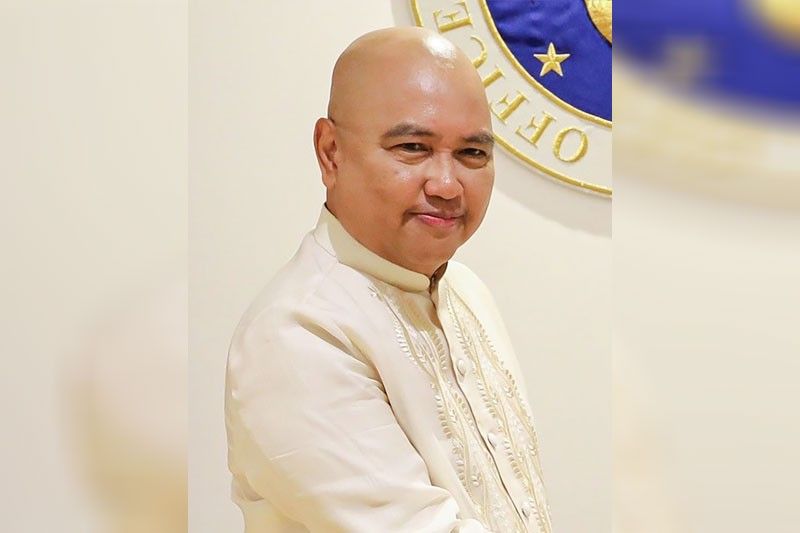
MANILA, Philippines — My years with The Philippine STAR were among the most challenging periods of my professional journey, yet they were also the most enriching and memorable. That chapter marked a pivotal crossroads in my young career—one I would gladly choose again if given the chance.
Fresh out of the university, where I had studied accountancy, I was still a struggling writer torn between pursuing a career in business and following my passion for the written word.
After leaving my alma mater, the University of the East, where I had served as editor-in-chief of The Dawn — then the country's most widely circulated weekly student newspaper — I spent a few months with the Journal Group.
A Meaningful Breakthrough
But it was only when I joined the pioneering team of reporters at The Philippine Star in July 1986 that I received my first real opportunity to build a meaningful career in journalism. There, I honed my newswriting skills while treating every beat and every assignment as an opportunity to learn about the workings of government and what it truly means to serve the people.
Those early years gave me a profound appreciation for public service — its demands, its responsibilities, and the importance of serving with integrity and dedication. They also deepened my understanding of the vital role of the media in holding public officials accountable and demanding transparency in government.
Two of my earliest beat assignments proved especially instrumental in shaping that perspective. I covered the newly created Presidential Commission on Good Government (PCGG), then headed by Jovito Salonga, who would later become Senate president, and the Commission on Audit (COA), then chaired by Teofisto Guingona, who would later be elected the country’s vice president. At the time, these were among the most important and prestigious beats in Philippine journalism.
Both offices were rich sources of news, reflecting the Aquino administration's determination to recover the country's so-called ill-gotten wealth. The PCGG was issuing sequestration orders almost daily and later filing graft and forfeiture cases against individuals and corporations believed to have amassed wealth illegally. Meanwhile, the COA was meticulously examining the financial records of government agencies with a fine-tooth comb, uncovering instances of waste, abuse, and the misuse of public funds.
Covering these institutions provided me with a front-row seat to one of the country's most significant efforts to restore public accountability during that period.
More importantly, it reinforced my conviction that journalism is not merely about reporting events — it is about helping citizens understand how government works and why transparency, integrity and accountability are essential to public service.
Later, I was assigned to cover the House of Representatives, beginning in 1987 under Speaker Ramon V. Mitra and continuing through 1994 under Speaker Jose de Venecia Jr.
I cherish those years as both work and education. I spent long hours covering committee hearings and plenary sessions, punctuated by one-on-one interviews with legislators.
On slow news days, I would simply choose a committee hearing to observe or sit quietly in the gallery of the session hall, absorbing the spirited debates unfolding on the House floor.
On the drive home, I often hitched a ride with my senior reporter and mentor in The STAR, Efren Danao, whom I greatly admired. He would captivate me with stories of political dynasties, local rivalries, and electoral battles from congressional districts across the country. I marveled at the depth of his knowledge, the precision of his memory, and the accuracy of his recollections. Those conversations were an education in themselves, and they would serve me well throughout my career.
In 1995, I moved to Malacañang to cover the administration of President Fidel V. Ramos. I was in tandem with the incomparable ace reporter Marichu Villanueva. It was then that I assumed the role of senior reporter at The Philippine STAR. For any journalist, covering the country's highest office is the pinnacle of a reporting career, and I remain deeply grateful to The STAR for entrusting me with that responsibility.
The early years
Looking back, it is remarkable that I never took a formal college course in journalism. I belonged to what many would call the school of hard knocks. My education came from an early fascination with current events, politics, sports, and the daily discipline of reading newspapers.
I still remember, at the age of 12, racing my father each morning to retrieve the newspapers neatly tucked at the gate of our home. I would eagerly devour the sports pages before moving on to the front-page headlines. From there, I read everything—from news, cartoons, lifestyle features, entertainment, and even my daily horoscope.
I read newspapers from cover to cover. As fate would have it, I eventually found myself working for the newspaper whose famous slogan proudly declared that it was "the only newspaper you read from cover to cover" — The Philippine STAR.
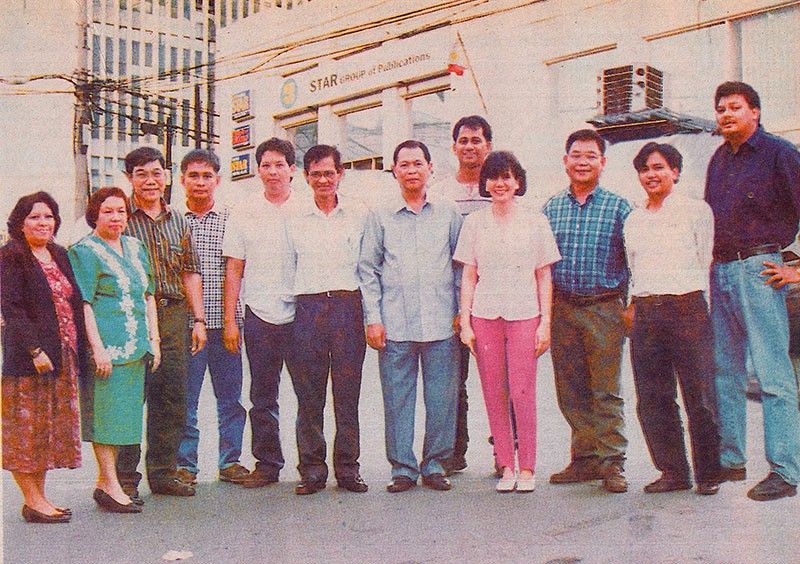
I have countless fond memories of my 11 years with The STAR. Our pioneering newsroom was the perfect blend of youthful energy and seasoned experience. Many of us were barely out of college, while others had already earned reputations as respected political journalists despite their relatively young age.
I vividly remember the late political columnist Art Borjal inviting me to join the start-up newspaper in June 1986. He told me that my college mentor and adviser, the late Raul Gonzales — who had served as Press Secretary to former President Diosdado Macapagal — would also be joining as executive editor. Several fellow Dawners from the University of the East were recruited as well, including Alex Fernando, Bobby Capco, Roman Floresca, and Gerry Carpio. A few months later, more college friends came aboard, among them The Dennis Fetalino, Mary Ann Reyes, Elmer Mesina and many others.
From the very beginning, the organization was blessed with an extraordinary roster of talent. The legendary Max V. Soliven was our publisher. Louie Beltran joined the editorial team, while Conrad Banal was the business editor, Millet Mananquil headed Lifestyle, Lito Tacujan led Sports, and the incomparable Ricky Lo became the face of Entertainment.
But the one person who made all of this possible was our founder, Betty Go-Belmonte.
To all of us, she was simply Tita Betty.
She gave many young journalists an opportunity when few others would not. She saw potential in us long before we saw it in ourselves. More than building careers, she shaped lives. She inspired excellence, demanded integrity, and, through her unwavering faith, awakened in many of us a deeper relationship with God. Countless journalists owe not only their professional success but also their personal growth to her guidance and example.
‘Old school’
Today's generation of journalists would probably call us "old school," and they would be right.
Our workday began early on our respective beats before we headed to the newsroom in Port Area by mid-afternoon. There, we pounded away on old Underwood typewriters in a cramped, frenetic and wonderfully chaotic newsroom.
Many of us were chain-smokers in those days. But unlike most newspaper offices of that era, The STAR, upon the instructions of Tita Betty, allowed smoking only outside the building — a small but telling example of her concern for her employees.
Inside, the newsroom was a world unto itself. We worked elbow-to-elbow with editors, copyreaders, copy boys and fellow reporters. The air carried the unmistakable smell of newsprint, ink, and carbon paper used to make duplicate copies of our stories.
It was hardly a place for writers who needed solitude.
The relentless clatter of typewriters filled the room. Editors shouted instructions across the newsroom. Someone was always telling a joke that would send everyone into roaring laughter. Every now and then, a spectacular reporting blunder would be loudly called out, instantly silencing the room. In those moments, you could hear a pin drop.
Every day brought another deadline. I imposed upon myself a personal quota of stories to file before calling it a day, usually around six or seven in the evening. After work, many of us young reporters would gather at the National Press Club or one of the watering holes in Malate to unwind after another demanding day. We often stayed until midnight, only to begin the cycle again early the next morning.
There were no weekends, no eight-hour shifts and hardly any holidays. We were on call 24 hours a day, seven days a week. As I recall, our only real holiday was Maundy Thursday (and Good Friday) because The Philippine STAR did not publish on Good Friday.
As reporters for The STAR, we were the new kids on the block. At first, many news sources treated us as second-class journalists. Although we had highly respected reporters like Amy Pamintuan, Jess Diaz and Efren Danao — who had already come from more established publications — we still had to earn our credibility one story at a time.
One incident perfectly captured those early days.
During a drinking session outside the home of our colleague Dennis Fetalino, an intoxicated stranger rudely barged into our gathering. Rather than escalate the situation, we quietly retreated inside the house. Bobby Capco, however, was furious. He immediately grabbed an old rotary telephone and called the police.
"Nobody treats STAR reporters that way," he declared indignantly in Filipino.
We listened as he firmly explained the incident to the officer on the other end of the line.
"Taga-STAR po kami," he said proudly.
There was silence.
A long pause followed.
Then Bobby quietly added, almost apologetically, "Diyaryo po iyon."
We burst into laughter.
The exchange perfectly reflected who we were then — a young newspaper still struggling to establish its identity and earn recognition.
Success did not come easily to The STAR. We had to toil, struggle, scratch and claw our way toward respectability and prominence. Whatever success the newspaper enjoys today was built through hard work, unwavering commitment to the highest standards of journalistic ethics, and an uncompromising pursuit of excellence.
And as our beloved Tita Betty — whom I imagine smiling proudly from above — often reminded us: "Nothing is impossible with God."
We believed those words then, Tita Betty.
We believe them still.
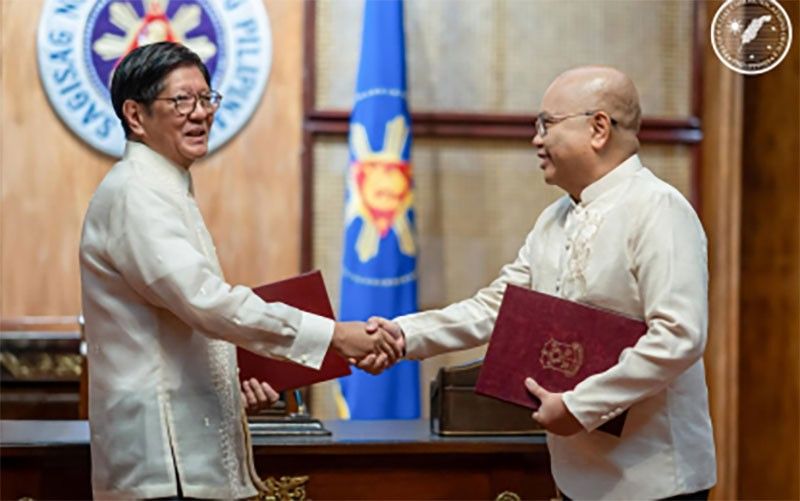
About the author: Dave Gomez is the Secretary of the Presidential Communications Office. He is a veteran public relations practitioner, corporate communications executive, and former reporter of The Philippine STAR.








