Rising prices remain biggest problem of Pinoys – President Marcos
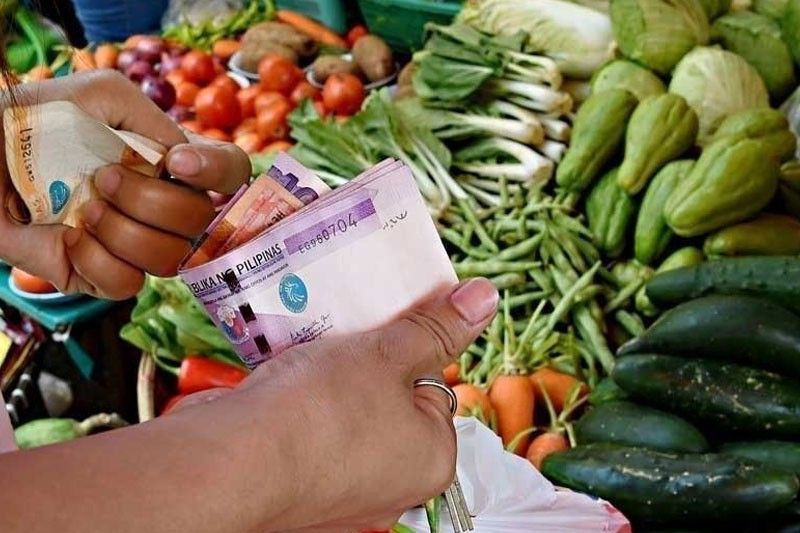
MANILA, Philippines — Rising food prices remain to be Filipinos’ major concern, President Marcos said yesterday, as he vowed to increase people’s access to affordable but quality commodities by providing additional support to agricultural workers and establishing more Kadiwa outlets nationwide.
“We know that currently the biggest problem we all face is the rising prices of goods,” the President said at the launch of the Kadiwa ng Pangulo in Limay, Bataan.
At the event, the President directed the Department of Agriculture (DA), Department of Trade and Industry and Department of the Interior and Local Government to put up more Kadiwa stores in different parts of the country.
Agricultural commodities such as rice, sugar and onions are being sold at the Kadiwa centers at lower prices, he said.
“Let’s increase these (Kadiwa outlets) so we can reach even those in far-flung areas in the Philippines who are in need,” Marcos said in Filipino.
The Kadiwa outlets aim to give a platform for Filipino farmers, fisherfolk and micro, small and medium enterprises (MSMEs) to generate more income through direct farm-to-consumer trade.
The Kadiwa program was first introduced during the term of Marcos’ late father, former president Ferdinand Marcos Sr., to provide a market for local farmers and fishermen and small business enterprises selling basic necessities.
Marcos, who concurrently serves as agriculture secretary, said while the government is opening more Kadiwa outlets, it must also focus on improving agricultural productivity and reduce the country’s reliance on imports to stabilize the prices of basic goods.
He noted that the country has been relying too much on importation even before the COVID-19 pandemic and has neglected the agriculture sector.
Assistance
During his visit to Bataan yesterday, Marcos also distributed various forms of government assistance, including P90.1 million for the improvement of the Sitio Nazareno-Culis farm-to-market road in Hermosa town and P180.3 million for the construction of a fish landing facility in Orani town. The funding came from the DA.
Marcos also handed over reinforced boats with marine engine, marine engines, fishing paraphernalia and fisheries post-harvest equipment with a total cost of P1.2 million to select beneficiaries.
They also received a fry holding facility, milkfish fingerlings, tilapia fingerlings and smokehouse, amounting to P3.7 million from the Bureau of Fisheries and Aquatic Resources.
Meanwhile, the Department of Labor and Employment also provided P6.8 million assistance under its Integrated Livelihood Program; P38.9 million under its Tulong Panghanapbuhay sa Ating Disadvantaged/Displaced Workers or TUPAD and P15 million under its Special Program for Employment of Students (SPES) Program.
The Technical Education and Skills Development Authority, on the other hand, gave out ovens and toolkits to SPES scholars.
The Department of Social Welfare and Development also launched a payout for 934 beneficiaries, each receiving P5,000 under the agency’s Assistance to Individuals in Crisis Situation.
Sale of seized sugar
The DA and the Sugar Regulatory Administration (SRA) hope to start the sale of seized smuggled sugar at the Kadiwa centers in early April, according to Agriculture Assistant Secretary and deputy spokesman Rex Estoperez.
“We are expecting that it will be available at the Kadiwa in the early part of April. We are just waiting for the mechanics, especially the proceeds as it involves finances,” Estoperez said, adding that proceeds from the sale of seized sugar will be used by the DA to expand the operation of the Kadiwa centers.
He said at least 12,000 metric tons of seized sugar will be sold at Kadiwa outlets, including the 8,000 MT of sugar confiscated in Batangas and 4,000 MT of sugar seized in Subic.
Based on monitoring of the DA on Friday, the retail price of refined sugar ranged between P86 and P110 per kilo, washed and brown sugar between P80 and P95 per kilo.
At the same time, Estoperez said the SRA board approved the release of 24,000 MT of imported sugar to the local market to help bring down retail prices. He added that the SRA will authorize the additional release of imported sugar if the 24,000 MT fail to reduce prices.
“The bulk (of imported sugar) will be stored for buffer stock. We will increase allocation for the local market if there is a need to help lessen the inflation,” he noted. — Bella Cariaso, Ramon Efren Lazaro





- Latest
- Trending