In the age of AI, Jon Favreau, Mike Gunton remind us what real looks like

There was something almost poetic about interviewing Disney Legend Jon Favreau about “LION.”
Here is a man who has spent much of his career convincing us to believe in things that technically do not exist — “Iron Man,” “The Mandalorian” and the live-action “The Lion King.”
Characters and creatures brought to life through technology, visual effects, animation and an extraordinary amount of imagination.
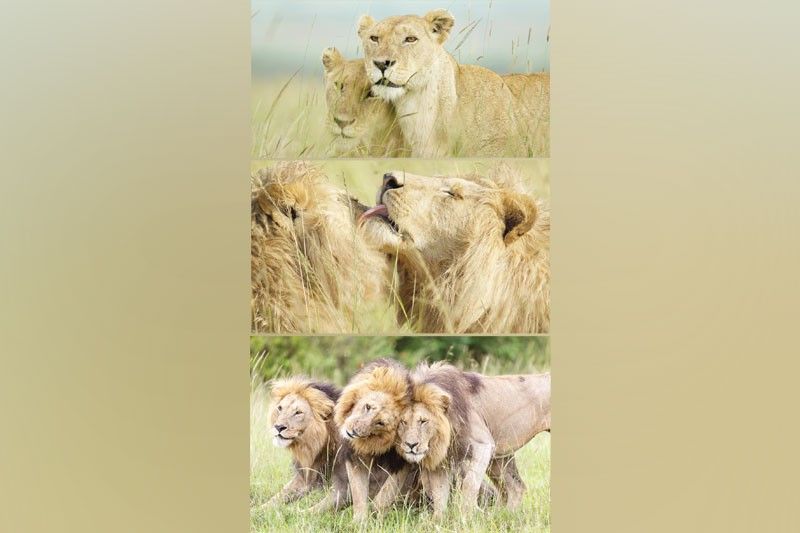
And now, Jon wants us to look at something that does not need to be created by man at all — a real lion, a real pride, a real landscape and a real story unfolding in front of a camera through the course of four years.
That was what made my conversation with Jon and Mike Gunton about National Geographic’s “LION” particularly fascinating for me. Because at a time when artificial intelligence (AI) can generate an image, a face, a voice or practically an entire scene in seconds, here is a major Hollywood filmmaker telling us that sometimes the most impressive thing you can put on screen is simply what actually happened.
And coming from Jon, that carries a lot of weight.
Many have been introduced to him as “Happy Hogan” from the Marvel Cinematic Universe, but more than that, he is the filmmaker who directed “Iron Man” and helped establish the cinematic language that would eventually become the Marvel Cinematic Universe we know today.
He directed “Elf,” “Zathura,” “Cowboys & Aliens,” “The Jungle Book” and “The Lion King.” He wrote, directed and starred in “Chef.” He became a major creative force behind “The Mandalorian,” helping usher “Star Wars” into a new era of TV storytelling.

And yes, he is also an actor who has appeared in everything from “Friends” and “Seinfeld” to “The Wolf of Wall Street.” Then there is the awards shelf. His work on “The Jungle Book” earned an Oscar and BAFTA for visual effects, along with multiple Visual Effects Society awards. In 2018, Jon himself received the Visual Effects Society Lifetime Achievement Award. The man knows technology. He knows spectacle. He knows how to make audiences believe.
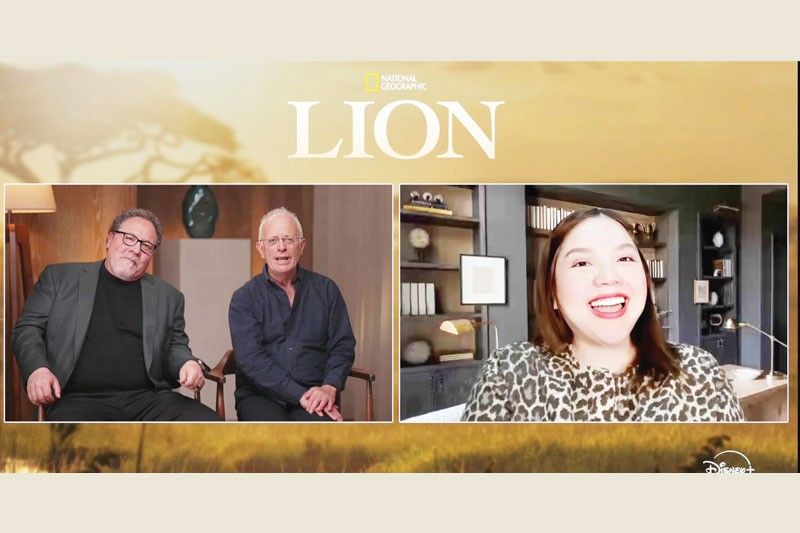
Which is exactly why I found his approach to “Lion” so refreshing. He is the executive producer for it along with Mike, who is also BBC Studios Natural History Unit’s creative director.
The documentary follows a lion cub named Kio over four years as he grows into adulthood and, eventually, fights his way toward becoming a king. It was filmed in Kenya’s Maasai Mara and required an extraordinary commitment from the production team, which spent years following the same pride and waiting for nature to reveal the story.
As Jon told us, “I’m used to writing and animating, and as a filmmaker, you have tremendous power in the story and editing room, but here the only thing you could do is decide what lions to follow. We had the music and just the editing room. Everything else was how it was served to us by Mother Nature.”
I loved that answer because it really captures the difference between making a movie and documenting life. When you’re making a movie, you control the story. When you’re filming nature, nature controls you.
And for someone like Jon, who has spent years working with some of the most sophisticated filmmaking technology in the world, I imagine that surrendering that control must have been both refreshing and liberating.
The irony isn’t lost on me, though.
The guy who helped make a galaxy far, far away feel real spent four years following lions because he wanted to preserve something that already exists.
And then came the part of our conversation that, for me, made the interview especially relevant — AI or artificial intelligence.
We have reached a point in entertainment where audiences are increasingly asking whether what they’re watching actually happened. Was that celebrity really there? Did that person really say that? Is that image real? Is that voice real? Was that scene actually filmed?
The technology is moving so quickly that even people who work in media have to become more discerning about what we consume and share.
Jon said that for LION, the production made a conscious decision from the very beginning not to use digital tools to manipulate what they had captured.
“I think it’s very important we set out four years ago with a commitment not to use any digital tools at all,” he shared.
Of course, they still edited the material. They used music, narration and color work. But they made a very deliberate choice not to digitally manufacture the world they were showing us. And Jon gave me an example that I found particularly telling. They didn’t even digitally remove airplanes from the footage.
He added, “That would’ve been very easy to do with AI.” Exactly. It would have been easy. And that is precisely the point. We are entering an era where “easy” is no longer necessarily the same thing as “right.”
As storytellers, we now have the ability to fix almost anything: remove something from the frame; change the background; make an animal do something it never did; create an environment that doesn’t exist; and make someone appear to say something they never said.
The possibilities are exciting and at the same time also a little terrifying.
So when Jon told us that “LION” gives viewers the assurance that what they’re seeing “really happened,” I understood why that mattered to him and what he wanted to impart to the audience.
“It’s refreshing for people to be able to look at something, to have an assurance that this is something that really happened, that is not manipulated. It’s organic, and you’re getting something that’s really happening in a part of the world that exists,” he said.
That word “assurance” really stayed with me. Because isn’t that becoming one of the most valuable things in entertainment today?
Not simply being entertained, but knowing that what moved you was real. And I don’t think this means we should suddenly become anti-AI. That would be ridiculous.
Hollywood has always evolved with technology. Sound changed cinema. Color changed cinema. CGI changed cinema. Streaming changed the TV landscape. Social media changed celebrity culture. Now AI is changing the creative process again. We are not going backwards. But perhaps, as we move forward, we also need to remember what we don’t want to lose.
Jon put it beautifully when we talked about his own children and the generation growing up with these technologies, “I think we need to not lose sight of what’s real in the world. And I know for my kids’ generation, spending time with real people doing real things, watching real images, I think there’s a space for that to help balance things out.”
That is where “LION” becomes much bigger than a documentary about a lion. It becomes a reminder about attention, about the value of watching something unfold instead of immediately demanding that it happen. Think about how unusual that is now.
We swipe when something doesn’t interest us within seconds. We watch shows at 1.5x and hurry on to what to consume next. We consume celebrity news in bite-sized clips. We expect immediate access to everything.
And yet “LION” took four years, as in four years of waiting for Kio to grow. That patience is almost rebellious now. And perhaps that is why speaking to Jon and Mike felt so special to me.
As someone who has spent years interviewing actors, musicians, filmmakers and personalities, I have always been fascinated by the difference between the person we see on screen and the person behind the production.
Entertainment is, after all, about creating illusions. The magic is in making us believe.
But there is another kind of magic as to what simply happened, and someone was lucky enough and patient enough to capture it.
That is what Jon and Mike have given us with “LION.”
And coming from a Disney Legend whose career has been so deeply connected to technology, visual effects and cinematic invention, I find that choice particularly meaningful.
And maybe that is exactly the kind of entertainment we need right now.
“LION” is streaming on Disney+ Philippines.


- Latest
- Trending