


Ube industry growth stalled by supply gaps
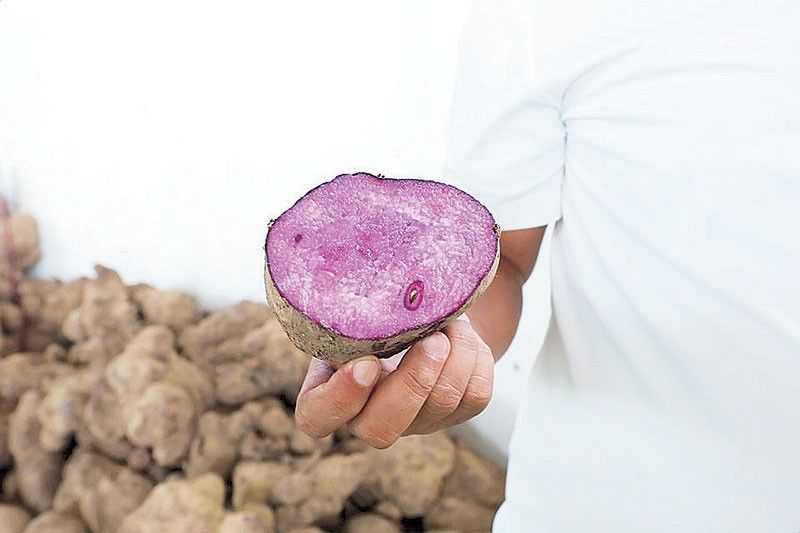
MANILA, Philippines — Supply constraints could limit further growth in the Philippines’ ube industry amid the growing demand for purple yam in overseas markets.
In its latest report, research and analysis firm BMI said supply shortages, limited farmland and slow farmer adoption are expected to weigh on the country’s plans to expand its ube industry.
“Prolonged supply constraints, slower-than-expected expansion of domestic cultivation capacity or the emergence of substitute ingredients that capture consumer attention could limit ube’s ability to sustain its current growth trajectory and transition from a trending flavor into a permanently established global food category,” it said.
The Fitch Solutions unit noted that the government’s ban on exporting fresh ube and planting materials highlights the production challenges faced by the industry amid rising foreign demand.
BMI added that despite the export ban preserving planting materials, the absence of financial incentives for farmers to shift their limited farmland to ube growing continues to deter any meaningful expansion of domestic supply.
“Demand has now become strong enough to create supply-side constraints, evident by the fact that the policy was introduced specifically because overseas demand for ube has risen while domestic planting stock remains limited,” it added.
The report also flagged that the export ban could cause purple yam prices to drop, deterring more farmers from adopting ube farming.
BMI said that supply-side challenges serve as further evidence that ube’s global rise is “no longer merely an emerging consumer trend but an increasingly important agricultural and commercial opportunity that producers are now racing to support.”
Last week, the Department of Agriculture (DA) announced the indefinite suspension of all raw ube exports to protect the country’s planting materials.
It covers the shipment of fresh ube and propagative planting materials, whether used for consumption, planting or research.
The report said among the reasons for low ube output is that many Filipino farmers adopt a wait-and-see approach in their planting decisions, as most households see agriculture as their main source of income.
BMI added that ube production is also confined by geographical limitations, as purple yam is traditionally grown on small and seasonal plots by stallholder farmers who often lack funding to acquire additional land for expansion.
“The finite nature of their farmland means farmers are more hesitant to switch over to a popular crop, unsure of the financial longevity of the trend,” it said.
Despite limited farms producing purple yam, the country’s ube production increased by 17 percent to a two-year high of 5,658 metric tons in the first half from 4,838 MT in the same period last year, according to the Philippine Statistics Authority.
Earlier, President Marcos approved a P300-million budget for the ube industry under the 2027 national spending plan to support further expansion.



- Latest
- Trending


