Marikina model for waste management – Marcos
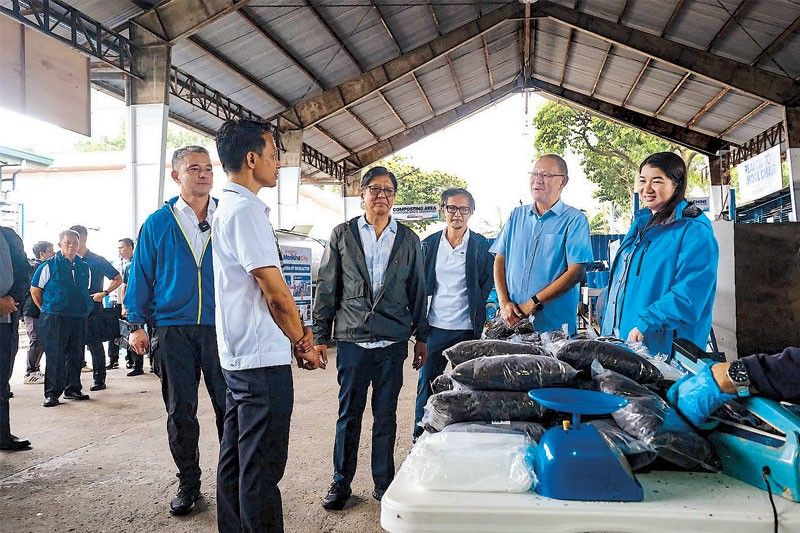
MANILA, Philippines — President Marcos yesterday urged cities and municipalities across the country to replicate Marikina’s solid waste management system to address flooding in their areas.
During his inspection of the Marikina River Linear Park and the city’s centralized materials recovery facility (MRF) in Barangay Sto. Niño, Marcos said the city’s experience demonstrated that effective flood mitigation requires more than desilting rivers and collecting garbage.
“It won’t just go directly to the river then you’ll carry out desilting or collect trash,” Marcos said. “But here Marikina, over the last 11 years or so, they have managed to put a system in place. The reason we are here is that this is the best example of a circular economy.”
The President was joined by Environment Secretary Juan Miguel Cuna, Public Works Secretary Vince Dizon, Marikina 1st District Rep. Marcelino Teodoro and Mayor Marjorie Ann Teodoro.
Marcos also noted that Marikina had cleared no-build zones along the river, relocated structures from restricted areas and installed trash catchers to prevent garbage from reaching the waterway.
“This should serve as a template – and is indeed becoming the template for various cities, especially in the NCR (National Capital Region),” he said.
Marikina’s MRF processes biodegradable waste into compost and converts plastics into bags, bricks as well as other useful materials, including components for school desks.
Marcos described the initiative as a practical example of a circular economy, in which materials are recovered, recycled and reused rather than being thrown away.
The President credited the Marikina local government for establishing a system that links river cleanup, garbage collection, recycling and waste recovery.
“It is not only part of flood management, but it is also in terms of the environment na malaki ang naitutulong (that helps a lot),” Marcos said.
The Barangay Sto. Niño MRF has sorting bins, composting bioreactors, upcycling facilities and biohazard storage. It can process as much as 200 tons of dry waste daily.
The Department of Environment and Natural Resources (DENR) has supported the system through floating trash traps installed at critical tributaries to intercept waste before it reaches the river.
As of July, the DENR and the Marikina local government had deployed 47 estero rangers in 12 barangays to maintain trash traps and conduct waterway cleanup. – Rainier Allan Ronda


- Latest
- Trending