Fitch unit sees long lead time in nuclear development
MANILA, Philippines — Fitch Solutions sees a substantial upside risk in the Philippine energy sector with the proposed executive order (EO) to include nuclear in the energy mix as the country is expected to have a strong demand growth in the next few years.
In its latest commentary, Fitch Solutions said the Philippines would see a power demand surge over the coming years on the back of strong macroeconomic and demographic growth as well as government’s goal to achieve a 100 percent electrification rate by 2022 under the Total Electrification Program (TEP).
Given the situation, it said there is substantial upside risk to its forecasts for the country’s energy sector if nuclear is successfully reintroduced into the country’s energy mix.
“The use of nuclear power will be an effective way to meet this demand given its high capacity factor as a baseload resource, and particularly as coal-fired power – which the Philippines has largely turned to – comes under increasing environmental oppositions,” Fitch Solutions said.
“We note that there has already been some traction on developing Philippines’ nuclear sector in recent months, given ongoing government considerations to restart the country’s Bataan Nuclear (Power) Plant and reintroduce nuclear energy in the country,” it said.
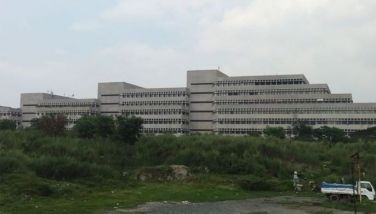
The Philippines had built the 620-megawatt (MW) Bataan Nuclear Power Plant (BNPP) during the Marcos administration to supply additional power by replacing ageing power plants.
However, it was not operated when the late president Corazon Aquino took over the presidency, during which time there was widespread brownouts during the late ’80s and early ’90s.
The project faced strong opposition from environmental and cause-oriented groups over safety concerns and reports former president Ferdinand Marcos received about $80 million in kickbacks from builder Westinghouse.
The country further went on undeclared moratorium for nuclear power plants following the Fukushima incident in 2011.
It was only in 2016, under President Duterte, when restarting BNPP operations was considered again, largely for energy security, which led to a series of feasibility studies and efforts on this front, Fitch Solutions said.
In October last year, the Department of Energy (DOE) received the official Phase 1 Mission Report of the Integrated Nuclear Infrastructure Review (INIR) Mission conducted by the International Atomic Energy Agency (IAEA).
The report contains the IAEA initial findings on the country’s existing good practices, undertaken improvements as well as the recommendations and suggestions for the DOE-Nuclear Energy Program Implementing Organization’s (NEPIO) preparation of the Integrated Work Plan (IWP).
Among the key areas which the country needs further action on include the need to involve a broader range of stakeholders to form a national commitment to introduce nuclear power, to develop a legal and regulatory framework on nuclear program, and to further develop its understanding nuclear power.
After receiving the report, the DOE said it would work on an action plan to further prepare the country for a nuclear power agenda.
“There are no details as to when a decision will be made on nuclear power yet. At present, we maintain our forecasts that no nuclear capacity will come online in the country over the coming decade given that there are still significant uncertainties surrounding this such as high capital costs, safety considerations and long lead times, but we may seek to revise it if there is more concrete project development in the sector going forward,” Fitch Solutions said.




- Latest
- Trending