New EO lets all schools suspend, resume classes
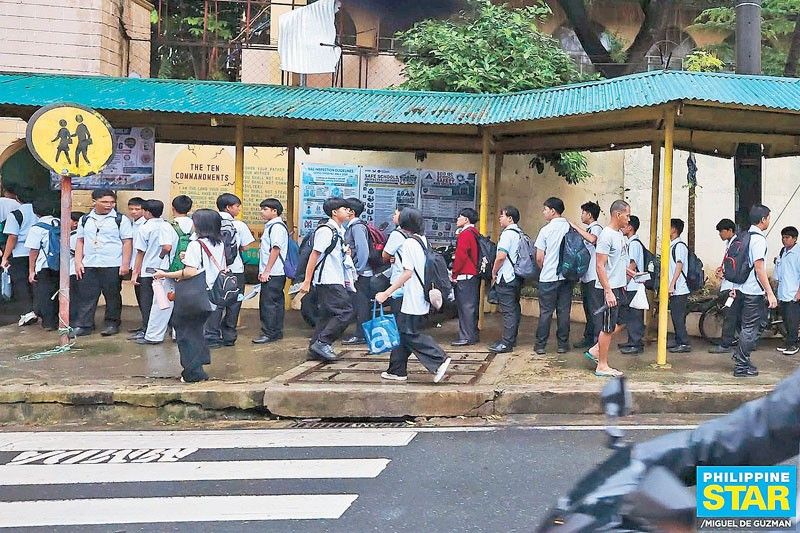
MANILA, Philippines — President Marcos issued yesterday an executive order allowing schools to suspend or resume classes based on risk assessments in their areas, a policy that Malacañang said would ensure students’ safety while supporting learning continuity.
Under EO 130, three mechanisms govern the suspension and resumption of in-person classes, activities and onsite work: automatic suspension based on prescribed technical thresholds; localized suspension by local chief executives based on local risk assessments and prevailing conditions, and granular suspension by schools based on documented site-specific assessments.
Palace press officer Claire Castro said the order gives local governments additional leeway to decide which areas or schools would be covered by class suspension based on actual conditions.
“Each school day suspended is a huge loss. The goal of the new EO is to ensure the safety of students while continuing their learning,” Castro said.
Under the order, automatic suspensions take effect when warnings, advisories, alert levels, forecasts or other official issuances from the Philippine Atmospheric, Geophysical and Astronomical Services Administration (PAGASA), Philippine Institute of Volcanology and Seismology or other competent national government agencies so warrant.
In the absence of an applicable automatic suspension, local chief executives may declare localized suspensions based on documented local risk assessments and prevailing conditions.
Schools may declare granular suspensions only when no national or local suspension applies and documented site-specific assessments establish an actual or imminent threat to the safety, health or welfare of learners and personnel.
Classes and onsite work may resume once the suspension period expires or the applicable warning or declaration is lifted, downgraded or has ceased, provided required safety assessments and inspections have been completed.
Earlier resumption in areas covered by localized suspensions requires the concurrence of the concerned local chief executive.
The order stressed that the suspension of in-person classes “shall not automatically suspend learning,” directing educational institutions to implement appropriate alternative delivery modes and other learning continuity measures.
The Department of Education welcomed the measure, saying it provides more flexible, orderly and responsive guidelines for suspending and resuming classes and onsite work in schools and learning centers.
“We sincerely thank government agencies, school superintendents, school heads, teachers, local government units (LGUs) and other stakeholders who listened, collaborated and supported the advancement of this measure,” the DepEd said.
The department is expected to issue implementing guidelines within 30 days, including technical thresholds, grounds, criteria, documentary requirements, timelines and coordination procedures.
Heat index alerts
As the government conducts preparations for El Niño, PAGASA resumed yesterday issuing its highest heat index forecasts.
According to its forecast yesterday, Borongan, Eastern Samar, registered the highest at 44 degrees Celsius.
Six areas recorded 43 degrees Celsius, including Dagupan City in Pangasinan, Bacnotan in La Union, Iloilo City, Dumangas in Iloilo, Mambusao in Capiz and Butuan City in Agusan del Norte.
San Jose in Occidental Mindoro, Cuyo in Palawan, Siquijor and Guiuan in Eastern Samar recorded heat indices of 42 degrees Celsius.
A heat index of 42 to 51 degrees Celsius falls under the danger category, where prolonged exposure and continuous activity may result in heat exhaustion or heat stroke.
The weather bureau also warned that around 12 areas may experience drought by the end of November as El Niño persists. These include Albay, Camarines Norte, Camarines Sur, Catanduanes, Capiz, Negros Oriental, Leyte, Samar, Siquijor, Southern Leyte, the City of Isabela in Basilan and Misamis Oriental.
Another 57 areas may experience dry spells, while 11 may have dry conditions by the end of the month.
Due to forecasts of dangerously high heat indices, several LGUs suspended classes yesterday.
Cavite City Mayor Denver Chua suspended face-to-face classes in all levels in public schools, except Cavite City National Science High School, due to an expected heat index of 42 degrees Celsius.
Mulanay, Quezon, also suspended classes in all levels in public and private schools due to the extreme heat and an expected heat index of 42 degrees Celsius.
In Himamaylan, Negros Occidental, Mayor Raymund Tongson suspended classes in all levels in public and private schools amid a forecast heat index of 41 degrees Celsius.
Masterclasses
The Department of Health (DOH), for its part, is also preparing its workforce and hospitals for the potential health effects of the prolonged hot and dry conditions.
The agency has started holding El Niño masterclasses for its employees and health care professionals to strengthen preparedness and response measures.
The classes also aim to equip personnel in regional offices and DOH hospitals with information on El Niño preparedness and the appropriate actions to take as the weather phenomenon intensifies.
In anticipation of a possible influx of patients suffering from heat-related illnesses, the agency is likewise preparing to temporarily assign personnel from other hospital departments to provide medical attention to affected patients.
Dedicated fast lanes will also be established in hospital emergency rooms for patients suffering from heat-related illnesses.
The public is advised to drink plenty of water, use sunscreen and avoid going outdoors between 10 a.m. and 4 p.m. when possible. — Bella Cariaso, Josiah Antonio, Rhodina Villanueva









- Latest
- Trending