Editor’s picks: Tina Maristela Ocampo turns the tables
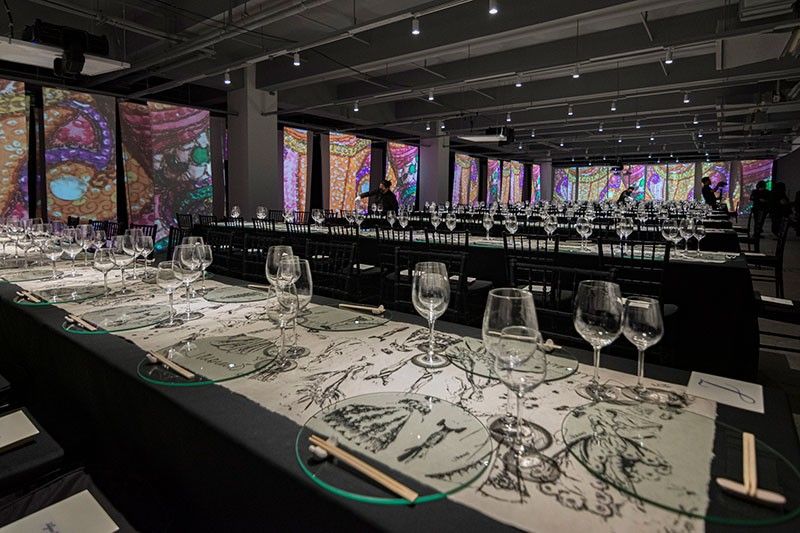
Still the talk of chic town is the beautiful, unique tablescape during the Metropolitan Museum’s tribute to Pitoy Moreno held at the BGC recently.
It was a very non-traditional setting that could only have been conceived by someone who truly thinks out of the box.
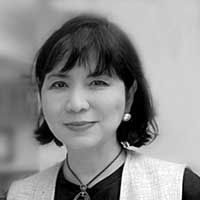
That tablescape artist is Tina Maristela-Ocampo, whose fearless creativity as a fashion model, retail maven and lifestyle tastemaker is well known — rather, legendary.
The table did not have the very predictable flowers and candles. Tina requested Kai chef Gilbert Pangilinan to use only transparent plates and glasses, so as not to block the visibility of the only centerpiece — the long table runner made of paper carrying fashion sketches culled from Pitoy’s sketchpads and archives.
The result? Guests perusing the details on the runner in between bites of the food, which was so delicious and beautifully presented as well. (Think of crab meat with roe in the shell, on top of a seemingly sculptured rectangular ice plate imbedded with tiny leaves.)
Tina teamed up with another creative, Maricris Floirendo-Brias, to achieve this. Maricris, whose family famously exports bananas, thought of a compassionate way to make use of banana tree parts: turn them into paper, thus giving employment to hundreds of disadvantaged Davaoenos.
It was clearly in Brias’ generous heart to supply and print the paper table runners with the signature of Pitoy.
To match such a setting, the UP Manila Choir sang the Hotdog song Bongga Ka Day that goes thus: “Suot mo’y gawa ni Pitoy/ Di nanggaling kay Eloy.”
The videos/speeches/images flashed onscreen were non-traditional as well, done by the Tarzeer Pictures group of Dinesh Mohnani, Enzo Razon and Gio Panlilio.

We bumped into Tina the other day and asked her to tell us the back story:
“When we began discussing how to make Pitoy Moreno relevant to future generations, I realized that my own knowledge of him was quite limited. I knew Pitoy only as the iconic designer whose favorite models I sometimes filled in for — most memorably during shows in Malacañang. That was the extent of my connection.
“But during our initial meeting, Met Museum president Tina Colayco shared something that completely reframed my view of him. I learned that Pitoy had quietly sponsored several scholars to study art at the University of the Philippines. This side of him — his generosity and commitment to nurturing young creatives — was a story that needed to be told.
“I felt strongly that this softer, more soulful side of Pitoy should be at the heart of the tribute — not just the beauty of the gowns he created, but the beauty of his heart.
“This inspired the table setting: a long, flowerless table dressed only with transparent plates and wine glasses, placed atop the paper made out of banana fiber from Tadeco, the foundation of Maricris, as the canvas for the art that they would create as a tribute to their beloved Pitoy. It was intentionally understated — a quiet yet powerful gesture. The minimalism was meant to draw focus to the works of the artists he helped, honoring the legacy he built beyond the runway.
“However, the cost and risk of having Pitoy’s art scholars’ art on the table was something we had to consider since, after all, the event was a fundraiser. So instead, we asked Maricris to print on the same banana paper all the sketches of Pitoy.”
Colayco’s co-chairs for this event — Doris Magsaysay Ho and Fe Rodriguez — put their heart and soul into this event with concept installation done by Tony Gonzales.
After this, somehow, tablescapes with the predictable flowers and candles will now look boring.
Scene & Heard
From Osaka with love
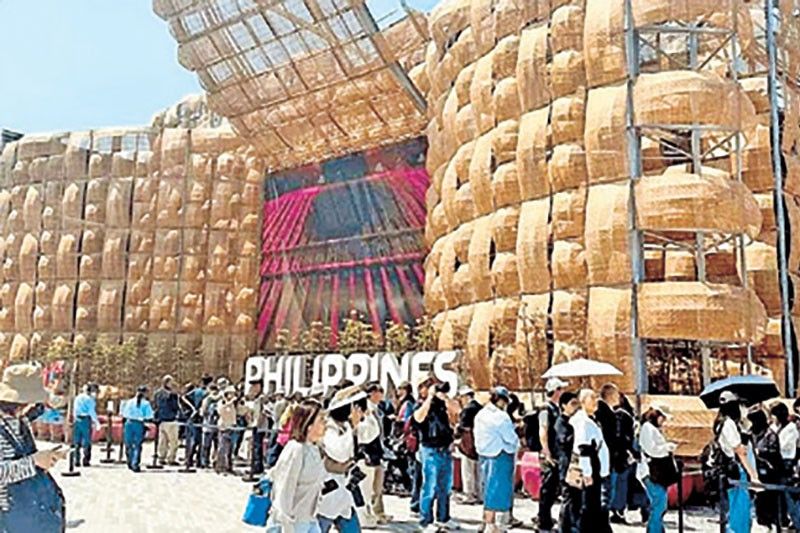
Now it can be told: The plan is to transport the Philippine Pavilion at the Osaka Expo 2025 back to the Philippines after the expo ends in October 2025. This is the result of President Bongbong Marcos and First Lady Liza Araneta Marcos’ working visit to the site, where our pavilion drew long queues and praises. Designed by Carlo Calma Consultancy, the pavilion was handcrafted from rattan by 2,331 weavers from 121 Filipino communities and is made of 874 stackable panels. Such a work of art giving respect to Philippine heritage and its weaving traditions did not escape the eye of FL Liza Marcos, who said “the plan is to put it beside the National Museum.” STAR columnist Impy Pilapil wrote that she felt profound pride upon seeing this “Woven” work of art.
Look what we found at w/17!
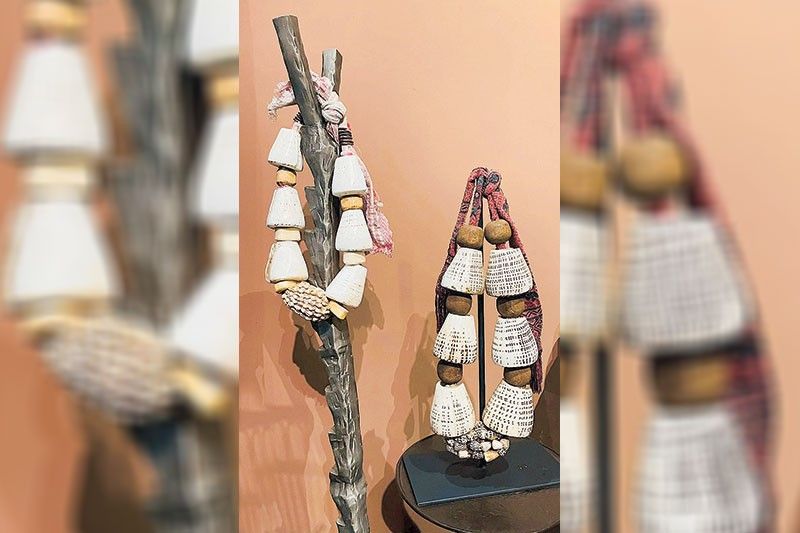
The late Pepito Albert was not only a fashion designer. He was also an interior design maven, a taste maker, a collector of all things beautiful. At the W/17 Store, we saw these African shell neckpieces by Pepito which can also be used as accent objects for the home. W/17, owned by Andy Vasquez Prada and Kaye Tinga, where Old World elegance and Asian cultural treasures combine, is located at 2241 Pasong Tamo, La Fuerza Compound in Makati.
Quote unquote: Easy riders
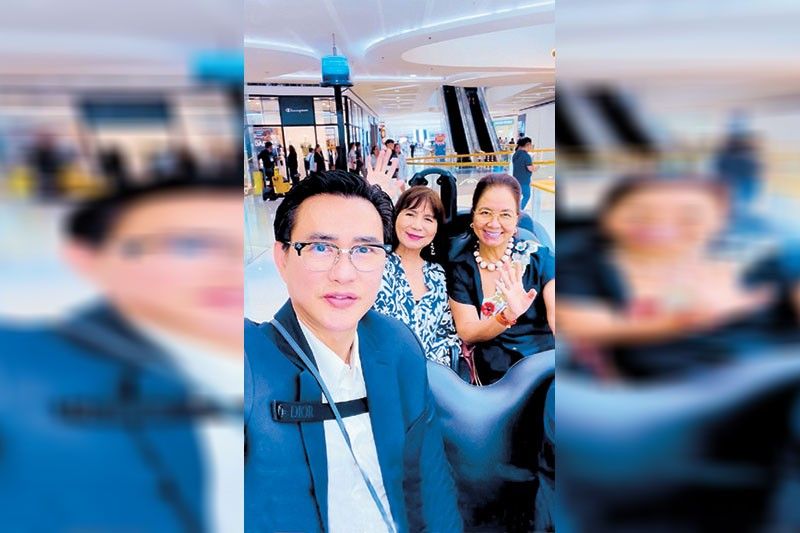
“If you enjoy what you’re doing, it doesn’t feel like work.” — SM Supermalls president Steven Tan on a rediscovery tour of the Mall of Asia with restaurateur Maritel Nievera and Millet Mananquil on a buggy car.
Loser=Winner
“Sometimes when you lose, you win.”— Javier Bardem to Brad Pitt in F1 The Movie.
Heart Aches?
Cardiologist Dr. Randy Francisco, when asked: Which causes heart attacks more: lechon or a heartache?
His answer: “Heart attacks result from a blocked artery of the heart. The most common cause is a blood clot forming during to a ruptured plaque. This forms when cholesterol deposits under the lining of the blood vessel. It is triggered by injury to the lining (smoking, drugs, uncontrolled diabetes or hypertension) or by high levels of circulating bad cholesterol (LDL or low density lipoprotein or L-echon D-e L-eche) which then facilitates the deposits of cholesterol into the blood vessels.
“Animal products are notoriously high in bad cholesterol, especially innards.
“The major identified risk factors that raise your risks for a heart attack are high sugar, high blood pressure, high cholesterol, obesity and smoking.
“Stress has been identified as a risk factor too. We don’t know how to quantify it, but basically, bad or negative stress (no friends, hate life, hate job, hate work, etc.) increases your risk, too.”
* * *
Follow the author on Instagram and Facebook @milletmartinezmananquil. Email her at milletman88@gmail.com and mmmananquil@philstarmedia.com.