ProGRESS and vape regress

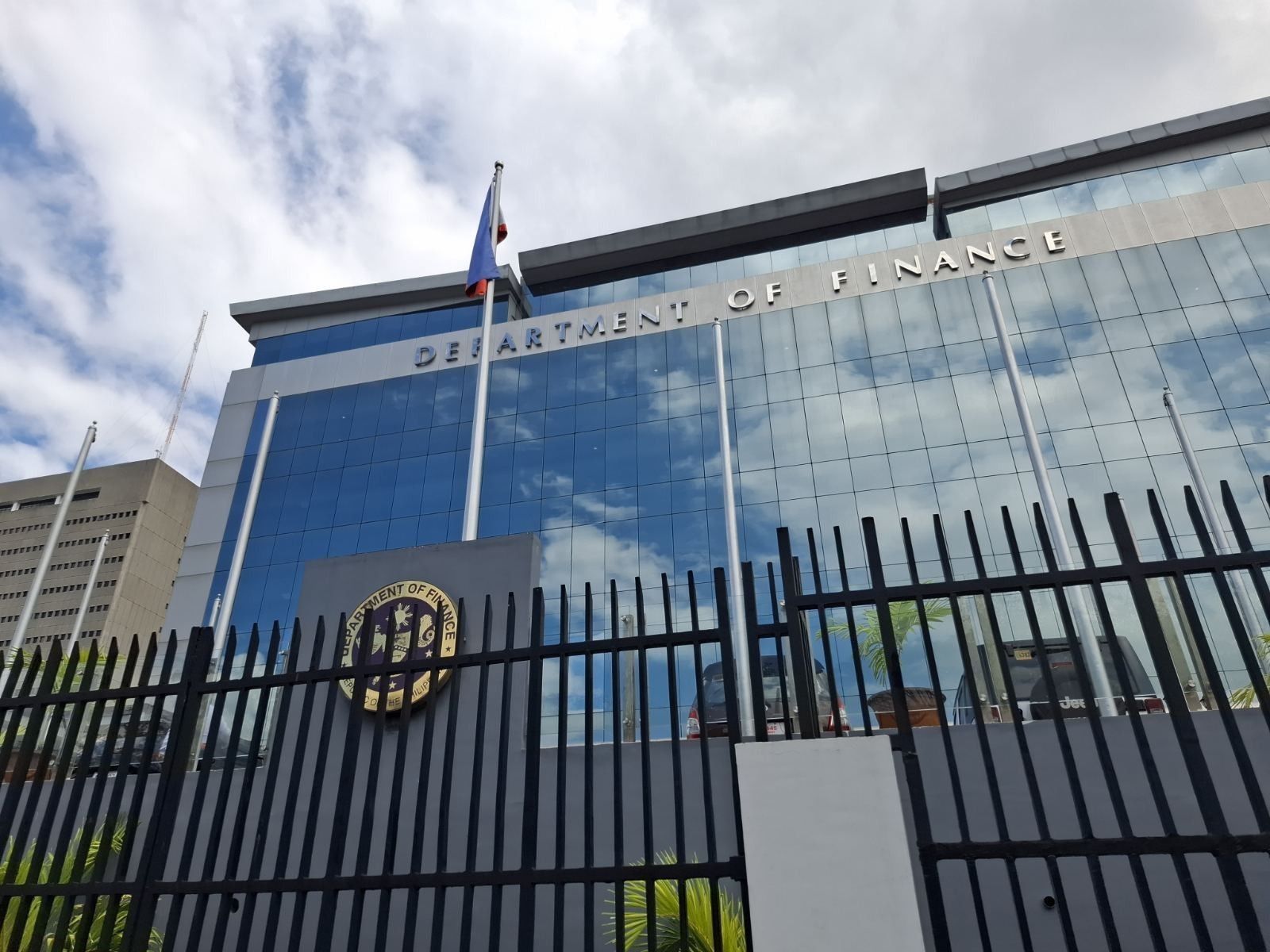
The Department of Finance (DOF) held a “Stakeholder briefing on Promoting Growth, Revenue and Equity toward Socio-Economic Sustainability (ProGRESS) Bill” on Sept. 2 at the Land Bank Plaza Hall in Manila. I was invited and attended it. Perhaps there were 400 people in the hall.
ProGRESS bill consists of three main issues: (1) Tax relief: rationalization of personal income tax (PIT) and minimum corporate income tax exemption for micro and small businesses; (2) New sin tax rates: alcohol, sugar, tobacco, plastic and (3) wealth tax: luxury vehicles (higher tier), tax on non-essential goods like private aircraft and global minimum tax.
I discussed my position on PIT and luxury vehicle tax in my column, “Looking at LGUs’ budget surplus and the ProGRESS consultation” (BusinessWorld, Sept. 3). I argued that the DOF proposed P350,000 per year income as tax-free from the current P250,000 per year should be made P500,000 per year and reduce the tax brackets from six to five.
On luxury vehicles tax, the DOF wants to add another bracket of 75 percent tax for gasoline vehicles worth over P8 million. I spoke during the open forum and argued that the DOF is wrong to grant zero tax for full EVs and a 50-percent discount on hybrid EVs. ProGRESS bill should remove such privilege but it does not. The rich’s EVs worth to P2 million-P6 million have zero tax while a small gasoline sedan worth P0.6 million is slapped 20 percent tax. This is wrong. All cars, gasoline, diesel or EVs should pay the same tax rate.
The new sin tax rates have gathered the longest discussion from stakeholders. On sugar tax, the DOF wants to raise it from P6 to P20 per liter of purely caloric or non-caloric; from P12 to P40 per liter of HFCS; remove the exemption for certain products like natural vegetable juices. People from the sugar industry in Negros, the organization of sari-sari store vendors, etc. spoke expressing disapproval or considerations.
On the vape tax, many have spoken from NGOs, academics like Joel Torres, former dean of the UP College of Business Administration and former BIR commissioner; Kim Henares, also former BIR commissioner; Joey Dulay, president of the Philippines E-Cigarette Industry Association and many more. I also raised my hand but was not called due to little time left.
I was invited and have spoken in several Senate and House committee on ways and means (CWM) public hearings this year on the e-cigarettes and vape tax. There are many doctors who spoke there and some argued for outright banning and prohibition of vapes and traditional cigarettes. Or tax these to the sky to discourage smoking and vaping. They refer to legal products only because illicit products simply fill in the gap, their prices are too low and demand simply shift there.
In the last two hearings at the House of Representatives in August, I argued that (a) it is a CWM hearing, not a committee on health hearing, so the goal is how to raise more billions for the government from vape products, not prohibitions and zero revenue for the government; and (b) the goal of the hearing is to find an optimum tax rate, not maximum tax rate, that will give more billions to the DOF, reduce illicit trade and smuggling, both outright and technical smuggling.
Currently there is dual taxation on vape products. In 2025, nicotine-salt (NS) was P57.33 per ml, Freebase was P66.15 per 10 ml or P6.62 per ml. This year, NS is P60.20 per ml and FB is P69.46 per 10 ml or P6.95/ml.
This huge gap in tax differentiation naturally leads to technical smuggling, NS products that are declared as FB so government revenue from vapes is naturally small, only P0.95 billion in 2024 and P2.54 billion in 2025.
I wanted to know the distribution of volume and revenues from NS vs FB because the DOF data did not show it, they only showed total volume removal of 265.7 million ml in 2025. So I showed some computations in my presentation at the House CWM like this formula — tax optimization and revenue maximization:
R = (t1 * v1) + (t2 * v2)
Where: R = Tax Revenue, t1 = tax rate of NS, v = volume of all vapes,
v1= (v * s1) = volume of NS, s1 = estimated share of NS;
t2 = tax rate of FB, v2 = (v * s2) = volume of FB, s2 = estimated share of FB; s2 is also an indicator of under- or mis-declaration of NS as FB, tax dodging and technical smuggling due to dual tax rate.
So, R = (P57.3 per ml x 265.7 M ml x .058 share) + (P6.6 per ml x 265.7 M ml x 0.942 share) = P2.54 billion in 2025.
The above numbers imply that at P57.3 per ml tax, only 5.8 percent of all vapes were declared as NS, and 94.2 percent of all vapes were declared as FB. Raising the tax to P70 per ml or higher as DOF and some NGOs want is courting an outright smuggling.
Now at the House CWM bills, there is consensus that the dual rate should be made single or unitary, that is good news. The bad news is that the proposed single rate is similar to the current rate: P61.43 per ml by CWM chairman Miro Quimbo, P66.16 per ml by Cong. Gatchalian and DOF’s ProGRESS proposal is P72.90 per ml, then a five percent increase every year.
Cong. Meehan and many legislators propose a P10 per ml plus five percent increase yearly. I believe this is the most optimal rate. My own computation shows at P10 per ml initial single tax rate (from P6.95 per ml FB) would give the DOF P8.4 billion in 2027, P12.3 billion at P10.50 per ml in 2028, P16.8 billion at P11 per ml in 2029, P21.2 billion at P11.50 per ml in 2030.
The goal is to find an optimum tax rate, not the maximum tax rate. The aim is to generate more revenues, not encourage more smuggling and illicit trade. The DOF’s proposal is vape revenue regress, not progress.


- Latest
- Trending