

Can you learn from scraps?

For the past two weeks, our prayer assignments have used scenes from "The Chosen." However, today’s Gospel (Matthew 15:21-28) about Jesus and the Canaanite woman has not yet been tackled by the series. One theory among its fandom is that this story is so controversial that the producers may not know how to approach it yet.
Why is this passage controversial? Jesus is particularly harsh to the Gentile woman who is only asking for help for her suffering daughter. He, at first, gives her the silent treatment: “Jesus did not say a word in answer to her.” Then this escalates into an explicit rejection: “I was sent only to the lost sheep of the house of Israel.” Finally, Jesus insults the mother: “It is not right to take the food of the children and throw it to the dogs.”
Some scholars try to explain away Jesus’ cruelty here by saying that he was just “testing” the woman’s faith. But if Jesus were “testing” the woman’s faith, I think this makes him even more cruel. If Jesus already knows he is going to heal her daughter, but decides to subject her to silence, to rejection, and then to insult, the image of God presented here is a manipulator who plays psychological games with our misery. Why would God make a mother who is already in anguish jump through humiliating hoops before granting her mercy?
It becomes even worse when some other scholars say that Jesus tested the woman to teach his disciples—and us—about faith. Is the woman then a mere visual aid or tool or prop for someone else’s spiritual growth? This is more dehumanizing than being called a dog. Is this how you see your God?
So how can we explain this scene?
What if this story is about Jesus learning more about what his mission is supposed to be? Jesus, being a Jew in the first century, would have shared the cultural and religious view that Israel was God’s chosen covenant people. He would have seen the Jews as distinct from all other nations because of their faith. But this encounter with a Gentile woman showed him that truly profound faith could flourish even outside Israel.
After hearing Jesus’ mighty words when he told us the parables about the Kingdom, we witnessed his mighty works. Two weeks ago, he fed the multitude. Last week, he walked on water. This week, was the mighty work his healing of a young girl without even touching or seeing her? I think there is an even mightier work here: Jesus learned.
Experiences of learning can be miracles. To learn something new, you sometimes have to break down walls of ignorance and move mountains of prejudice. To learn something new, you sometimes have to unlearn what you have always relied on as truth. And this involves a dying and rising again.
Three weeks ago, Jesus spoke about how the kingdom of heaven is like a net thrown into the sea that collects fish of every kind. What if the encounter with the Gentile woman made him relearn what he had talked about? God’s net is a boundless embrace that welcomes all kinds of fish.
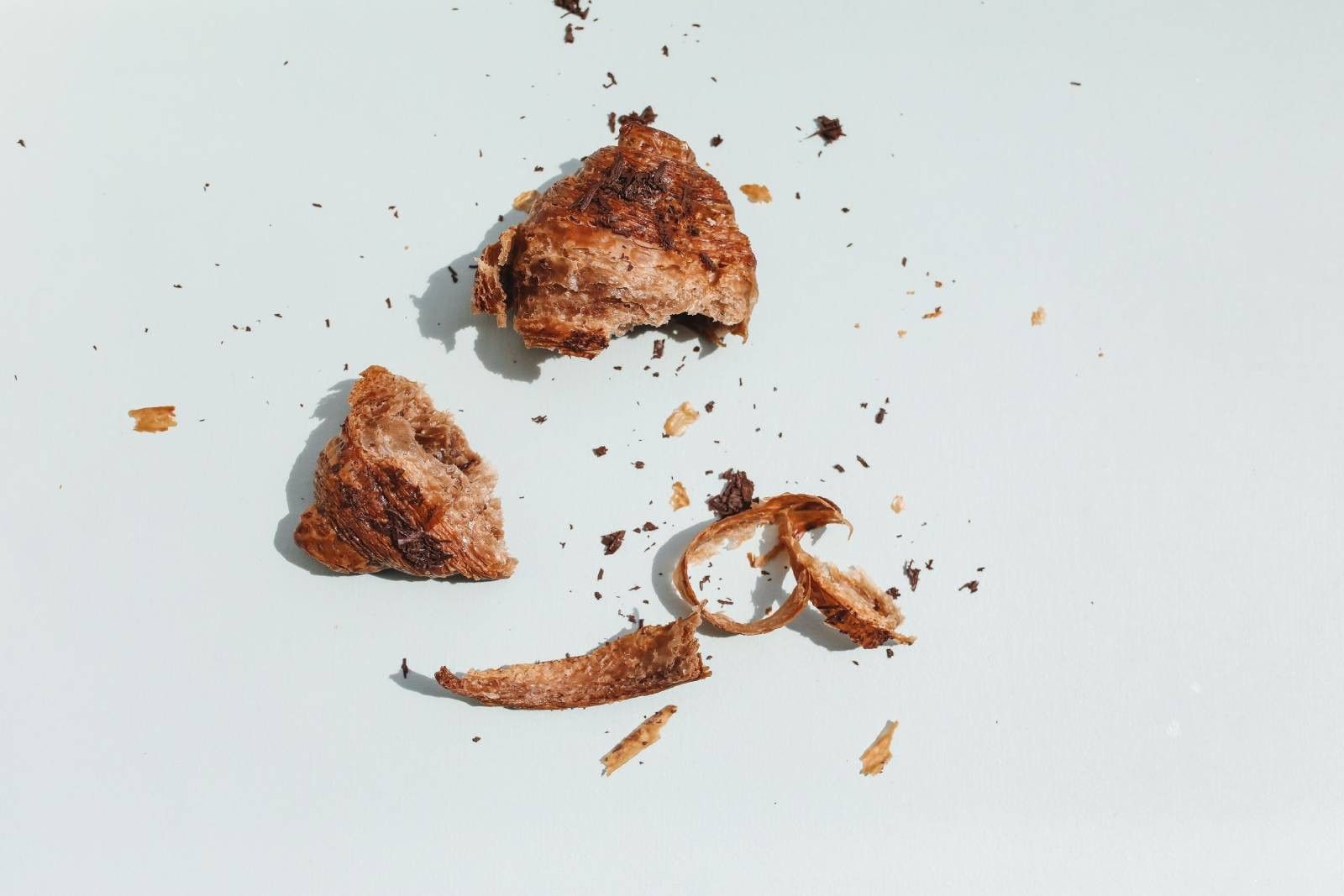
Two weeks ago, we looked deeper into Jesus’ command to gather the little broken fragments of food, the klasmat?n, the leftovers, the crumbs that would have been cast aside after the multitude had eaten. When the disciples did so and filled twelve wicker baskets from what was just five loaves and two fish, it was then that the miracle of the multiplication became manifest.
Last week, we saw Peter of little faith, oligopiste, actually get out of a boat being tossed by waves and walk on water—even for just a few steps. Our reflection was not to underestimate “little faith,” especially when it makes you cry out and cling to Jesus more.
This week, we see the power of the little again in the Gentile woman belittled by Jews, cast aside like a leftover crumb, showing great faith. What awakened Jesus to her great faith? Her words: “Please, Lord, for even the dogs eat the scraps that fall from the table of their masters.” She believed that even “scraps,” psichi?n, little morsels—if they come from the Master—can already do great wonders. In my imagination, it was the word “scraps” that turned the light on in Jesus’ head and made him see. So he let the Gentile woman into God’s net.
Your prayer assignment this week:
Gather the fragments of your experiences. Even from scraps, we can learn—as long as we have even a little faith. Yes, there are trivial annoyances you have to let go, but there are brief encounters you need to collect in your basket. Let these not go to waste.
As you gather the scraps, ask yourself this question: What have I learned recently? The last word is important. If it has been a long time since we learned something new or relearned something we thought we already knew, then maybe our pride has gotten too big. We need to be little to learn.
Let me share with you what I have unlearned recently: Hindi laging totoo na kapag gusto, may paraan; kapag ayaw, may dahilan. It is not always true that where there’s a will, there’s a way. Case in point: People with real mental health issues aren’t just nag-iinarte. Many of them want to get out of the trap they find themselves ensnared in, and yet they can’t.
It was a simple conversation that brought me to that conclusion, a short chat with someone I almost brushed aside. As I gathered the scraps of my day and realized I had found a great pearl in that fragment, the words of Rob Thomas’ “Little Wonders” snuck into my ear:
Our lives are made
In these small hours
These little wonders
These twists and turns of fate
Maybe you can listen to this song as you sift through the crumbs and see what you have learned recently.
Fr. Francis teaches Theology, Education and Scripture at both the Ateneo de Manila University and Loyola School of Theology. As a classroom teacher, he is first and foremost a student. As a professor, he sees himself primarily as a pastor.