


Marcos orders agencies to control rice prices
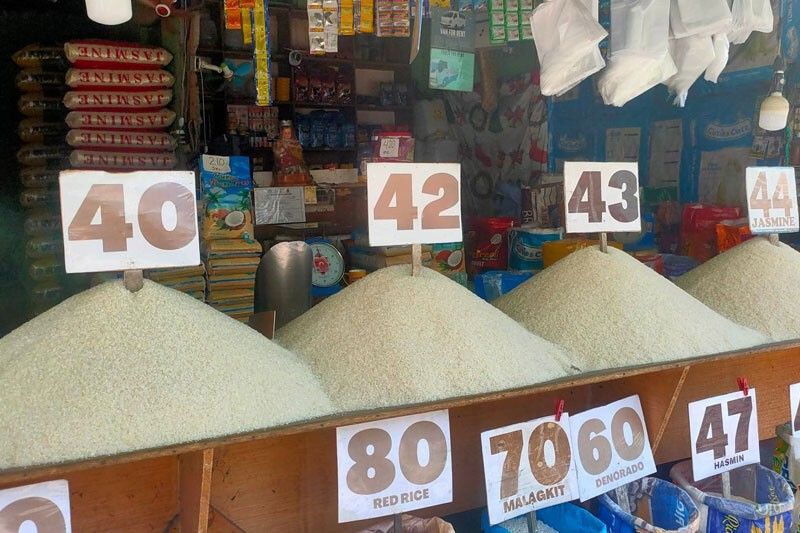
MANILA, Philippines — All available legal tools should be used to control the prices of rice and ensure that the staple is readily available to the poor, President Marcos said in an order to all agencies after a sectoral meeting at Malacañang yesterday.
In a Facebook post, Radio Television Malacañang (RTVM) said Marcos, also the agriculture secretary, had expressed concern over the price of rice although the supply of the commodity remains sufficient based on the most recent outlook by the Department of Agriculture (DA).
“The Chief Executive directs all concerned agencies to utilize the available legal tools in controlling the price of rice and make this affordable especially to poor households, as well as ensure other support mechanisms for farmers and traders alike should legal measures be invoked by the government in controlling the price of rice,” the RTVM post read.
Among the possible causes of the price hike are hoarding, the effects of consecutive typhoons namely Egay and Falcon over the past month in severely affected areas and rice-deficit regions and actions by middlemen.
The RTVM said Marcos also called on the Bureau of Customs (BOC), in coordination with the DA, to study possibilities of donating BOC-seized rice to the Department of Social Welfare and Development.
Customs Commissioner Bienvenido Rubio said Marcos has directed his agency to continue its warehouse raids to quell hoarders and illegal rice importers.
“As per the directive of our President, we will be conducting more inspections of these warehouses, and the inspection and visitation will be coordinated with other agencies like the DA and DTI (Department of Trade and Industry),” Rubio said at a press briefing yesterday at Malacañang.
“What we will do is we will validate all warehouses that are storing imported rice and then upon validation we will issue letters of authority to conduct inspection on these warehouses,” he added.
More than P31 billion worth of smuggled items have been seized since January this year, BOC data showed. The figure is higher than the P24.65 billion worth of items confiscated in the entire 2022.
Rubio said the BOC recently served three letters of authority against three warehouses in Bulacan that were supposedly used to store imported rice. The warehouses inspected by authorities were Great Harvest Rice Mill Warehouse at Intercity Industrial Complex; San Pedro Warehouse Intercity Industrial Complex and FS Rice Mill Warehouse.
The sacks of rice found in the warehouses were imported from Vietnam, Cambodia and Thailand, respectively, with an initial estimated aggregate value of P505 million, the customs chief said.
Owners and operators of the warehouses were prohibited from retrieving the goods unless they can present required documents on their rice importation.
They were given until Sept. 8 to prove they paid the necessary duties for the goods.
Rubio said cases would be filed if proven that the owners and operators of the warehouses are at fault. The customs chief could not provide details on the pending cases against smugglers but gave assurance that the BOC is working with the justice department in the filing of cases.
“We are in close collaboration, coordination with the DOJ to fast-track the filing of charges against the smugglers we apprehended and identified,” Rubio said.
Meanwhile, Bicol Saro Partylist Rep. Brian Raymund Yamsuan has filed House Bill 7970 seeking an amendment to the 31-year-old Republic Act 7581, or The Price Act of 1992, to make punishment for rice and corn hoarders and profiteers harsher.
In his bill, Yamsuan also sought the creation of an anti-rice or corn hoarding and profiteering task force in every province, city and municipality to “regularly check the inventory levels of all mills, warehouses and stock houses of rice and corn, and find out if these commodities are being hoarded.”
The measure proposes a jail term of up to 40 years to be imposed on rice and corn hoarders and profiteers “in certain instances when their illegal acts are tantamount to acts of economic sabotage.”
“One of the reasons greedy and shameless traders are bold enough to hoard rice or corn even during difficult times is that the punishment imposed on them under the law is not harsh enough,” he said in a statement.
Yamsuan added it is about time to amend the law to ensure that the “penalties remain commensurate to the crimes committed, and include other acts and practices that should be deemed illegal but not covered under this law.”
Under the measure, the hoarding of rice and corn “during or on the occasion of any calamity, disaster or any emergency declared as such by the President” shall be deemed equivalent to economic sabotage.





- Latest
- Trending


