Cesar Virata, 95
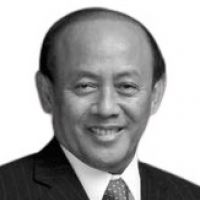
The Philippines’ foremost technocrat and first prime minister, Cesar Emilio Aguinaldo Virata, died on Oct. 2, 2026. Born Dec. 12, 1930, he was 95.
As a business and economic journalist, I covered Cesar Virata from 1970, when he was a 39-year-old finance secretary, until People Power I ousted Ferdinand Edralin Marcos Sr. and his Cabinet on Feb. 25, 1986. And on to Virata’s years as a banker at RCBC, where he served as a director since 1995, corporate vice chairman since July 2000 and senior adviser from 2007.
Cesar was very proud of being an Emilio Aguinaldo. He was, after all, the grandnephew of Gen. Emilio Aguinaldo, the youngest (at 29) and the first president of the Philippines. Aguinaldo was a killer president, blamed for the deaths of Andres Bonifacio and Gen. Antonio Luna, legendary heroes in their own right.
Cesar EA Virata was a gentle soul, a smiling face that disguised a steely will. The only times I heard him raise his voice were when someone, like me, denigrated the economy. In that light, I kept a safe but friendly distance from him.
Just like his Lolo Aguinaldo, Cesar was a nation builder. He was the fulcrum and stabilizing force during the moments of greatest peril to the republic – in 1983, after the Aquino assassination and the economic and financial crisis that crippled the country in its aftermath.
Cesar managed the tension and the battle royale between Marcos’ technocrats on one side, and Imelda and the cronies on the other.
In Cesar’s team were Harvard MBA Roberto V. Ongpin and the PhD in economics from MIT, Gerardo Sicat. Ongpin envisioned the 11 major industrial projects. Sicat presided over the fastest growth of the economy, nine percent in 1973.
Given the stakes, the turf war with Imelda and the cronies was a happy stalemate for the technocrats. The cronies got to enrich themselves, Imelda pursued her edifice complex and the technocrats managed the economy, according to critics, under the dictates of the World Bank and IMF.
Cesar served as governor for the Philippines at the World Bank, the Asian Development Bank and the International Fund for Agricultural Development. He was chair of the development committee of the World Bank and International Monetary Fund from 1976 to 1980 and chair of the board of governors of the Asian Development Bank.
As PM, Cesar became the nation’s second most powerful man, after Marcos. Imelda and the cronies, of course, did not like it. Cesar had awesome gravitas – mechanical engineering, cum laude, 1952, UP; MBA Wharton, 1953; principal, management services, SGV; dean, UP College of Business Administration.
“I will remember him not only for the many years he gave to the nation, but for the quiet dignity, discipline and sense of duty with which he lived his life,” said President Ferdinand R. Marcos Jr. He and First Lady Liza paid their final respects on Virata Oct. 7, 2026.
He was “a man who devoted many years of his life to our country and worked alongside my father in public service,” Bongbong posted on his FB.
Till his dying days, Cesar worked daily despite advancing age and weakening limbs. He walked with a cane and rode in a wheelchair after straining his leg muscles from playing strenuous tennis.
Virata saw RCBC, under Helen Yuchengco Dee’s stern grip, rise to become the fifth largest private domestic bank.
Cesar was audacious for his quiet humility and huge integrity. He told me he had to work daily, furiously even when he was already past 80, “because I did not enrich myself.”
Virata served Marcos for 19 years, 16 of them as finance secretary/minister and concurrently, two years as prime minister.
He led the coterie of technocrats that served Marcos, providing him the aura of competence and patina of can-do visioning. Cesar was the soft and legitimate face of strongman rule. The technocrats helped Marcos in envisioning that “this country can be great again.” Marcos’ “This Nation Can Be Great Again” slogan, or the Great Again New Society, antedated MAGA by half a century. After all, in the 16th century, the Philippines had defeated the world’s then greatest naval power, Spain, in the 1521 Battle of Mactan, where Magellan was cut to pieces.
Though he was in charge of state revenues and massive foreign borrowing, Cesar, the management wizard, left government in the same state of personal finance he had when he joined it – with not much money.
Rare are professionals who join the government aiming to do good for the people and end up as poor as they were on Day One of public service. Most end up doing good for themselves, leave government as veritable mega-millionaires, if not as tycoons. Not Virata.
Virata’s first job, post-Marcos era, was one he knew best – management consultancy. Thus was born C. Virata and Associates. Later on, he would become a full-time banker, as vice chairman of taipan Alfonso Yuchengco’s RCBC.
Virata’s “accumulated experience in government policymaking had provided him with important insights into the processes of the government; private companies trying to understand how to deal with the government would therefore find his advice relevant,” writes noted US-educated economist Gerardo P. Sicat, in a book on Virata.
For four decades, Sicat relates in his book, Virata “was an active young professional, engineer, business professor and educational administrator, later secretary/minister of finance and, finally, prime minister. As finance minister, his role was that of a government technocrat helping to manage national financial and economic affairs.”
A business professor, college dean, engineer and management expert, Cesar emerged as the most prominent technocrat during the presidency, 14 under martial law, of Marcos Sr. Cesar rose to prime minister in the parliamentary government. Thereafter, he returned to the private sector as a banker, respected citizen and community leader, and senior statesman.
* * *
Email: [email protected]





- Latest
- Trending