


Can the Bataan Nuclear Power Plant run? The body that decides on its fate
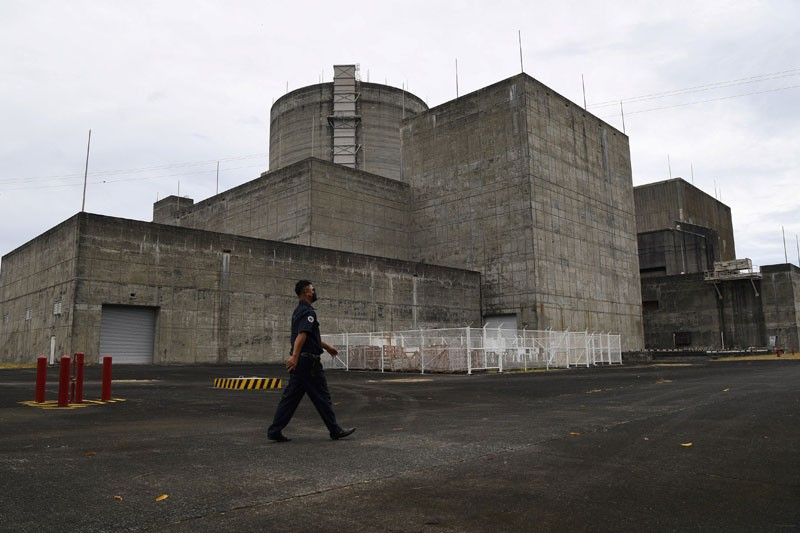
MANILA, Philippines — The Bataan Nuclear Power Plant will only be rehabilitated if the Philippine Atomic Energy Regulatory Authority (PhilAtom) deems it safe, the Philippine Nuclear Research Institute (PNRI) said.
Speaking at a press conference, PNRI Director Carlo Arcilla said PhilAtom was created to provide the Philippines with an independent nuclear regulatory body, similar to those in other countries.
“Requirement po ng maraming bansa na nagbebenta ng nuclear. ‘Pag wala kang independent regulatory, hindi sila papasok. Bakit? Kasi ‘yung PhilAtom helps guarantee safety,” he said on November 13.
(It’s a requirement in many countries that sell nuclear technology. If you don’t have an independent regulatory body, they won’t engage with you. Why? Because PhilAtom helps guarantee safety.)
Nuclear power by 2032
PhilAtom was established through Republic Act 12305, or the Philippine National Nuclear Energy Safety Act, when it was signed by President Bongbong Marcos in September.
The measure seeks to serve as a framework for the safe and peaceful application of nuclear technology in the country, especially as the government plans to achieve 1,200 megawatts of nuclear energy output by 2032.
Arcilla stressed it would be PhilAtom’s responsibility to guarantee that nuclear power plants built in the country are constructed and operated properly, with two inspectors stationed in the plant.
“So ibig sabihin, hindi tatakbo ang planta hangga’t hindi maayos. Sino ang magsisiguro niyan? ‘Yung regulator po, si PhilAtom,” he said. (So this means the plant won’t operate until it’s properly ready. Who will ensure that? The regulator, PhilAtom.)
No license if unsafe. Simply put, the Bataan Nuclear Power Plant will only receive a license if it meets safety standards, a move Arcilla said reflects the PNRI’s principle that “an accident anywhere is an accident everywhere.”
“Hindi papayagang tumakbo ‘yan kung hindi maayos ang pagkakagawa. ‘Yan po ang kagandahan kung mayroon kang independent nuclear regulator,” he added.
(It will not be allowed to operate if it is not properly built. That’s the advantage of having an independent nuclear regulator.)
Mothballed plant. The Bataan Nuclear Power Plant, the nation’s sole nuclear facility, was constructed under the administration of the late dictator Ferdinand Marcos Sr. in 1976. It was completed in 1984 and designed to produce 621 megawatts of power.
After safety concerns, the Chernobyl explosion and Marcos Sr.’s ouster, the Bataan Nuclear Power Plant never began commercial operations and has remained dormant since.
Critics and experts have since argued that its proximity to a major fault line would put the power plant and the communities around it at risk of earthquakes. A probe also uncovered over 4,000 defects in construction, design and the radioactive waste management system.
Who would operate it?
Westinghouse Electric Co. built the reactor for the Bataan Nuclear Power Plant at a cost of $2.3 billion.
The project later became controversial, as Marcos Sr. and his associates were reported to have pocketed millions from the deal despite the government receiving lower bids from other manufacturers.
Filipinos only finished paying for the Bataan Nuclear Power Plant in 2007, roughly 32 years after its construction, even if it was never put to use.
Arcilla explained that Westinghouse’s involvement in the rehabilitation would depend on contractual arrangements. If South Korea, now conducting a feasibility study on the Bataan plant, becomes the operator, it would have to contest or coordinate with Westinghouse.
Meralco has also expressed interest in reviving the Bataan plant, saying it would be the "quickest route" for the Philippines to adopt nuclear power.
RELATED: Philippines, South Korea firm ink deal for Bataan nuclear power plant study | Meralco eyes rehab of Bataan nuclear plant
Arcilla, however, said there really is no assurance about who the operator would be, given that they would be liable for the license, safety and supply of the Bataan Nuclear Power Plant.
The PNRI chief maintained that reviving the Bataan plant offers the most cost- and time-efficient path to nuclear power, with a projected $30 million price tag and four-year timeline.
Risk warnings
Environmental advocates like Greenpeace, however, said the new nuclear energy measure cannot fully prevent accidents.
They stressed that fueling and operating the Bataan plant would be more expensive compared to funding renewable energy sources, which are deemed safer and cleaner.
The Department of Energy is currently developing policy frameworks and incentives to encourage private investment in the country’s first commercial nuclear power plant and aims to accept project proposals by 2026.





- Latest

