

To protect backyard industry: Cebu sets hog prices
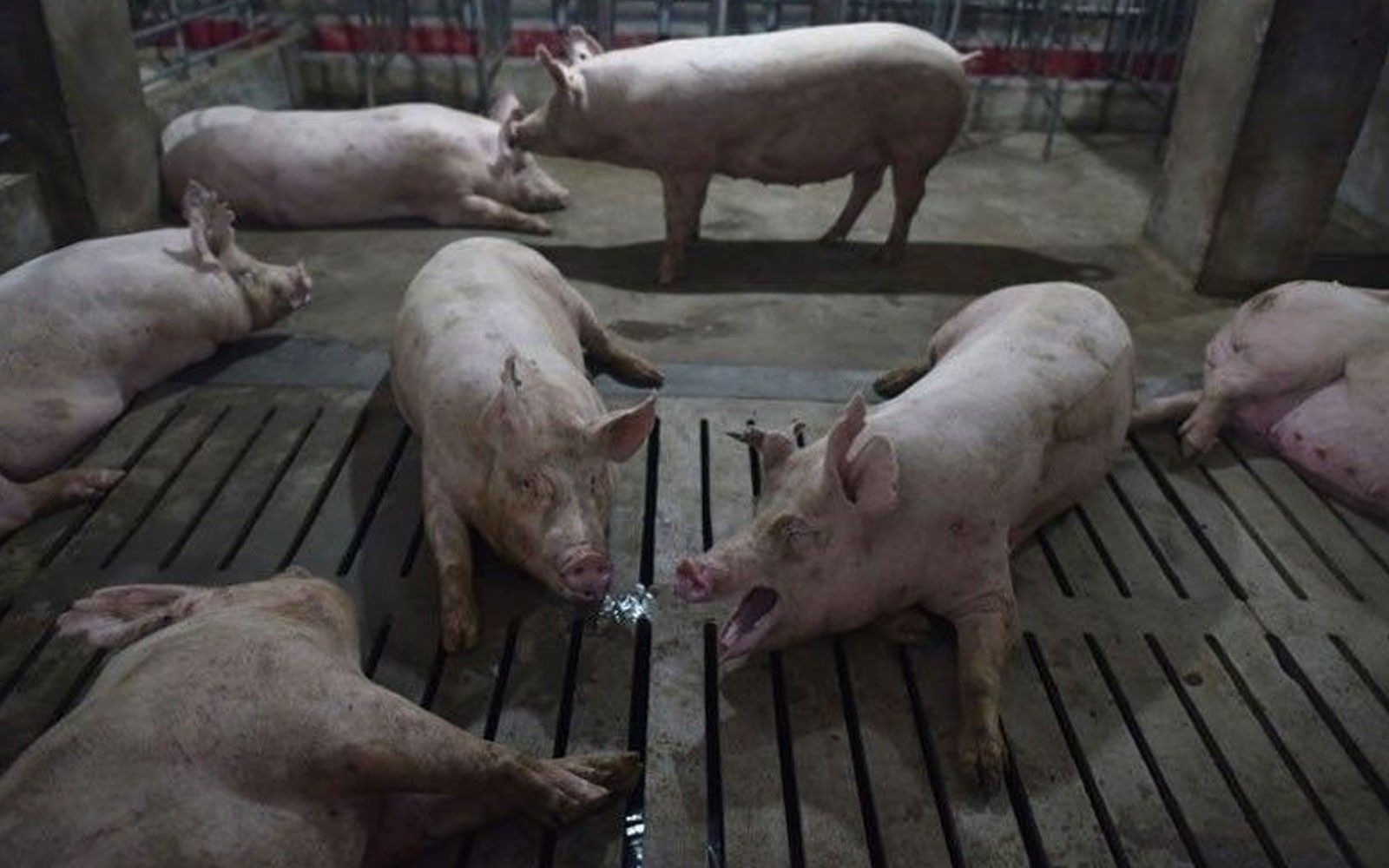
CEBU, Philippines — With farmgate prices of live hogs reportedly dropping to as low as ?105 per kilogram in some areas, the Cebu Provincial Government has adopted recommended price references to help protect local raisers from mounting losses.
Executive Order No. 61, Series of 2026, signed by Governor Pamela Baricuatro on Wednesday, November 25, establishes the Cebu Hog Industry Market Stabilization and Buy Local Program, which also encourages lechon producers and other buyers to prioritize hogs raised in the province.
The order followed consultations with local hog raisers who raised concerns over declining farmgate prices, rising production costs and competition from outside supplies.
Baricuatro said the Capitol would prioritize backyard hog raisers whose livelihoods have been affected by the market situation.
"Let me be clear na atong priority ang atong Sugbuanong backyard hog raisers," she said.
She said the provincial government had met with raisers and would continue to address their concerns.
Under the order, the province adopted recommended reference prices for live hogs, piglets and selected pork products to guide market transactions and monitor price movements.
For live hogs, the recommended prices are ?250 per kilogram for animals weighing 20 to 30 kilograms, ?240 for those weighing 31 to 40 kilograms, and ?230 for hogs weighing 41 to 50 kilograms.
For hogs weighing 60 kilograms and above, the suggested price ranges from ?180 to ?190 per kilogram.
Newly weaned piglets are priced at ?3,500 to ?4,500 per head, subject to periodic review based on market conditions, production costs, animal health and supply and demand.
For pork carcasses weighing 79 kilograms and below, the recommended price is ?230 to ?250 per kilogram.
Suggested prices for selected cuts range from ?280 to ?330 per kilogram for boneless pork, belly and regular pork; ?240 to ?290 for ribs and trotters; and ?250 to ?300 for pork chops.
The price guide also covers pork mascara, bakagan, bones, and pork head and trotters.
However, the executive order clarifies that the reference prices are advisory and intended as benchmarks for market monitoring, price analysis, consumer information and policy formulation.
Baricuatro stressed that the Capitol could only recommend prices, while enforcement would be up to the concerned local government units (LGUs).
"Let me remind everyone also na the Capitol can merely recommend. We cannot really implement, no? Kay LGUs man ang concerned. So we can only recommend," she said.
She cited Tabuelan and Daanbantayan as among the LGUs that had issued executive orders on hog prices, urging other municipalities and cities to adopt similar measures.
"So I urge the other LGUs also to do the same, no? To actively make EOs regarding the prices and the supply of pigs," she said.
The provincial government said consultations revealed that farmgate prices in some areas had fallen to ?105 per kilogram of live weight, threatening the sustainability of local hog production.
The order noted that feed accounts for 60 to 70 percent of the total production cost of market hogs, making raisers vulnerable when selling prices fall below sustainable levels.
It also cited the entry of live hogs from outside Cebu despite adequate local supply, as well as the growing presence of imported and frozen pork products.
Buy Local
Aside from the price references, EO 61 encourages lechon producers, traders, consolidators and other buyers in Cebu to prioritize hogs from registered local farmers before sourcing from outside the province.
The Provincial Agriculture Office, through its AgriLink marketing platform, will facilitate direct market access for local raisers by linking them with institutional buyers, traders, cooperatives, lechon processors and other prospective purchasers.
The program aims to strengthen the competitiveness of locally produced hogs while maintaining pork availability and affordability.
According to the order, Cebu has a pork sufficiency level of 134.71 percent, based on Department of Agriculture-Central Visayas data, indicating that local producers can supply more than the province's requirements.
The province's hog industry is estimated to be worth ?20 billion and supports thousands of farmers, farm workers, traders, meat processors and other stakeholders, Provincial Veterinarian Dr. Mary Rose Vincoy said.
Vincoy said the province had been addressing industry concerns since last year, particularly African swine fever (ASF), market instability and rising production costs.
She said the Capitol had strengthened border controls, intensified disease surveillance and containment, and continued consultations with hog raisers.
"Fair farmgate prices, lower feed costs, and stable pork prices are our next priorities," Vincoy said.
Among the measures was the amendment of the provincial ASF ordinance in December 2025 to align local policies with Department of Agriculture and Bureau of Animal Industry regulations.
The province also launched a hog surveillance program to help raisers obtain recognition for active ASF monitoring and gain access to markets outside Cebu. Vincoy said 24 LGUs had received such recognition from the Bureau of Animal Industry.
The Capitol also issued executive orders tightening restrictions on live hogs and pork entering the province from ASF-affected areas, while strengthening seaport inspections and farm biosecurity.
Vincoy said the province had responded to ASF cases in Ginatilan and Samboan through quarantine, testing and containment operations, with teams deployed immediately after positive results were reported.
The provincial government had also met with hog raisers, the Cebu Hog Raisers Association, feed millers and government agencies to discuss possible feed subsidies, discounts and other measures to reduce production costs.
The Capitol is also considering a long-term protective ordinance and the creation of a hog industry advisory council to improve coordination among government agencies and industry stakeholders.
Baricuatro said EO 61 serves as the province's initial recommendation to stabilize the hog market, while discussions with the Department of Trade and Industry and other concerned agencies continue on additional interventions. — (FREEMAN)








- Latest