Engaging China
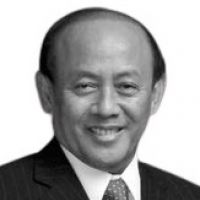
Early last month, at Ateneo, a retired Singaporean diplomat and scholar, Kishore Mahbubani, 78, tackled an issue which he said “is an extremely difficult topic,” torn as he was with being diplomatic and being “honest with all of you (the audience).” He was invited by businessman Robert Kwan Laurel to discuss the topic: the Philippines and China.
“We are now living in one of the most dangerous times, especially in geopolitics,” Mahbubani warned his audience. He then proceeded ways to navigate the danger by presenting five messages:
1. We are now living, obviously, in a time of great power transition. Times of great power transition are very difficult.
2. The US-China contest is the biggest contest of our time.
3. International law will not help you very much.
4. All of us should study Ukraine very carefully. Ukraine is what happens when you don’t understand great power transitions.
5. Other countries face dangers too. And so we’re not alone in having these difficulties.
“The country that should know best the dangers of great power transition is the Philippines,” noted Mahbubani. The Philippines was colonized by Spain in 1565. In 1898, 333 years later, Spain ceded the Philippines to the US. The Philippines became an American colony. In the 1890s, when the US emerged as a great power, it decided to take over territories. “Our world of 2020s is now very similar to the world of 1890s,” says the Singaporean prof.
With Roosevelt, the US declared war on Spain, acquired Puerto Rico, Guam and the Philippines, threatened Germany with Britain in war unless they agreed to settle disputes on American terms, supported an insurrection in Colombia to create a new country, Panama, in order to build a canal, and declared itself the policeman of the Western Hemisphere, exerting the right to intervene whenever and wherever it judged necessary. Thus, in the 1890s, a great power emerged and said, “I will now do what I want to do.”
Mahbubani says “we are now, for the first time since the 1890s, in 130 years, experiencing a new situation where the US believes that there is now a power that can challenge American power.” China. “Whenever a new emerging power begins to challenge the established power, which today is China challenging US, the established power pushes down the emerging power, which is China.”
However, there are other dimensions in a great power contest. In US-China, it’s the cultural dimension, “the fear of the yellow peril. And the fear of the yellow peril has existed in the Western imagination only for 800 years since the Mongols almost conquered Europe.”
“This fear is real and that’s why Mr. Robby Kwan Laurel got punched in the face in Manhattan. It’s the fear of the yellow peril.”
“It’s real and it adds an emotional dimension to the contest, which makes it very difficult for everyone else,” says Mahbubani. “And then there’s an ideological dimension.”
With the visits of President Trump to Beijing and President Xi to Washington DC recently, the relationship is now very calm. “But in geopolitics, the calm never lasts. Get ready. Something surprising will happen and the contest will continue.”
In the case of the Philippines, can it rely on the UNCLOS (UN Convention on the Law of the Sea) Law to protect itself? Mahbubani asks.
Answer: No. “The reality is that Western countries apply international law very selectively.” Power decides outcomes of conflicts and agreements.
Mahbubani’s advice to Manila: “Be careful: You don’t have history on your side. At the end of the day, power is what drives international relations and you must always recognize changes in power. Because if you don’t, you become a Ukraine.”
Laments Mahbubani: “We have seen so many proxy wars in our times, and people don’t learn the lessons of proxy wars. If you’re not careful in geopolitics, you become the battering ram for somebody else’s interests.”
Which is why, explained the veteran diplomat, “the ASEAN countries collectively have wisely said that in the US-China contest, we’ll be friends with the United States, we’ll be friends with China and we won’t take sides. And it’s wiser not to take sides for the ASEAN countries. And this is what several leaders have said.”
In 2019, then Prime Minister of Singapore Lee Hsien Loong noted:
“All of the US allies in Asia, including Japan, South Korea, the Philippines, Thailand and Australia, as well as many of his friends and partners, including Singapore, have China as their largest trading partner. They all hope that the US and China will resolve their differences. They want to be friends with both to nurture security and economic ties to the US as they grow their business links with China.”
In case of a China attack on the Philippines, Mahbubani frets, “there will be a clear chance that Australia will face direct attack from Chinese long-range forces.”
Hugh White, another former Australian ambassador to China, says, “in view of our unique position, we must avoid becoming, as we have done recently, a cheerleader for either side (he meant US or China). Our interests clearly are in the continuing emergence of a strong, confident China. We need the ongoing US presence and we must be helpful to both US and China.”
In my 57 years of journalism, I learned a phrase very useful in conflicts and tensions: constructive engagement.
Constructive engagement, says AI, is a helpful, positive approach to communication or diplomacy that aims to improve a situation, solve a problem or build a working relationship rather than cause conflict.
* * *
Email: [email protected]






- Latest
- Trending