The case for a Northeast Asian dialogue: A resiliency framework for First Island Chain
The First Island Chain is emerging as a single strategic theater whose stakeholders confront common security and economic challenges that no state can effectively manage alone. Can these challenges compel the Philippines, Japan, South Korea and Taiwan to explore new mechanisms of cooperation to strengthen their individual and collective resilience?
During the Pilipinas Conference 2026, hosted by Stratbase ADR on November 20, one panel looked at opportunities for practical cooperation between the four middle powers. They considered maritime domain awareness, exercises and interoperability, logistics, sub-sea infrastructure protection, cyber and information resilience, and defense industrial cooperation.
Before looking at new ways of cooperation, consider the complexities and uncertainties of the emerging world order:
- A possible modus vivendi between Trump, Xi Jinping and Putin as international relations shift from the “rule of law” to a “might is right” paradigm, much to the consternation of middle and small powers;
- A coalition between China, Iran, Russia, and North Korea (CRINK) that allows conflicts in Europe and the Middle East to fester despite US and allied efforts to contain them;
- Xi Jinping salivating over Taiwan as China’s maritime ambition seeks to break out from the First Island Chain towards the mid-Pacific;
- Trump’s attempt at “economic containment” of China through attacks on Venezuela and Iran, complemented by diplomatic pressure over the Panama Canal and Greenland;
- A US Navy with diminishing battleforce numbers and difficulty restoring domestic shipbuilding capability, placing the People’s Liberation Army Navy (PLA-N) and China’s other maritime forces at an advantage in the Western Pacific; and
- A fragmented ASEAN that attests to the efficacy of China’s geoeconomic strategy in Southeast Asia and its disruptive influence through proxies within ASEAN.
These developments create security problems that no single middle power can address alone.
Geography creates common interests among the four states. They sit astride critical maritime corridors such as the East China Sea, South China Sea, Taiwan Strait, Luzon Strait, and Miyako Strait.
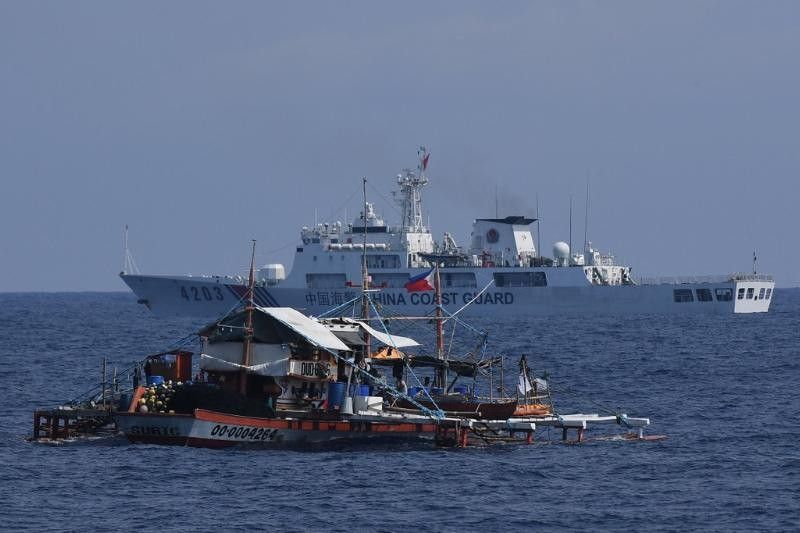
China creates common incentives for cooperation. The Philippines suffers from China’s coercive behavior in the West Philippine Sea, affecting the country’s energy and food security. Japan has to fend off China’s claims on the Senkaku Islands. South Korea’s proximity to North Korea and economic exposure to China render it the most vulnerable to retaliation. Taiwan bears the brunt of cross-strait tensions instigated by Beijing.
These circumstances make the case for minilateralism as a practical mechanism for cooperation. Examples include the Five Power Defence Arrangements (FPDA), Malacca Strait Patrols, TCA-INDOMALPHI and Quadrilateral Dialogue (QUAD), alongside newer arrangements such as AUKUS, SQUAD, the US-Japan-South Korea trilateral and US-Japan-Philippines trilateral. Minilateralism allows states with shared interests to come together, offers greater flexibility than formal alliances, permits faster decisions, and measures success through practical outcomes. If it is becoming the region’s preferred instrument of cooperation, could a similar framework be developed among the Philippines, Japan, South Korea, and Taiwan?
Situated within a single theater of operations, these four middle powers have compelling reasons to establish a minilateral arrangement or Northeast Asian dialogue. Such an arrangement could address defense and maritime security along the First Island Chain. A hub could be built around emerging Philippine-Japan defense cooperation under the Reciprocal Access Agreement (RAA) and Tokyo’s Official Security Assistance (OSA) program. This would involve at least an information-sharing protocol, but could extend to intelligence fusion, an informal combined coordinating structure, or a kill-web comprising missile and drone batteries across adjoining archipelagos.
A Northeast Asian Dialogue could also be a resilience framework rather than purely a defense arrangement. Borrowing a page from the Chinese Communist Party’s (CCP) playbook, it could adopt a geoeconomic approach: pursuing economic initiatives to attain political objectives while mindful of collective vulnerability to Beijing’s economic coercion, concentrated supply chains, and energy security challenges. Together, they could mitigate these concerns through supply-chain diversification.
Japan leads in advanced manufacturing, South Korea excels in electronics and digital innovation, while Taiwan, of course, has its semiconductors. The Philippines has an emerging digital economy and strategic geography.
The Northeast Asian Dialogue could also foster cooperation in maritime governance.
Such an undertaking has challenges and constraints. Politically, they must manage relations with China, domestic transitions, and historical tension between Japan and South Korea. Operational challenges include limits on intelligence-sharing, legal constraints, and institutional coordination. Strategically, there is the risk of perceptions of containment and bloc polarization. China could confront Taiwan through a maritime blockade, sustained air incursions, or non-kinetic attacks. But excluding Taiwan creates strategic gaps for the other three middle powers because of its geographic centrality, semiconductor industry, and the regional spillover of any crisis on the island state.
This arrangement could offer several benefits. In regional security, it could enhance deterrence, improve maritime awareness, and promote capacity-building, especially for the Philippines. Economically, it could increase foreign direct investment, access to advanced technologies, and opportunities for integrated supply chains. Diplomatically, it could expand strategic options and reinforce ASEAN through complementary mechanisms.
A convenient way to jump-start a Northeast Asian Dialogue is through Track 1.5 and Track 2 forums to generate interest and inspire confidence. Other approaches include think-tank cooperation and academic exchanges, low-hanging fruits that could be established with little regional resistance. The next phase could encourage functional cooperation through maritime information-sharing, coast guard activities, and cybersecurity exercises. In the last phase, the arrangement could be institutionalized through periodic ministerial consultations, working groups for distinct concerns, and a formal strategic resilience framework.
The question is no longer whether these four states share common interests, but whether they can transform those interests into a durable framework for collective resilience before regional crises force the issue. Their emerging strategic intersection reflects a broader reality: Indo-Pacific security is increasingly indivisible. Developments in the Taiwan Strait, East China Sea, South China Sea and Luzon Strait are no longer separate issues but components of a single strategic theater. A pragmatic minilateral arrangement would not constitute a military alliance. Instead, it would serve as a resilience and security network addressing maritime security, economic coercion, technological vulnerability, and humanitarian contingencies while reinforcing a stable regional order.
---
RADM Rommel Jude Ong is a non-resident fellow at the Stratbase Institute and professor of Praxis at the Ateneo School of Government. He retired in 2019 as vice commander of the Philippine Navy.


- Latest