


The P20 rice challenge: Delivering relief, building resilience
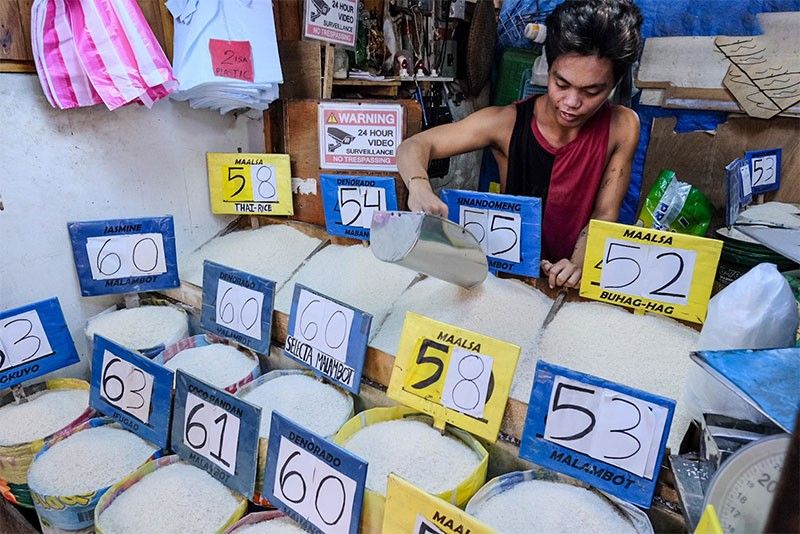
The fulfillment of a campaign promise can be seen as the cornerstone of a president’s legacy. It signals not just political will, but the ability to deliver results.
In the case of President Ferdinand Marcos Jr., his commitment to bring rice prices down to P20 per kilo—once met with both hope and skepticism—has partially materialized. In select areas, through the support of government subsidies and inter-agency cooperation, P20 rice is now a reality. But the deeper question remains: at what cost, and for how long?
During the 2022 presidential campaign, then-candidate Marcos presented an ambitious vision of food affordability. The country, still recovering from the socio-economic devastation of the pandemic, was grappling with inflation, food insecurity, and weakened supply chains.
Against this backdrop, the promise of P20 rice resonated. His plan included buying directly from farmers, combating rice cartels, offering fertilizer subsidies, establishing government-owned storage facilities, and reviewing the Rice Tariffication Law (RTL). It was, in many ways, a holistic blueprint—at least on paper.
Fast forward to 2025, the promise has come to fruition; albeit in limited form and heavily propped up by billions in public subsidies. The program—rolled out in collaboration with local government units, the National Food Authority (NFA), and the National Irrigation Administration (NIA)—offers rice at P20 per kilo to select communities.
It is being lauded as a milestone achievement. Yet, beneath the surface lies a fundamental dilemma: can this artificial relief for a permanent problem be sustained without unintended consequences?
Critics argue that while this move benefits consumers, it could hurt the very sector it intends to support—Filipino farmers. The government’s push to keep rice prices low is seen by some as distortionary, potentially pulling down farmgate prices and crowding out local producers. In a bid to ease the burden of inflation, are we transferring the weight to the shoulders of our farmers?
Data from the Philippine Statistics Authority (PSA) presents a mixed picture. While farmers’ production costs per kilo of palay rose to P14.52 in 2024 (from P13.54 in 2023), net returns per kilo also slightly improved.
Farmers earned P0.61 for every peso invested last year, up from P0.47 in the previous year. These figures suggest resilience—but only under current market conditions. Introducing P20 subsidized rice at scale could tip this balance, unless farmers themselves are shielded through comprehensive support systems.
The implementation of the Rice Tariffication Law (RA 11203), which liberalized rice imports and stripped the NFA of its regulatory powers, is now under renewed scrutiny.
Sen. Kiko Pangilinan has called for a thorough review of the RTL, pointing to its failure to significantly lower consumer prices and its potential role in suppressing local palay prices. He also seeks to reexamine the NFA’s capacity to intervene in the market—a tool that may be necessary in ensuring food security amid unpredictable global commodity trends.
This brings us back to the heart of the debate: is the P20 rice initiative a lasting solution or merely a political maneuver to fulfill a campaign promise?
The president, in his recent podcast, affirmed that the program is sustainable and will last until the end of his term. But when we talk about sustainability, do we mean only until 2028—or beyond?
True sustainability demands that we go beyond subsidies. It requires strengthening the local agricultural industry and investing in its long-term viability. That means improving post-harvest infrastructure, investing in climate-resilient technologies, reforming extension services, addressing logistical bottlenecks, and addressing systemic issues such as hoarding, profiteering, and cartel-driven market distortions.
But sustainability is not just about stabilizing prices—it is about empowering the very people who produce our food. When we talk about sustainability, we must talk about strengthening farmers and communities, not merely managing costs at the expense of resilience.
The Department of Agriculture, for instance, carries a dual mandate: support both farmers and consumers. But these interests often collide. Farmers want higher prices for their produce; consumers want food affordability. Navigating this tension requires institutional reform, not just budget injections.
Moreover, the focus must shift from mere production support to a value-chain approach. Seeds, fertilizers and mechanization matter, but so do post-harvest facilities.
A pillar of a resilient food system – an improved and accessible post-harvest facility. Price ceilings and emergency subsidies might offer temporary relief, but they do not address structural inefficiencies that keep Philippine agriculture uncompetitive.
So, we return to the question: Is achieving P20 rice a symbol of fulfilled promise, or a symbol of short-term political calculation? It may be both. It is a commendable effort to ease the burden of the poor—but if it lacks a long-term framework that prioritizes both farmer welfare and supply chain modernization, it risks becoming a hollow victory.
As the administration moves forward, it must ask: what does a truly resilient food system look like? Does it mean rice is affordable today, only to be scarce or imported tomorrow? Or does it mean farmers are thriving, resilient supply chain, and Filipinos are food secure—not just during one president’s term, but for generations?
In the end, the answer lies in moving past the politics of subsidy and toward the politics of empowerment. Because only when we strengthen our agricultural foundations can promises, like P20 rice, go from immediate relief to sustainable resilience.
Alyssa Minette Deuna is senior research manager at think tank Stratbase Group and is also the secretary general of the Philippine Business for Environmental Stewardship (PBEST).


- Latest


