Lacson challenges Marcos' Iran reason for economic slowdown

MANILA, Philippines — Sen. Ping Lacson rejected President Ferdinand Marcos Jr.'s attempt to trace the Philippines' economic difficulties entirely to the Iran conflict, pointing to faster growth in other Southeast Asian countries.
"With all due respect Mr. President, blaming the US-Iran conflict will not suffice. Our ASEAN neighbors face the same oil-price pressures, yet Vietnam's GDP rises to 9.95%, Indonesia is steady at 5.47%, Singapore and Malaysia with 5.4% and 5.3% respectively," Lacson said Sunday, November 22.
The Philippine economy, in comparison, grew by 2.1% in the third quarter, slowing from 2.4% in the previous three months, according to the Philippine Statistics Authority.
Lacson was responding to Marcos' defense of his economic managers after the senator urged the administration to reassess their performance.
"All the difficulties we're going through can be clearly directly traced to the war in Iran," Marcos said November 20 at a press conference in Shenzhen, China.
The senator said, however, he wasn't seeking a change in the Cabinet's composition. His call, he said, was for the administration to reconsider the policies behind an economy that is slowing more sharply than those of several regional peers.
"Our growth is lowest at 2.1% and still decelerating. I did not posit a cabinet reshuffle, but a long hard look at our economic team to revisit some of our economic policies," he added.
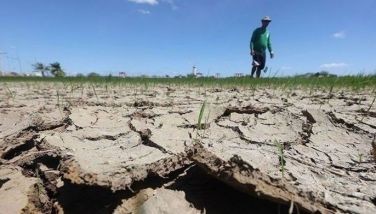
The country's economic weaknesses extended beyond what is directly attributed to oil prices. Agriculture, forestry and fishing contracted by 4.8%, while industry was virtually flat. Gross capital formation, a measure of investment, declined by 0.2%.
Household consumption, traditionally the economy's main engine, grew by only 2.4%.
More than an external shock. The Iran conflict has nevertheless inflicted visible economic damage by raising energy and transport costs.
Headline inflation accelerated to a three-year high of 7.8% in October from 7.2% in September. Transport prices rose 20.1% from a year earlier, while housing, water, electricity, gas and other fuels increased by 9.3%.
But the administration's own economic planners have identified a broader set of pressures.
In July, the Development Budget Coordination Committee cited governance-related concerns and weaker business and consumer confidence alongside geopolitical tensions.
It also warned that high inflation could restrain consumption and investment, while slower remittances, weaker visitor arrivals and El Niño could further depress growth.
The DBCC cut its 2026 growth projection to between 3.5% and 4.5%, reflecting both domestic and external risks.


- Latest
- Trending