‘US findings on COVID-19 airborne transmission need further study’
MANILA, Philippines — The Department of Health (DOH) appears to be unconvinced about the findings of the United States’ Centers for Disease Control and Prevention (CDC) that the coronavirus disease 2019 has the potential for airborne transmission.
It said the CDC findings are limited and need further study.
“The virus is already assumed to be airborne when conducting aerosol generating procedures in hospitals. But more definitive studies are necessary to say that this is also the case for non-healthcare settings,” the DOH said in a statement.
According to the CDC, the COVID-19 virus can be transmitted particularly by tiny particles suspended in the air for an extended period. Experts previously said the virus could be spread via droplets sourced from coughing, sneezing and talking.
The DOH said the CDC findings should serve as reason for the public to practice minimum health standards. CDC has stressed the importance of wearing a mask in lowering the chance of COVID transmission by up to 85 percent.
“This is why we need to err on the side of caution, the public is enjoined to wear masks and practice the minimum health standards to reduce the transmission of the virus. The effectiveness of personal protective equipment, such as face masks and face shields, and physical distancing must not be underestimated,” the DOH pointed out.
Eye disorders
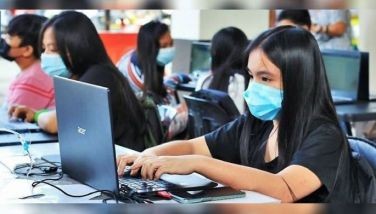
Meanwhile, health experts warned yesterday of a possible rise in cases of eye disorders with the advent of online education and work from home schemes due to the pandemic.
“With the increase in the use of gadgets and devices, especially for a prolonged period of time, it can affect our eye health,” said Ma. Margarita Lat-Luna, Philippine Academy of Ophthalmology (PAO) president.
“Against this backdrop, eye strain, dry or itchy eyes, headache, blurred vision, physical and mental fatigue, can start becoming common problems today,” she added in yesterday’s virtual briefing.
She pointed out that when people stare at the screen for too long the blinking reflex in the eye, which functions to keep moisture off its surface, could be affected. An increased use of digital media could also result in more frequent tired eyes and burning sensation.
Lat-Luna noted that the lockdown has prevented people from visiting ophthalmologists to have their eyes checked. The limited or delayed interaction with healthcare providers increases the risk of eye diseases progressing silently and quickly into more serious conditions.
Based on the Philippine Eye Disease Study (PEDS) 2018, almost two percent of Filipinos suffer from visual impairment.
One of the major causes of visual impairment is cataract, affecting 1.06 percent of the population or 1.16 million Filipinos, with 387,187 requiring surgery.
Other causes include uncorrected error of refraction with 0.38 percent (416,408 Filipinos), glaucoma with 0.27 percent (295,869 Filipinos), and maculopathy/DM retinopathy with 0.2 percent (219,162 Filipinos).
Eye specialists advised the public to observe the “20-20-20” rule to avoid problems.


- Latest
- Trending