Healthcare manpower crisis looms in 2 months
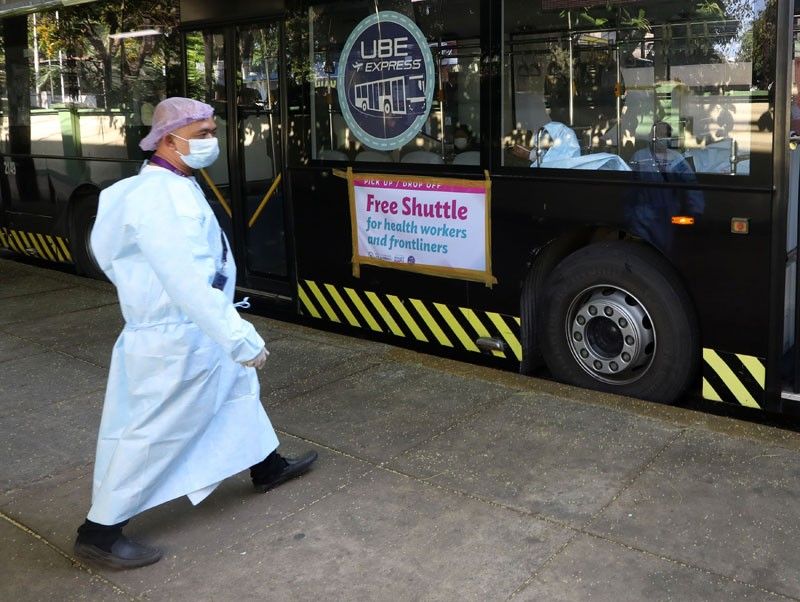
MANILA, Philippines — Doctors and health workers may themselves end up as patients or worse in two to three months if they continue with their heavy workloads and without adequate protective equipment as they attend to thousands downed with illnesses due to the 2019 coronavirus disease (COVID-19).
The Philippine Medical Association (PMA) aired the warning yesterday as the Department of Health (DOH), through Undersecretary Ma. Rosario Vergeire, called for volunteer doctors, nurses and other health workers to augment the manpower of the Philippine General Hospital in Manila and Dr. Jose N. Rodriguez Memorial Hospital and Sanitarium (DJNRMHS) in Caloocan City.
PMA president Jose Santiago Jr. said the healthcare system is facing a manpower crisis due to the continuing spread of COVID-19 in the country.
“We are looking at this on a long-term basis. In two to three months, I’m not sure if we still have the manpower to really take care of our patients. By that time, probably our doctors and other health workers will be converted into patients, not as doctors or health workers,” he told The STAR.
As of yesterday, Santiago said six members of the PMA who were taking care of COVID-19 patients have been found positive for the virus. One of them, a cardiologist, had died.
“I am really worried for our doctors and other frontline workers. This should not continue. Otherwise, no one will take care of our patients,” he said.
Santiago underscored the need for health workers to be provided with personal protective equipment (PPE) to protect them from the disease.
“If we are not provided with the necessary protective gear we might end up with that kind of situations – either we become PUIs (persons under investigation) or we get infected with COVID-19,” he added.
He also said that “fatigue is also coming into play” as most frontline workers are now on duty 12 hours a day, seven days a week.
“You really have to give them time to rest and sleep. Give them some break. They cannot work 24/7,” he added.
Santiago maintained that their situation in the next few months may improve if the frontline workers would be equipped with PPEs and given enough breaks.
Vergeire said the sudden increase in COVID-19 cases in the country can be attributed to some patients concealing information about their travel history, thus breaching the protocols on infection prevention and control procedures.
As a policy, those who have history of travel in a country with COVID-19 cases or history of exposure to an infected individual should share such information with doctors during consultation.
This is intended to prevent such patient from spreading the virus if it turns out that he is infected.
The DOH official also said PGH and DJNRMHS will become COVID-19 centers. This was in response to a request from 11 private hospitals for the government to have a unified approach against COVID-19 as their facilities and manpower are already overwhelmed with cases.
PGH has offered a building which will accommodate some 130 COVID-19 patients.
The official added that the DOH-run Lung Center of the Philippines will also specialize in COVID-19 cases.
The Philippine College of Physicians (PCP) also appealed to large businesses to donate PPEs.
In a statement, PCP president Gina Nazareth said that doctors and other health workers on the frontlines “desperately look for solutions to prevent more deaths and stem the continuing (spread of) COVID-19.”
“A patient needs to be intubated but we don’t have protective equipment. Both the patients’ and doctors’ lives are on the line. Full protection is needed and it is difficult for us to just watch this happening before us when we can do something about it,” she noted.
“We urge our large businesses in the country to help us in this time of serious health by providing resources for the procurement of PPE for the protection of our frontline health workers,” she added.
Nazareth said many available PPEs leave frontline workers more vulnerable to contracting COVID-19.
“Not only will this lead to a faster and wider transmission of the virus but this will also deplete our frontline health workers who have been tirelessly attending to our countrymen in need of urgent health treatment,” she added.
The Philippine Health Insurance Corp. (PhilHealth), meanwhile, is releasing an initial P30 billion to accredited hospitals to help them respond to the onslaught of COVD-19 in the country.
PhilHealth said the amount is equivalent to three months’ worth of claims based on historical data, which will be charged to their future claims. Hospitals will be asked to submit a letter of intent to avail of the mechanism. This will include those facing sanctions for various violations of their contracts with the national health insurer.
“PhilHealth rests on solid ground and with sufficient liquidity to support government’s efforts to fight the COVID-19 threat. These are extraordinary times that require extraordinary measures, and this arrangement will surely be of help in President Duterte’s resolve to avert the spread of the virus.” PhilHealth president and CEO Ricardo Morales said.


- Latest
- Trending