Systems loss, consumers gain

Why do we have to pay for electricity that we do not even use but collected from us and taxed even as “systems losses”? It took President Ferdinand “Bongbong” Marcos Jr. (PBBM) to raise this question in his penultimate state of the nation address (SONA) last July 27 before leaders and members of the 20th Congress finally acted on our laments through the years.
Acting on PBBM’s demand, Congress started the public hearings on bills to amend the 2001 Electric Power Industry Reform Act (EPIRA). Among other things, the amendatory law will henceforth prohibit the passing of system loss charges and their corresponding 12 percent value added tax (VAT) to us consumers.
In our Kapihan sa Manila Bay news forum last Wednesday, Murang Kuryente party list Rep. Arthur Yap welcomed PBBM’s directives that were immediately complied with.
Yap particularly lauded the initiatives of the Energy Regulation Commission (ERC) and subsequently by the Bureau of Internal Revenue (BIR). The BIR Revenue Memorandum Circular (RMC) No. 97-2026 removed the 12 percent VAT on allowable system loss charges within the cap approved by the ERC.
The BIR followed the ERC Resolution No. 26, approved on Aug. 26, which declared that charge – within the ERC cap, a government-mandated pass-through cost – is no longer part of the gross sales of generation, transmission and distribution costs of all power utilities. Both took effect immediately.
Yap estimated this will amount only to P20 per kilowatthour (kwh) reduction in particular with the customers of the Manila Electric Co. (Meralco) who have an average of 200 kwh monthly electricity consumption.
“That’s only equivalent to P20 per kilo of rice,” Yap noted.
The parallelism to the P20-per-kilo rice is the May 2022 campaign promise then of now President Marcos who is now in his last two years in office at Malacañang Palace. Obviously, Yap could not help liken this to rice because he was once Agriculture Secretary during the administration of former president and still Congresswoman of Pampanga Gloria Macapagal-Arroyo. Yap subsequently got elected and served for one term as Bohol Governor. After which he run and won for three consecutive terms as Bohol Congressman.
Advocating at present for cheaper cost of electricity (Murang Kuryente), Yap explained that the problems of the power supply industry are closely associated with agriculture and food production. He cited the latest inflation figures that show 40 percent of the cause of rising prices of food originated from the high costs of electricity in our country.
Yap announced that they at the Lower House have committed to approve the proposed amendments of the 25-year old EPIRA before Congress adjourns for the Christmas break in December this year. As the House committee on energy vice chairman, Yap disclosed they have already conducted one public hearing on the proposed bill to amend and update the EPIRA.
Currently, Yap cited the House committee’s technical working group is reviewing how to delineate the “technical” and “non-technical” components of the system losses to ensure this not cause any extreme disruption to our country’s power supply situation.
This item on “system losses” refers to electricity lost as power travels from baseload plants to homes due to “technical factors” like heat in wires and transformers where electric currents flow from the baseload power plants going to distribution and transmission utilities until it is delivered to end-users of electricity. But there are also “non-technical” issues like electricity theft due to illegal connections, use of “meter jumpers” and other gadgets to lower monthly bills, if not totally avoid paying electricity.
In the Philippines, we have laws like the EPIRA that mandated power rates to be fully unbundled. Under Republic Act (RA) No. 9136, or the EPIRA that took effect in June 2001, distribution utilities are legally allowed to pass a portion of these losses on to end-users.
The higher VAT rate started being imposed and collected following the implementation of the Reformed Value-Added Tax (RVAT) law (RA No. 9337) in November 2005, with the 12 percent rate fully taking effect in February 2006.
Thus, this has made the Philippines as having the most expensive electricity rates and consequently losing its competitive advantage to our Southeast Asian neighbors. The Department of Energy (DOE) conceded so many foreign investors have been shying away to locate and operate their manufacturing companies here in our country due to very high power costs.
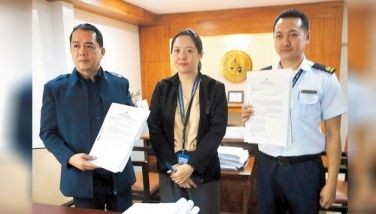
Our Kapihan news forum was attended by lawyers Maria Corazon Gines, ERC director III of the Legal Service, and Cynthia Alabanza, assistant vice president of the National Grid Corp. (NGCP). Both the ERC and the NGCP executives espoused a “wholistic” or “whole-of-nation” approach in addressing the power supply and demand situation in the Philippines. Gines also oversees or coordinates consumer affairs and addresses public queries at the ERC regarding power rates and billing disputes while Alabanza is concurrently official spokesperson.
Alabanza admitted the looming power crisis situation is now being manifested in the continuing fluctuations in the electricity supply in the Luzon, Visayas and Mindanao power grids. By NGCP projections, she warned, there won’t be any more excess power supply nor power reserve capacities by the year 2028.
“There are already writings on the walls, so to speak,” Alabanza echoed the NGCP warning.
She pointed in particular to the rotating blackouts, if not, NGCP issuances of yellow and red alerts. A yellow alert is issued when power reserves fall to low levels. A red alert is raised when the power supply is no longer sufficient to meet electricity demand.
In the specific situation of the Visayas grid, she admitted the NGCP could not deliver the electricity demand because the grid supply has not kept pace in baseload power development. She likened the situation to having so many rice delivery trucks, but with no rice supply. No new power plant projects have been put in place.
The House committee on energy chaired by Palawan Rep. Jose “Pepito” Alvarez will bring to Visayas its public hearing next week in a bid to forestall the imminent power crisis to erupt anew.
For now, we look forward to consumers gain with removal of the system loss.





- Latest
- Trending