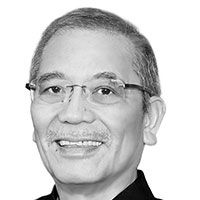
Retiring ombudsman singled out Wick Veloso
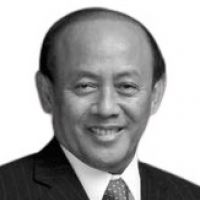
Justice Samuel Martires retired Friday, July 25, 2025, ending a controversial seven-year tenure as ombudsman. A former Supreme Court justice, Martires was plucked from retirement by then president Rodrigo Duterte on July 26, 2018, apparently to help cover Digong’s track (of human rights violations and allegations of corruption), post-presidency.
Before retiring, Martires made a number of trophy suspensions, to cap a career of “achievements.” Targeted was blue chip banker, Arnulfo “Wick” Veloso, today the hottest fund manager you can find. The outgoing ombudsman took a terminal leave July 16, 2025. Five days before that, he signed Veloso’s suspension – clearly a midnight order. The order was dated July 11, 2025 but was signed by Martires on July 15, 2025, before he went on vacation.
Wick Veloso is, of course, surprised and shocked. He was suspended for six months in connection with the stock purchase of 100 million preferred shares in Alternergy Holdings Corporation for P1.45 billion made by GSIS.
Alternergy is owned by Vince Perez Jr., an Ivy League-educated investment banker, a renewable energy pioneer and a former secretary of Energy. Vince, 67, has been an independent director of among the largest corporations in the Philippines.
Vince is the man behind the success of the 25 MW Bangui windmills of Ilocos Norte built in 2005 when Ferdinand Romualdez Marcos Jr., the future president, was the provincial governor. “For 16 years, we have built our name on integrity and transparency while delivering projects that strengthen our country’s energy security and protect our environment,” says Vince Perez. Vince also built the Pililla Wind Farm in 2015.
The first in the Philippines and Southeast Asia, Bangui’s windmills fortified BBM’s cred as a pro-renewables and pro-environment activist.
Wick feels bad about his capricious suspension. Clearly, an injustice was done him. I received yesterday his pained letter.
First, complains Wick, “my preventive suspension is based solely on an anonymous and unverified complaint purportedly filed against me (and) without the ombudsman considering my counter-affidavit.” “Without waiting for my counter-affidavit, which was timely filed, the ombudsman decided to rely solely on the bare allegations contained in the anonymous and unverified complaint in preventively suspending me and other hardworking officers of GSIS.”
Second, “based on the records of GSIS and narrated under oath in my counter-affidavit, the investment of GSIS in Alternergy underwent rigorous evaluation and endorsement by the GSIS investment team, whose technical expertise in financial instruments and risk assessment confirmed that the Alternergy investment fell squarely within established parameters. Certainly, the professional judgment of these experts holds significantly greater credibility than the unverified assertions of an anonymous source.”
Third, and more importantly, “the Alternergy investment complied with all applicable investment rules and regulations of GSIS.”
Under GSIS policy, board approval is required only for investments exceeding P1.5 billion. The Alternergy investment – P1.45 billion for 100 million preferred shares –was well within the authority delegated to the president and general manager. No Board approval was legally required.
Republic Act No. 8291 allows GSIS to invest in preferred or common shares of listed corporations. It does not require that the specific shares be listed at the time of purchase – only that the issuing company be listed and regulated. Alternergy has been listed on the Philippine Stock Exchange since March 2023 and remains under full regulatory oversight.
As to the Market Capitalization and Free-Float Thresholds, Wick says “these are intended for investments in publicly traded common shares, where liquidity risk must be managed. The Alternergy investment was not for common shares. GSIS subscribed to non-traded preferred shares, which are fixed-income instruments designed for yield, not for trading. Applying market capitalization and public float criteria here reflects a failure to understand both the nature of the instrument and the purpose of the policy.”
Fourth, in 2024, barely a year after the investment was made, GSIS earned P117.9 million in cash dividends from Alternergy. This is a concrete return that strengthens the GSIS fund and directly benefits our members and pensioners – clearly disproving any suggestion of financial loss or mismanagement.
Finally, to allay any misconception as to the financial status and sustainability of the GSIS fund, Wick says, “since I assumed office as president and general manager, the fund has grown from approximately P1.54 trillion by end of 2021 to around P1.88 trillion as of June 2025 – an increase of over P300 billion, or roughly 20 percent over three years.”
As of June 2025, approximately 72 percent of the GSIS investment portfolio is allocated to relatively risk-free assets such as government securities, loans to members and real estate, reflecting a cautious and stability-focused strategy, 19 percent in equities, five percent in private equity funds invested in infrastructure and four percent in cash and near-cash items.
As of 30 June 2025, GSIS had total income of P172.7 billion, up a colossal P21.67 billion or 14.35 percent. Profits surged 31 percent to P77 billion, up a whopping P18 billion from June 2024. GSIS’s massive profits extended its fund life to 2058 or by 33 more years, enabling GSIS to fulfill our responsibility of delivering benefits to members and retirees on time. In contrast, PhilHealth’s benefits fund has only a shelf life of four years. GSIS is among the financial industry’s top moneymakers, second only to BDO’s P82 billion.
With decades of experience in finance and investments, Wick says “I have always been mindful of the boundaries of my authority, and have consistently ensured that all investment decisions remain well within those limits. As president and general manager of GSIS, my mandate has always been to protect and grow the GSIS fund through prudent, opportunity-driven strategies, for the benefit of government workers and pensioners.”
GSIS’s Alternergy investment was within legal bounds, policy limits and fiduciary standards – made solely in the best interests of GSIS members, insists Wick Veloso.
* * *
Email: [email protected]


- Latest
- Trending