South Korea pushes stronger ties with Philippines
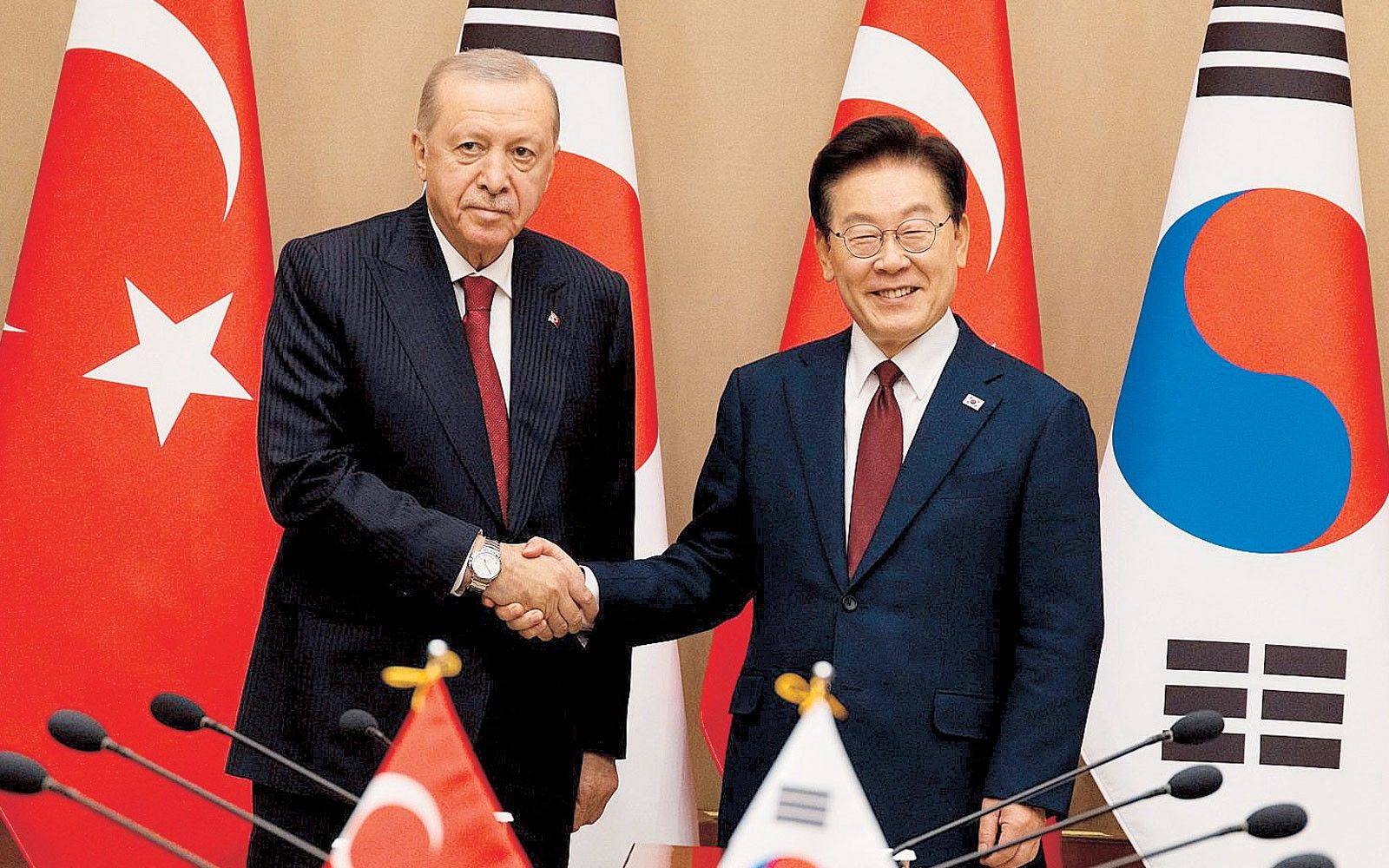
MANILA, Philippines — Ahead of his arrival in the Philippines today to attend the Association of Southeast Asian Nations (ASEAN) Summit, South Korean President Lee Jae Myung has pledged his government’s commitment to strengthen ties and take a more proactive role in promoting stability in the region.
Lee, who is visiting the country for the second time this year, underscored the importance of promoting the close relationship with his country and the regional bloc.
“ASEAN has played an important role in helping Korea realize its potential and expand its engagement with the world,” he said in a written interview with The STAR.
“ASEAN is Korea’s second-largest trade and investment partner, with our people-to-people exchanges reaching 12 million annually.”
Lee cited the results of the Contributor, Springboard, Partner Vision that he unveiled during his first ASEAN summit in Malaysia last year, including a tailored program for students who wish to study in South Korea.
“Korea is also working to further regional economic integration in the interest of ASEAN’s future growth and innovation,” he said, citing negotiations to upgrade the free trade agreement between his country and the regional bloc.
These discussions, Lee said, aim to “incorporate forward-looking trade rules into the agreement.”
“We will also support seamless implementation of the ASEAN Digital Economy Framework Agreement, thereby helping advance digital economic integration. In addition, we will share Korea’s technologies and expertise in artificial intelligence as well as the cultural and creative industries,” he said.
Law enforcement
Among the key partnerships Lee cited was the enhanced investigative coordination between the Korean National Police Agency and the ASEAN Chiefs of Police or ASEANAPOL, a regional law enforcement organization coordinating police cooperation across Southeast Asia.
He said this is part of efforts to address online scams and other transnational crimes, which is necessary to ensure that economic ties and people-to-people exchanges fully translate into opportunities for cooperation and shared prosperity.
The partnership, he said, lays the groundwork for a robust regional coordination framework among law enforcement agencies.
“Over the mid- to long-term, it could evolve into a broader platform for public safety and security cooperation, bringing together other dialogue partners of ASEAN as well,” Lee said.
He maintained the project’s significance extends beyond closer cooperation between the police agencies, describing it as an important step toward broadening ASEAN-Korea cooperation.
“President Marcos once underscored that transnational threats do not respect borders, and neither can our responses. I fully agree,” Lee noted.
Defense and culture
The South Korean President’s second visit to the Philippines also aims to further strengthen ties between Seoul and Manila in terms of defense, security and culture.
Citing decades of friendship and cooperation, including during the Korean war, Lee highlighted his vision of expanding the partnership beyond infrastructure and manufacturing.
“These historical ties have served as a strong foundation, allowing our two countries to maintain friendly, cooperative ties over the past 77 years. Bridges built by Korean companies connect the Philippine Islands, while vessels constructed by Korean companies at the Subic shipyard will sail the world’s oceans, helping bridge the Philippines and other countries worldwide,” he said.
“Our cooperation does not stop here. We are expanding our partnership into new areas, including artificial intelligence, space, nuclear power and critical minerals,” Lee added.
He shared lessons and best practices in developing their own defense industry, which he said the Philippines can also learn from.
“The Philippines, too, is well-poised to develop a defense industry tailored to its geographic and security conditions. Its specific defense needs and the future direction of its defense industry must reflect its unique security situation – the need to defend vast maritime areas and an extensive archipelago,” Lee said.
“I believe that our two countries can work together in many areas by combining our respective strengths. We can expand the scope of our cooperation beyond the mere supply of weapons systems to include technological collaboration, joint production, maintenance and repair, as well as the training of specialists,” he added.
Lee is also hopeful that the Philippines would be able to leverage its cultural strengths, similar to South Korea’s experience in expanding its global cultural influence.
“Korea’s cultural industry has developed by preserving its unique identity while constantly communicating with the rest of the world and proactively embracing change,” he said.
“The Philippines, too, possesses world-class cultural capabilities. Its diverse history and traditions, as well as its music, cuisine and rich artistic sensibility,” Lee added.
He proposed expanding joint productions of cultural content, people-to-people exchanges and collaboration among creators as a way to promote cooperation.
Legacy of bayanihan
For Lee, the two countries can benefit from a stronger spirit of mutual assistance or, as Filipinos call it, the bayanihan spirit.
“Our key legacy should be creating and passing down an institutional foundation for cooperation and exchanges,” he said.
“In particular, we must build a framework that enables our younger generations – those who will shape both nations’ futures – to learn about one another’s cultures, build friendship and work together to usher in a better future,” Lee added.
The South Korean leader has committed to stronger people-to-people and cultural exchanges, including streamlining visa issuance procedures for Filipino group tourists and establishments.
“Going forward, we will continue pooling our wisdom on ways to provide institutional support. In this way, we will be able to promote vibrant exchanges and cooperation between our two peoples,” he said. “I hope that Korea and the Philippines will continue to move forward, ‘navigating our future together’ as kaibigan – friends.”




- Latest
- Trending