

Cebu City, MCWD sign pact for water wells in schools
CEBU, Philippines — The Cebu City government and the Metropolitan Cebu Water District (MCWD) formally signed a memorandum of agreement allowing the development of production wells within six public elementary schools, a project expected to benefit up to 4,000 households daily.
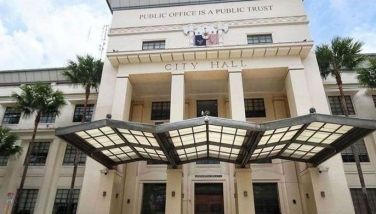
The agreement, signed by Mayor Nestor Archival and MCWD General Manager Atty. John DX Lapid yesterday at City Hall, covers portions of Pardo, Basak, Punta Princesa, Labangon, Barrio Luz and Talamban elementary schools, where MCWD will conduct groundwater exploration, drilling, construction, operation and maintenance of production wells and related facilities.
Speaking during the signing ceremony, Lapid said the project is expected to produce about 3,600 cubic meters of water per day, which could serve roughly 4,000 households in Cebu City.
"Practically 4,000 households ang makapahimulos aning tubig nga atong ma-extract diri sa mga schools," Lapid said.
He assured the public that groundwater extraction would be closely monitored to prevent environmental damage.
For his part, Archival described the agreement as a long-awaited initiative that gained urgency amid growing concerns over water shortages and the threat of El Niño.
"I'm very happy that this day has come," Archival said, noting that discussions on the project had been ongoing for months.
"Dugay na ni nga plano, but karon na ni na-materialize, ug usa sa naka-trigger ani ang El Niño. Kinahanglan tag tubig nga sustainable," he said.
The mayor said each school site is projected to produce around 600 cubic meters of water daily, contributing to the overall target of 3,600 cubic meters.
He added that the city's schools would receive royalties from the extracted water under the agreement.
"Kada cubic nga atong makuha, adunay share ang atong eskwelahan," Archival said.
The mayor also highlighted MCWD's commitment to regulating groundwater extraction to prevent over-pumping and saltwater intrusion, which are common concerns in groundwater development.
Under the agreement, MCWD will pay the city government P4 per cubic meter of water extracted from each productive well site. The agreement will remain in effect for an initial 10 years and may be renewed for another decade upon mutual agreement.
Water from the wells will be distributed exclusively through MCWD's system to consumers within Cebu City, particularly in Pardo, Basak, Punta Princesa, Labangon, Barrio Luz and Talamban, as well as nearby communities.
During the ceremony, Councilor Edgardo "Jaypee" Labella II, who helped facilitate the measure before the City Council, assured MCWD and city officials that lawmakers would continue supporting initiatives that directly benefit Cebuanos, regardless of political affiliation.
Labella said the council's priority remains the welfare of residents and ensuring that critical services, such as water supply, are improved.
The production-well project forms part of Cebu City's broader strategy to prepare for prolonged dry conditions and future water shortages.
The city's push to develop groundwater sources in public schools traces its roots to a proposal first raised in 2019, which stalled because a tripartite agreement involving the Department of Education (DepEd), MCWD and the city government was never finalized.
The initiative was revived this year after MCWD urged the city government to pursue a more streamlined arrangement directly with the city, which owns the school properties.
In August, the Cebu City Council approved a resolution directing the city government, the DepEd-Cebu City Division and MCWD to coordinate the development of groundwater sources in selected school sites as part of the city's response to worsening water supply challenges.
The project also complements other water security measures being pursued by the city and MCWD, including groundwater development in Kalunasan, the rehabilitation of old wells, water-trucking operations, rainwater harvesting initiatives and the restoration of community water sources amid forecasts of intensified El Niño conditions.
City officials expressed confidence that the additional groundwater supply from the six schools would help cushion the impact of future water shortages while longer-term solutions, including desalination and surface water projects, are being pursued. — (FREEMAN)







- Latest