‘Corruption scandals to undermine growth’
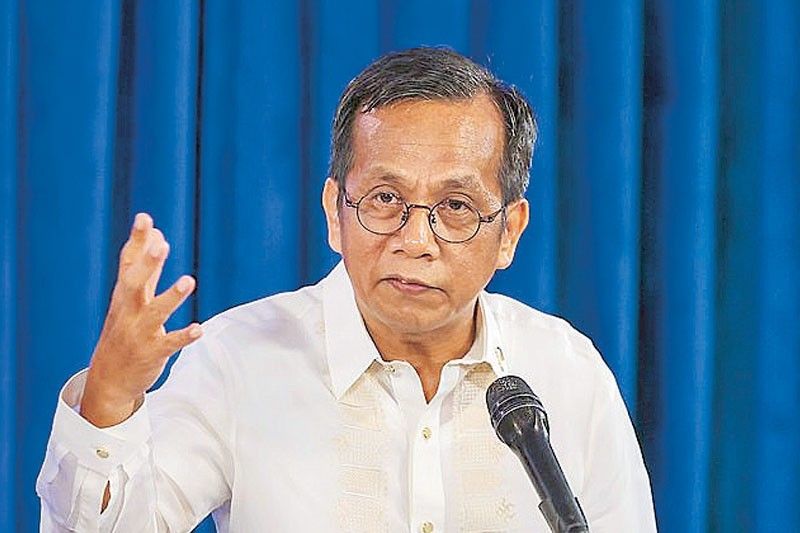
MANILA, Philippines — In an interview with The STAR, Department of Economy, Planning and Development Secretary Arsenio Balisacan said corruption issues could undermine economic growth by deterring investment.
“Corruption has consistently been shown to undermine the pace, quality and sustainability of economic growth across countries. It reduces investment by creating additional risks and higher costs of doing business, while at the same time eroding fiscal capacity needed to build infrastructure and foster innovation,” he said.
Over the long term, he said high levels of corruption also lead to slower economic growth and weaker forms of growth, with the economy often relying on extractive industries rather than diversified, innovation-driven sectors.
Balisacan said serious efforts to combat corruption, however, can yield significant economic benefits.
“Strengthening transparency and accountability builds investor and consumer confidence, improves the efficiency of public spending and enhances the productive capacity of the economy,” he said, noting such reforms set the stage for faster, more inclusive and more sustainable growth.
As such, he said the government’s creation of the Independent Commission for Infrastructure (ICI) to probe flood control projects in the last 10 years, is seen as a critical step.
“The move reflects a firm commitment to integrity in the use of public funds, strengthens governance systems and reassures both citizens and investors that infrastructure projects will be implemented with transparency, efficiency and fairness,” Balisacan said.
Despite the revelations, he noted that development partners remain on board.
“All engagements and scheduled implementations are proceeding as planned, with no indications of withdrawal, suspension or hesitation. On the contrary, our partners have commended the government’s efforts to strengthen governance in investment programming and project implementation,” he said.
Foreign business groups echoed the sentiment. British Chamber of Commerce Philippines executive vice chair Chris Nelson said that there has been no slowdown in inquiries from firms looking to invest in the Philippines.
“If you take the ongoing investigation into the flood control projects, clearly that’s a concern,” he said, but welcomed the ICI as a step toward transparency.
American Chamber of Commerce of the Philippines (AmCham) executive director Ebb Hinchliffe likewise reported “no indication that investors are holding back on the Philippines,” citing recent reforms such as the Konektadong Pinoy Act and amendments to the Investors’ Lease Act that could help sustain investor interest.
Yet the immediate market reaction has been sharp. Allegations that officials pocketed trillions of pesos meant for flood control and infrastructure have triggered heavy selling at the Philippine Stock Exchange, dragging the benchmark index down 5.53 percent since President Marcos ordered an audit in his July State of the Nation Address.
The PSEi has shed 352.63 points over two months, closing last week at 6,027.12, its lowest not only since the flood control corruption scandal erupted, but also since April 8’s close of 6,006,34.
The peso has also depreciated and went back to the 58 level even as the US dollar remains weak. The peso closed at 58.1 on Friday, marking the peso’s weakest finish in more than a month or since it closed at 58.145 on Aug. 1.
“Our stock market is still largely influenced by macroeconomic and monetary policy winds, but the massive corruption scandal is beginning to have some bearing on sentiment and outlook,” said China Bank Capital managing director Juan Paolo Colet.
He warned that delays in government payments and a slowdown in public infrastructure spending could weigh on gross domestic product (GDP) growth in the coming months.
Philstocks Financial research manager Japhet Tantiangco said investors are closely watching whether authorities deliver “a strong resolution against corruption.” Without it, he cautioned, “investor sentiment could remain dampened, which in turn would weigh on the market.”
Sun Life Investment Management president Michael Enriquez added that lower government spending in the near term and weaker FDIs over the medium term are likely if corruption perceptions worsen.
Market specialists also flagged broader risks to the country’s credit profile as the corruption scandals contributed to negative sentiment in financial markets.
“Recurring or large-scale project anomalies could increase perceived sovereign risk,” John Paolo Rivera, senior research fellow at the Philippine Institute for Development Studies, said.
He noted that credit rating agencies track governance standards closely. “If investors feel the state’s ability to deliver and oversee large public spending is weak, that can lead to higher yields, increased borrowing costs or (credit rating) downgrades.”
Russell Stanley Geronimo, founder of Geronimo Law, explained that investors measure governance and political risk through global indices such as Transparency International’s Corruption Perceptions Index, World Bank’s Worldwide Governance Indicators as well as credit ratings from Moody’s, S&P and Fitch.
“A downgrade or negative outlook tied to corruption directly raises borrowing costs and can divert foreign direct investment to more credible jurisdictions,” he said.
Geronimo added that corruption does more than waste public funds, it erases potential productivity gains. Economists measure this through the “fiscal multiplier,” with studies showing every peso spent on infrastructure can yield about 0.8 pesos in additional output in the first year, rising to around 1.5 pesos within five years, and in some transport projects even exceeding two pesos.
“When those funds are stolen, the loss is compounded because the projects that should have made business cheaper and faster never materialize,” he said.
Business leaders said the private sector is already feeling the chill. Makati Business Club executive director Rafael Ongpin noted that some major multinationals have pulled out of the Philippines due to corruption and red tape, while top infrastructure firms are shying away from bidding on flood control projects.
He urged the government to use technology to strengthen oversight. “They do not have the manpower at this point to scrutinize each of those transactions individually. So they’re going to have to work with artificial intelligence.”
Analysts, however, stressed that decisive action could turn the crisis into an opportunity. “Even just a focused and sustained transformation of the Department of Public Works and Highways to ensure that public funds are properly spent on the right infrastructure projects could have a significant beneficial multiplier effect on our economy,” Colet said.
For now, the market remains in a “holding pattern,” said Jonathan Ravelas, senior adviser at Reyes Tacandong & Co. “Growth is slowing, confidence is shaky and corruption is clouding the outlook. The fundamentals are there, but we’re not firing on all cylinders,” he said.
Balisacan remains optimistic that reforms will ultimately pay off. “The move to create the ICI strengthens governance systems and reassures both citizens and investors that infrastructure projects will be implemented with transparency, efficiency and fairness,” he said.
“Such reforms set the stage for faster, more inclusive and more sustainable growth.”


- Latest
- Trending