DOE: Offline plants set to return online
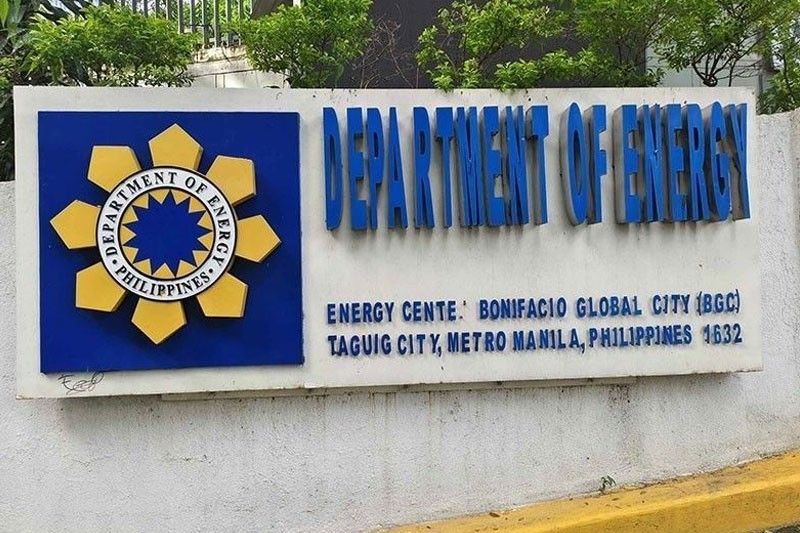
CEBU, Philippines — More offline power plants are set to return to service as the Department of Energy (DOE) continues its efforts to stabilize the Visayas power grid, including the deployment of battery storage systems.
In an interview, DOE Secretary Sharon Garin said, the immediate priority is to bring available generation capacity back into the system.
The 82-megawatt Cebu Energy Development Corporation (CEDC) Unit 1 returned to service on September 5, while the 169-MW Therma Visayas Unit 1 is scheduled to return on September 15.
The 150-MW PEDC Unit 3 in Iloilo is targeted to return by October 3.
Garin said the DOE is also coordinating the return of power plants in Mindanao that support the Visayas through the interconnected grid.
The 150-MW TSI Unit 2 in Davao is scheduled to return on September 8, followed by TSI Unit 1, also with 150 MW, on September 19, and GNPK Unit 2 in Lanao del Norte, with 103 MW, on September 20.
The Visayas has been unable to import sufficient power from Mindanao due to several power plants that were on forced outage, Garin said.
Aside from restoring generation capacity, the DOE is working with power companies to deploy 253 MW of battery storage across Cebu, Panay, Leyte, and Negros.
Garin said the batteries could provide quick backup when a power plant suddenly trips or when electricity supply becomes tight.
In Negros, excess electricity generated by solar and other renewable energy plants during the day could be stored in batteries and used at night, reducing the island’s need to import power from other areas.
Based on DOE simulations, Garin said the 253 MW battery capacity could eliminate more than half of the projected alerts in the Visayas, with the possibility of avoiding red alerts.
The DOE has directed the National Grid Corporation of the Philippines (NGCP) to implement outstanding ancillary services contracts needed by the Visayas grid, including battery capacity.
Garin said the DOE had already issued a show-cause order in August over delays in implementing these activities.
She also warned against recurring forced outages, saying power plant operators must determine the root cause of repeated breakdowns instead of repeatedly making temporary repairs.
The DOE has deployed field offices to inspect and investigate power plants and ensure their immediate return to service.
Garin added that the agency is strengthening its review of plants with recurring forced outages, auditing compliance with maintenance schedules, and requiring corrective action plans when necessary. Sanctions may also be pursued when violations are established.
The DOE is likewise assessing transmission constraints across the Visayas, including the Leyte-Samar Corridor, since available electricity must also be transmitted to areas where it is needed.
Interim measures, including power barges and generation sets, are also being considered to provide additional electricity while longer-term projects are being developed.
Garin said the DOE is rushing new generation projects to help address the region’s future power requirements, noting that conventional power plants normally take three to five years or longer to construct.
The DOE, Garin added, is also moving forward with the Green Energy Auction to bring additional renewable energy projects into the national grid. — (FREEMAN)


- Latest