UN chief urges faster renewable energy transition
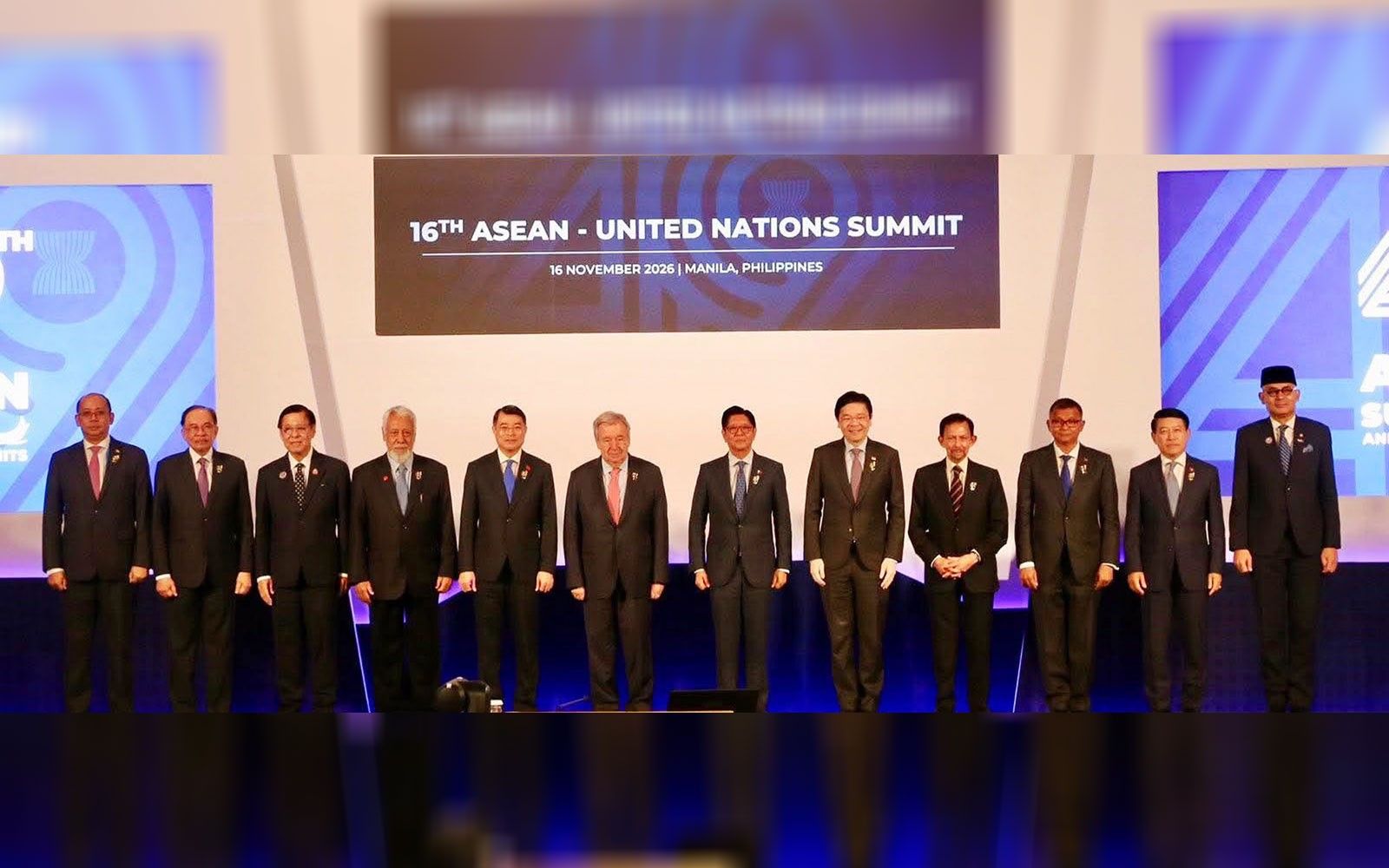
MANILA, Philippines — United Nations Secretary-General António Guterres yesterday called on countries to accelerate the transition from fossil fuels to renewable energy and significantly increase climate financing for developing nations, warning that the worsening effects of global warming would further threaten vulnerable communities.
Speaking at a press conference following the Association of Southeast Asian Nations (ASEAN)-UN Summit in Manila, Guterres said the transition to renewable energy must be accelerated as fossil fuels become increasingly costly and continue to expose countries to economic and energy security risks.
“The time of fossil fuel is coming to an end,” he noted.
Guterres pointed to the rising prices of oil and gas amid geopolitical tensions and disruptions to energy supplies, saying the situation underscored the economic disadvantages of continued dependence on fossil fuels.
“Today’s renewables are cheaper, and at the same time they are safer. Look at the difficulties that we have now in the Strait of Hormuz, in the Bab al-Mandab Strait and the fact that the prices of gas oil, of benzene, are extremely high, with people paying very high prices and the living conditions worsening,” he said.
At the same time, he questioned the distribution of profits in the fossil fuel industry, noting that nine major oil companies earned $95 billion in profits in the first quarter of the year.
“So there is something fundamentally unfair in this situation, and it’s time to accelerate the transition from fossil fuels to renewables,” he said.
Climate aid
In his final ASEAN Summit as UN Secretary-General, Guterres also called for stronger financial support from developed countries to help developing economies prepare for the intensifying impacts of climate change, particularly storms, typhoons, droughts and floods.
He said he had been urging developed nations to triple their financial support for climate adaptation, although even such an increase would cover only about 30 percent of existing needs.
He stressed that additional resources were necessary for countries in Southeast Asia, including the Philippines, to strengthen their resilience, protect communities and safeguard infrastructure against increasingly severe climate-related disasters.
The UN chief also warned that the expected El Niño phenomenon could further aggravate climate impacts in the region.
“Our new five-year plan of action and joint strategic plan of action for disaster management show that our partnership continues to deepen. But as we enter the 15th year of the ASEAN-UN Comprehensive Partnership, we face strong headwinds, raging conflicts, unchecked climate change, soaring humanitarian needs, a cost of living crisis and rising tariffs and energy costs,” he said during the opening plenary of the 16th ASEAN-UN Summit.
His remarks came as developing countries continue to face difficulties securing sufficient financial and technical assistance to address climate-related losses and damages, despite contributing relatively little to global greenhouse gas emissions.
Asked how the international community could ensure that major carbon-emitting countries fulfill their climate financing commitments, Guterres said the existing resources available through the loss and damage fund remained inadequate compared with the scale of the problem.
“There must be a massive funding of the loss and damage funds, and there must be also the full implementation of the other commitments made by developed countries, namely in relation to adaptation and in relation to the needs of supporting developing countries, also in their own transition from fossil fuels to renewables,” he said.
Guterres also criticized the influence of fossil fuel interests in delaying climate action, saying political leaders were aware of the threat posed by climate change but had failed to act decisively against powerful industry lobbies.
“I think political leaders understand very well what’s happening, but we have powerful interests that are interested in maintaining the fossil fuel domination,” he said.
He accused fossil fuel companies of using their profits to influence policymaking and public understanding of climate science, while calling for taxes on windfall profits from the industry.
“We have lobbies organized. We have enormous profits that allow, because they are not taxed properly, and I’ve been calling for a tax on windfall profits, the fossil fuels, and they are using those profits to lobby and to create this information, trying to make science not entirely understood by the public in general,” he said.
Guterres said governments must take responsibility for reducing emissions despite pressure from industry groups, adding that public opinion and civil society were increasingly demanding faster action.
Earlier in his remarks, Guterres warned that the world was approaching a period in which average global temperatures would temporarily exceed the 1.5-degree Celsius threshold set under the Paris Agreement.
He said the priority should be to limit the extent and duration of the overshoot and eventually bring global temperatures back below the threshold.
“Unfortunately, the current national climate action plans and so-called national determined contributions would lead, by the end of the century, to an average global temperature about 2.5 degrees. And that reality would be catastrophic,” he said.
Guterres said the situation could still be addressed through immediate and substantial emissions reductions, emphasizing that the world must cut emissions by around six percent annually.
He maintained that the target was achievable, given the declining cost of renewable energy and the availability of technologies that could support the transition away from fossil fuels.
The UN chief also urged ASEAN to use its growing economic and political influence to push for stronger international cooperation on climate action, disaster resilience and sustainable development.
He noted that the 11 ASEAN economies now form a $4.5-trillion economic bloc, with annual growth exceeding 4.5 percent, according to the International Monetary Fund.
In an increasingly multipolar world, Guterres said the regional bloc had the capacity to help address challenges extending beyond Southeast Asia, including economic instability, geopolitical tensions and climate change.
He cited the UN’s ongoing cooperation with ASEAN in areas including conflict prevention, climate action, sustainable development, peacekeeping, human rights and gender equality.
Among the initiatives he highlighted was the ASEAN for Green, a five-year plan of action covering more than 180 joint projects aligned with the ASEAN Community Vision 2045 and the United Nations’ Sustainable Development Goals.
He also cited the recent adoption of the ASEAN-UN Joint Strategic Plan for Disaster Management as part of efforts to strengthen regional cooperation.
However, Guterres said these initiatives must be pursued alongside reforms in international institutions to give developing countries a greater voice in global decision-making.
He noted that institutions such as the Bretton Woods system and the United Nations Security Council were established in 1945 and no longer adequately reflected the realities of the present world.
Ending violence
Beyond climate change, Guterres addressed conflicts and humanitarian crises, particularly in Myanmar, where he said violence and restrictions on humanitarian assistance continued to affect millions.
He said more than 16 million people in Myanmar needed humanitarian assistance, while over four million had been internally displaced. Aerial bombardments, he added, had become the leading cause of civilian casualties.
“The violence must stop, the impunity must end and humanitarian assistance must flow to people in need, irrespective of territorial control, immediately and unconditionally,” he said.
He also renewed his call for the protection of Rohingya refugees, saying conditions for their safe, voluntary, dignified and sustainable return to Myanmar remained absent.
Guterres urged ASEAN to continue pressing for an end to the violence and the implementation of its Five-Point Consensus, stressing that engagement with Myanmar’s authorities should not come at the expense of accountability for human rights violations.




- Latest
- Trending