Stricter SC guidelines alarm Sotto
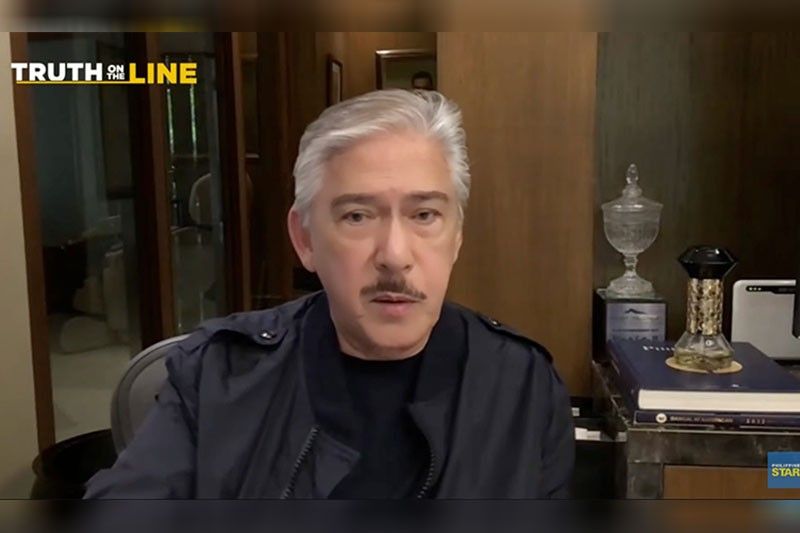
MANILA, Philippines — The more stringent guidelines set by the Supreme Court on impeachment make it doubly difficult to remove an impeached person from office despite strong evidence of wrongdoing, Senate Minority Leader Vicente Sotto III said as he expressed alarm at the High Court’s decision.
Speaking to The STAR’s “Truth on the Line” yesterday, Sotto said the SC essentially amended the 1987 Constitution, which mandates a speedy trial, in its landmark ruling that declared Vice President Sara Duterte’s impeachment unconstitutional.
“The decision of the Supreme Court is really flawed. It practically amended the Constitution,” Sotto said.
He said the decision – in finding that the House of Representatives violated the one-year-bar rule in dismissing the first three impeachment complaints and transmitting a fourth one – added more requirements to ensure due process to an impeached official, such as requiring that the one-third of all House members who endorsed the Articles of Impeachment should have read the complaint and all the evidence.
“The decision laid down the requirements – the evidence must be detailed, the impeached officer must be given time to refute the complaint. What if the official does not attend? All House members must have access to the complaint and execute an affidavit having read and understood all Articles of Impeachment. What if some will say they have not read it because they are abroad?” Sotto said.
“The rules were changed. Believe me, no official will ever be impeached after this,” Sotto added.
Sotto defended his dismissed motion to table or shelve any Senate move instead of outrightly dismissing or archiving the impeachment complaint.
Small victory
He said the archiving instead of outright dismissal of the case by the Senate was a small victory.
“Yes, you could consider that a small victory,” he said over “Storycon” on One News on Friday.
“They were trying to convince me to agree to archive,” he said. “But for me, I just wanted to make sure that when we say archive, it’s like we can bring them back anytime.”
Archive, Sotto said, may “mean being buried for good, although he noted the commitment of many senators that the matter can be retrieved if the Supreme Court reverses its decision.”
Despite the slim chance of getting majority support to revive the case in the event of a reversal, Sotto said he is counting on his colleagues to stay true to their argument that their actions were only based on the SC decision.
Nineteen of the 24 senators voted to archive it, with a caveat that it can still be revived if the SC reverses its decision on appeal. Four senators voted against the motion, while Sen. Panfilo Lacson abstained.
Lacson defended his move to abstain from the vote, saying that he also did not want to archive the case because the SC ruling is only “immediately executory,” but not yet final due to pending appeals.
“I did not ‘play safe.’ Rather, I am acting out of respect for the Supreme Court,” Lacson said in an interview with OnePH.
“I followed the Supreme Court and I do not want to preempt it because it has not issued a final decision,” Lacson explained.
Fact check
The SC has clarified that its original ruling on the League of Cities of the Philippines (LCP) case cited by Sen. Risa Hontiveros during the heated debate at the Senate last Wednesday over the impeachment complaint against Duterte was not unanimous, contrary to what the senator said.
Hontiveros has admitted the error.
“In response to some of your queries, we clarify that the Supreme Court’s ruling in the League of Cities case was not unanimous,” SC spokesperson Camille Ting said in a statement sent to reporters via Viber on Thursday night.
“Please refer to the Decision and Resolutions published in the Supreme Court E-Library and the Philippine Reports,” she added.
Ting issued the statement after Hontiveros on Wednesday cited the case of LCP vs. Commission on Elections (Comelec) as one of the supposed two instances wherein the SC reversed its en banc unanimous decision following motions for reconsiderations filed by the aggrieved party.
“We are uncertain as to the source of the claim that the decision was unanimous,” Ting said.
The LCP vs Comelec case involved the issue of constitutionality of 16 Cityhood Laws.
The case went through several rulings from 2008 to 2011 with the high tribunal initially ruling for the LCP in declaring the local laws as unconstitutional but reversed its original decision following motions for reconsideration by the Comelec. With finality, the Supreme Court upheld the constitutionality the 16 Cityhood Laws in its resolution promulgated on April 12, 2011.
Travel authority
Meanwhile, Duterte denied that her trip to Kuwait pushed through without a travel authority from the Office of the President after Palace press officer Claire Castro questioned if she went to Kuwait without proper authorization.
“The Office of the President and PCO (Presidential Communications Office) always says that we should not spread disinformation and fake news, and that’s not true that I went to Kuwait without a travel authority,” Duterte said in an impromptu interview in Davao City.
During her press conference on Wednesday, Office of the Vice President spokesperson Ruth Castelo failed to answer queries on the whereabouts of Duterte.
On Thursday, Duterte led the opening of the 2025 Kadayawan Festival in Davao City. — Bella Cariaso, Janvic Mateo, Elizabeth Marcelo
Related video:





- Latest
- Trending