Duterte: GCQ in Metro Manila, other areas until November 30
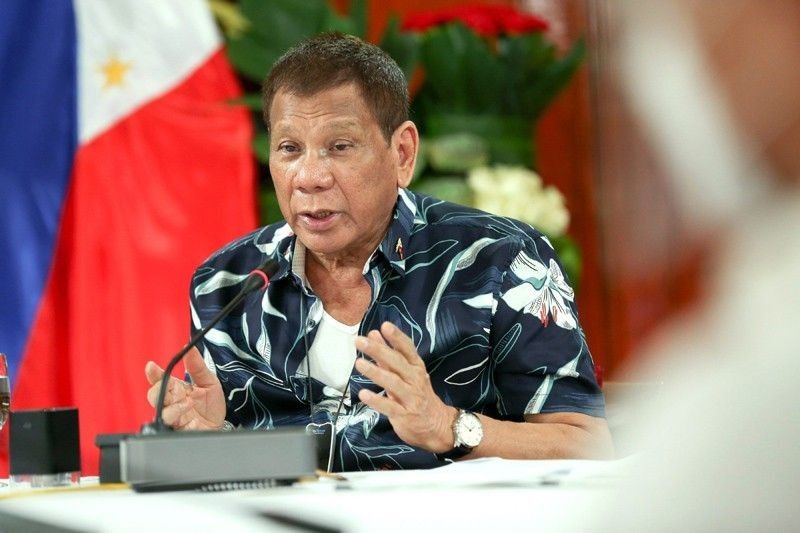
MANILA, Philippines — Metro Manila will remain under General Community Quarantine status until November 30 along with other areas in the Visayas and Mindanao, President Rodrigo Duterte announced in a recorded address aired Tuesday morning.
In a portion of the weekly meeting with the government's coronavirus crisis panel, Duterte bucked the possibility of the capital region shifting to a more relaxed quarantine, adding that the mayors in the National Capital Region want GCQ retained.
Aside from the capital, the following areas will also be under GCQ from November 1-30.
- Batangas
- Lanao del Sur
- Iloilo City
- Bacolod City
- Tacloban City
- Iligan City
Although the president only read out a list of areas recommended to retain GCQ status, the Palace routinely confirms after the recorded address is aired that those recommendations have actually been approved.
Earlier Monday, the interior department said that NCR mayors agreed that the cities and the lone municipality in the capital region should still be kept under GCQ.
Figures from the health department so far had shown that the region accounts for nearly 11,300 of the country's more than 371,000 virus infections, followed by CALABARZON with 7,744 and Central Luzon with 2,909.
Metro Manila, along with its neighboring provinces, has been under general community quarantine since August after a brief lockdown to give the medical community a "time-out".
This month saw government allowing more capacity in business establishments and in mass transport, as well as allowing a wider age group of 15 to 65 to step out of their homes.
Travel restrictions have also eased since then, with individuals now allowed to go between GCQ and MGCQ areas for any purpose.
Officials said that such moves are part of the third phase of its overall strategy to combat a health crisis in a bid to "sustain gains" in reviving the economy.
The Philippines now has 371,630 coronavirus infections as of October 26, with health officials reporting some 1,607 new cases.
Deaths, meanwhile, have reached the 7,000th mark since the country reported its first coronavirus death in February, while recoveries are at 328,258.
It was also this October that the country broke through the Top 20 nations across the world with the highest COVID-19 cases, apart from consistently placing in Southeast Asia also with the most infections.


Other regions and provinces in the Philippines considered moderate and low-risk areas will be placed under general community quarantine starting May 1. Bookmark this page for updates. (Main image by The STAR/Edd Gumban)
The health department registers 1,474 new COVID-19 cases, bringing the national caseload to 2,824,499.
- New deaths: 205
- New recoveries: 2,565
- Total active cases: 22,070
The Department of Health reports an additional 1,485 COVID-19 infections, bringing the national tally to to 2,823,210.
- New deaths: 277
- New recoveries: 1,393
- Total active cases: 23,200
The Department of Health registers 1,297 new COVID-19 cases, biringing the national caseload to 2,821,753.
- New deaths: 305
- New recoveries: 1,956
- Total active cases: 23,158
The Department of Health registers 2,646 new COVID-19 cases, bringing the national tally to 2,809,311.
- Active cases: 29,138 or 1.0% of the total
- Deaths: 99, pushing the count to 44,665
- Recoveries: 4,029 bringing the number to 2,735,508
The Department of Health logs 1,409 new COVID-19 cases, bringing the national tally to 2,806,694.
- Active cases: 30,544 or 1.1% of the total
- Deaths: 46, pushing the count to 44,567
- Recoveries: 2,941 bringing the number to 2,731,583


- Latest
- Trending