


Inflation cools to 6.4% in June
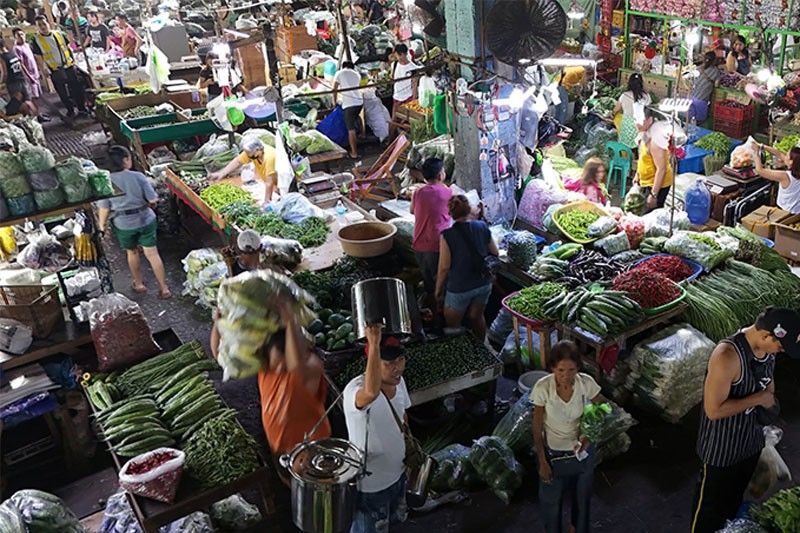
MANILA, Philippines — Inflation eased for the second straight month in June, driven by slower increases in transport and food costs, but the Bangko Sentral ng Pilipinas (BSP) remains on guard.
In a press briefing yesterday, National Statistician Dennis Mapa said that headline inflation or the overall increase in prices of goods and services slowed to 6.4 percent in June from the previous month’s 6.8 percent.
However, the June inflation was higher than the 1.4 percent in the same month last year, although within the six to seven percent forecast of the Bangko Sentral ng Pilipinas (BSP) for last month.
The downtrend in the overall inflation was driven by the slower increase in the transport index at 12.8 percent in June from 16.2 percent in May, amid easing tensions in the Middle East.
The slower growth in food and non-alcoholic beverages at 5.2 percent in June from the previous month’s 5.7 percent also contributed to the downtrend.
Food inflation at the national level registered a slower increase of 5.4 percent in June from 5.8 percent in the previous month.
This was driven by the faster decline in meat prices at 4.2 percent in June from 2.5 percent in May.
Slower increases were also seen in prices of other food groups such as fish and other seafood at 7.8 percent in June from the previous month’s 8.8 percent and rice at 15 percent from 15.6 percent.
For the first semester, inflation averaged 4.8 percent, still above the BSP’s two to four percent target band.
Department of Economy, Planning and Development Secretary Arsenio Balisacan said that the easing inflation pressures reflect improving global conditions and the impact of government interventions.
In particular, the government is providing targeted assistance for farmers, fisherfolk and transport service providers.
It also lifted toll for vehicles transporting agricultural produce.
“If we want stable prices, we need a stable food supply,” Balisacan said.
“Reducing losses from weather disturbances and other supply disruptions remains one of the most effective ways to protect both consumers and producers from future price shocks,” he added.
With El Niño underway and expected to intensify, the government is implementing a P26.13-billion food security action plan aimed at strengthening the country’s preparedness to weather disturbances, ensuring adequate food supply while minimizing income losses and expanding access to affordable food.
In addition, the Philippines and Japan are planning to establish a national strategic petroleum reserve to provide a buffer against geopolitical disruptions and extreme price volatility.
“Our goal is not only to bring inflation down but to keep it low and stable. That requires stronger food production, more efficient supply chains and greater resilience to climate and other shocks,” Balisacan said.

“By strengthening these foundations, we can help Filipino families plan, save and prosper with greater confidence,” he also said.
Meanwhile, the BSP signaled its readiness to take further hike interest rates as inflation is expected to remain above target until 2027, with price pressures broadening beyond fuel and food even after the June print settled within the central bank’s forecast range.
In a statement, the central bank warned that price pressures remain strong, keeping the Monetary Board on guard ahead of its next policy meeting.
“Inflationary pressures remain strong. Global oil and fertilizer prices remain elevated in June and continue to drive domestic fuel and food prices,” the BSP said.
“Rising core inflation indicates broadening price pressures and second-round effects, including higher inflation expectations,” it added.
The BSP said its latest projections still point to an elevated inflation path, with average headline inflation likely to stay above the government’s two to four percent target band in 2026 and 2027. Inflation is expected to move closer to the three percent midpoint of the target only by 2028.
“The BSP continues to monitor recent developments, especially in the international oil market, and shall consider these factors in the next policy meeting,” the central bank said.
“The Monetary Board will continue to be guided by incoming data and is prepared to take further monetary action as needed to ensure that inflation returns to the three percent target,” it said.
The BSP raised its benchmark interest rate by 25 basis points for a second straight meeting in June, bringing the key policy rate to 4.75 percent. The central bank has delivered a cumulative 50 basis points in rate increases since April to prevent inflation from becoming entrenched.
Citi economists Wei Zheng Kit and Helmi Arman said in a note that another 25-basis-point increase at the BSP’s August policy meeting remains likely, while October could be the first possible window for a pause.
“BSP’s concerns over second-round effects on inflation are likely to persist,” Citi said, citing record minimum wage hikes starting July, delayed adjustments in electricity and food prices, continued peso weakness due to balance of payments pressures and El Niño risks.
The economists said the record Metro Manila minimum wage increase, P60 in July 2026 and P25 in January 2027, is the most immediate upside risk to inflation as regional wage boards are expected to follow the National Capital Region’s lead.
While the wage adjustment may provide relief to lower-income households, Citi said it could also raise costs for small and medium enterprises and feed into services inflation.
Citi also flagged deferred electricity and food price adjustments as another source of pressure that could keep core inflation elevated well into 2027.


- Latest
- Trending


