


‘Peso may weaken further as inflation risks heighten’
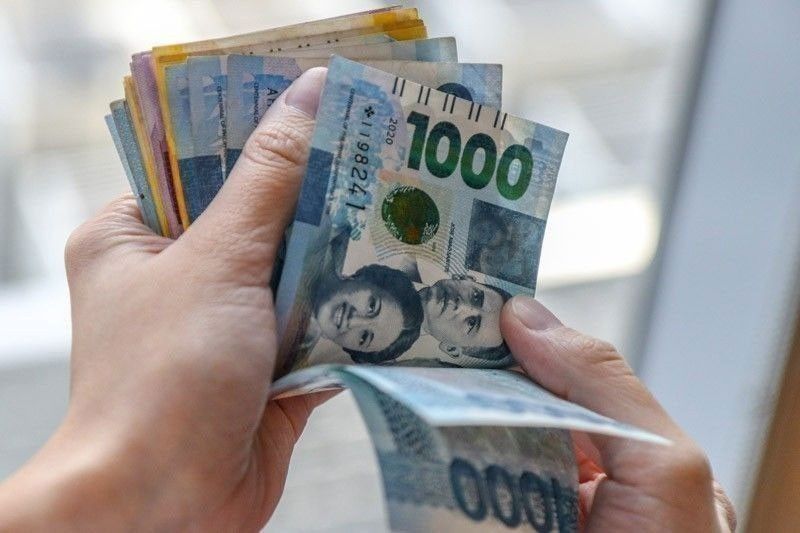
MANILA, Philippines — The peso may remain under pressure in the near term as elevated oil prices and rising inflation keep the Bangko Sentral ng Pilipinas (BSP) on a tightening path despite signs of softer domestic demand, analysts said.
In its Asia FX outlook, MUFG Bank said the peso is expected to further depreciate in the remaining weeks of the second quarter before recovering later in the year, as the currency bears the impact of higher import costs, second-round inflation effects and tighter financial conditions.
“The peso likely suffers from second-round effects on domestic prices, potential tighter financial conditions and associated weaker growth profile,” MUFG said.
MUFG sees the peso weakening to 62 to a dollar by the end of the second quarter under its baseline scenario before recovering to 61.50 in the third quarter, 61 by the fourth quarter and 60.50 by the first quarter of 2027.
Under an adverse scenario, the peso could weaken to 62.50 in the second quarter and 63 in the third quarter. In a severe scenario, the exchange rate could hit 63 in the second quarter and 64.50 in the third quarter.
The Philippines is seen to be among the more vulnerable economies in the region because of its dependence on imported energy. The country sources about 95 percent of its crude oil imports from the Middle East, while its overall external energy dependency stood at 78 percent.
MUFG raised its baseline inflation forecast for the Philippines to six percent this year, citing oil assumptions, second-round effects on food prices and risks from a possible super El Niño event later this year.
It expects the BSP to raise rates by another 75 basis points (bps) under its base case, bringing the key policy rate to 5.25 percent. Higher costs and tighter financial conditions could keep Philippine growth at around 3.5 percent this year, MUFG said.
In riskier scenarios, MUFG said inflation could rise to 7.5 percent or even as high as 10 percent, while growth could slow sharply or even contract under a severe case.
HSBC senior ASEAN economist Aris Dacanay likewise said the BSP is still likely to tighten policy despite the sharp slowdown in economic growth, as inflation pressures have become more difficult to ignore.
“The narrative continues: growth in the Philippines continues to deteriorate due to the fallout in public infrastructure spending, and its negative spillover effects on household consumption and private investment,” Dacanay said.
“With inflation still on the rise, growth in the remaining quarters of 2026 will likely continue to be a challenge. Regardless, we think a 50 bps rate hike in June is still on the table for monetary policy,” he said.
The Philippine economy grew by 2.8 percent in the first quarter, slower than the three percent expansion in the fourth quarter of 2025 and the 5.4 percent growth recorded in the same period last year.
Looking ahead, HSBC said growth could average 3.4 percent this year under an adverse scenario where oil prices remain at or above $100 per barrel until September, as government spending takes a backseat and household consumption remains weak.
Dacanay said the BSP’s policy response would likely be guided by “the principle of who can best do what.”
He said the weakness in growth is mainly tied to the slowdown in government spending, which means fiscal action would be the more effective tool to revive economic activity. Monetary policy, on the other hand, is better suited to containing the second-round effects of higher fuel and food prices.
“What the BSP can best address is stemming the spillover effects of higher fuel and food prices by signalling its commitment to do all that it takes to keep inflation expectations anchored,” Dacanay said.
“And with April inflation exceeding all expectations, the spillover effects of oil have crept in quicker than initially expected. A strong monetary response may be needed,” he said.
HSBC said a 50-basis-point rate hike remains possible in June if oil prices stay at or above $100 per barrel. Another option, it said, would be for the BSP to smoothen its tightening cycle through an off-cycle 25-basis-point rate hike before the June policy meeting.


- Latest
- Trending


