‘Inflation may hit 8% if ME conflict drags on’

MANILA, Philippines — Inflation could surge to as high as eight percent in the fourth quarter if tensions in the Middle East persist until the end of June or July, driven largely by rising food costs rather than fuel alone, according to HSBC Global Research.
HSBC ASEAN economist Aris Dacanay said the prolonged conflict could disrupt the Strait of Hormuz, a major global trade route for both oil and fertilizer, setting off a second wave of inflation that may hit the Philippines harder in the coming months.
“If the conflict persists up until the end of June or July, I think inflation could peak to around eight percent,” he said during a media briefing. “Driven not mostly by energy, but by food.”
HSBC estimates full-year inflation could average around 6.3 percent under its adverse scenario, sharply above the government’s two to four percent target range. For 2027, inflation is seen at 4.5 percent.
Dacanay said higher fertilizer prices pose a growing risk to food supply after urea costs had already doubled.
He noted that about a third of globally traded seaborne fertilizer passes through the Strait of Hormuz.
“We are talking about a global shortage of fertilizer, which will affect the yields not of food supply now, but the yields of food supply maybe perhaps in three or six months’ time,” he said.
The economist said the Philippines is among the most vulnerable economies in the region to food inflation because households spend a large share of income on food and the country remains a net food importer.
Beyond inflation, Dacanay warned that household spending might weaken this year as consumers cut back and increase savings amid economic uncertainty.
“They’re not just shifting from non-essential to essential spending. They’re cutting back spending altogether,” he said, citing survey data showing more households setting aside savings than before the pandemic.
HSBC’s base case sees Philippine economic growth at 4.6 percent this year, but this could slow to 3.4 percent if the conflict lasts through July. That would place expansion far below the government’s five to six percent growth goal.
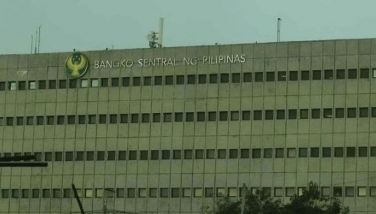
On monetary policy, Dacanay said the Bangko Sentral ng Pilipinas (BSP) is facing a difficult tradeoff between slowing growth and rising inflation.
He said that if oil prices remain elevated and the Middle East conflict extends through July, the BSP may need to tighten policy further to prevent second-round effects from becoming entrenched.
“I think the BSP, given its mandate of price stability, can raise rates to up to six percent,” he said, referring to the central bank’s key policy rate under a worst-case scenario. However, he clarified that such a level would likely require gradual 25-basis-point moves rather than a single aggressive adjustment.
Dacanay said a 50-basis-point increase in one policy meeting would probably need “a huge upside surprise” in inflation, suggesting the central bank would prefer measured tightening unless price risks worsen materially.
He added that non-monetary tools, particularly lower rice prices and clearer food supply policies, could reduce the burden on the BSP by easing inflation without further rate hikes.
Still, he said non-monetary measures such as reducing rice tariffs, ensuring policy certainty on imports and cracking down on abusive practices in food markets could help contain inflation pressures.







- Latest
- Trending