


Oil price shock steers PUV drivers toward 5-6 lenders
Special report
MANILA, Philippines — Jeepney driver Jeferson Raquel, 43, once relied on the Novaliches-Blumentritt route for a steady stream of passengers and enough income to support his household.
For several weeks now, however, his earnings have dwindled.
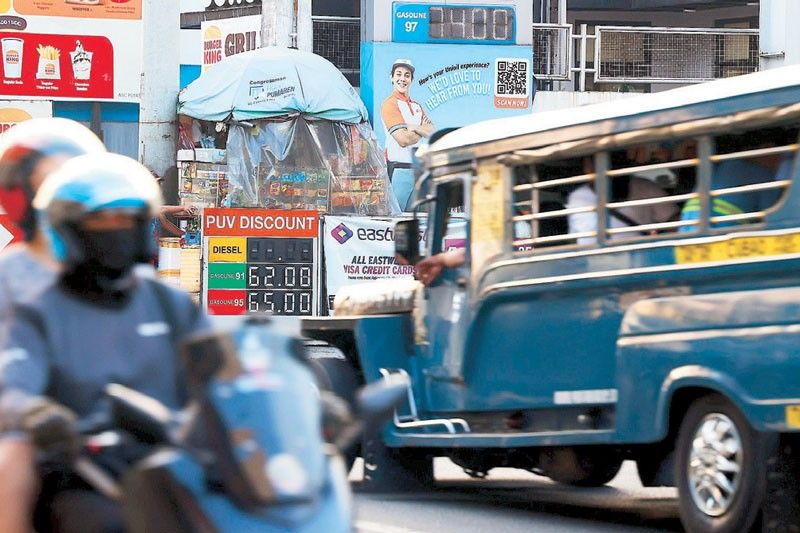
The oil price shock triggered by the Middle East war has sent diesel costs spiraling past P100 per liter since March, leaving public utility vehicle (PUV) drivers like Raquel struggling to make ends meet.
To survive, he was forced to take out a P10,000 loan from a neighborhood loan shark, known in the community as a “5-6” lender. Raquel had no choice but to borrow from the lender who lent him the money on the condition that he would pay it back over a period of 40 days.
Under the agreement, Raquel must pay P300 daily and an interest rate of 20 percent.
“It’s been more than a week without earning. There are so many expenses – for electricity, water and then the kids’ school allowance. I have no choice, I need to hold on,” Raquel told The STAR in Filipino.
The so-called 5-6 lending is a practice by mostly Indian nationals operating in the Philippines who charge an interest of 20 percent per month, mostly to those who have no access to formal lending. This means that when a borrower borrows five pesos, he has to pay six pesos.
There is no available information on the number of 5-6 lenders in the country but industry sources said they could total to at least 40,000 or one in every barangay in the Philippines.
Before the US-Iran war, Raquel said he used to take home around P800 to P900 a day. Now, he struggles to even reach P500, with most of his earnings eaten up by soaring diesel costs of about P1,170.
”What we do, if we’re about to park, we’ll just eat bread. We’ll wait again for the next trip, and if we’re lucky to get passengers, that’s when we’ll eat,” he said.
However, even the P500 he manages to bring home may not last the day, as he has to set aside P200 for lunch and dinner, P150 for breakfast, school allowance for three school children and rice.
The Philippines, which imports almost all of its fuel, has seen pump prices rising steadily since the US-Iran war broke out on Feb. 28, triggering a year-long energy emergency, though a two-week ceasefire is expected to offer relief.
Following the first round of ayuda for drivers and operators of PUV, President Marcos said the transportation department would implement a service contracting program that includes a P10 per liter fuel subsidy for PUV drivers and a 20 percent fare discount for commuters starting April 15.
The Land Transportation Franchising and Regulatory Board recently reported that nearly P1 billion in fuel subsidies had already been distributed, though some beneficiaries lamented being left off the list.
The anticipated measure to suspend or reduce the excise tax on fuel granted via special powers remains unused by Marcos.
Despite this, subsidies alone will not suffice, as surging fuel prices continue to drive up living costs and force many drivers to turn to loan sharks for quick cash.
Not enough documents
Ruben Carlo Asuncion, chief economist at Union Bank of the Philippines, said many drivers continue to rely on neighborhood 5?6 lenders because of accessibility and the speed with which they can borrow.
”Income in the transport sector is highly volatile and mostly cash?based, making it difficult to meet banks’ documentation and credit assessment requirements,” he told The STAR.
Meanwhile, 5?6 lenders offer instant cash with no paperwork or collateral, which becomes critical when drivers need daily working capital for fuel, boundary fees or household needs.
According to a study by Rizal Commercial Banking Corp. and Mastercard, 49.8 percent of Filipinos did not own a bank account in 2024, far below the global average of 79 percent. This was despite a decade of progress from only 26.6 percent of adults with accounts in 2011.
In the coming months, Asuncion said the reliance on predatory lenders is likely to persist as fuel prices remain elevated.
“Over time, this can lead to a debt cycle, where rising interest payments further erode income, making drivers more financially fragile during prolonged price shocks,” he added.
Joie Omandam, 40, a father of eight, took out a P2,000 loan at the start of March. He now spends as much as P2,000 to fill his tank but earns only P200 to P300 on a good day.
“It’s such a small amount, I’m still looking for someone to lend me money because no one trusts us anymore. Since we have no income, how can we pay them back?” he said. “Those who do lend, it’s just enough to keep us from going hungry.”
After the 30-day loan period, Omandam has to pay P500 in interest.
Omandam, who drives the Alabang?Calamba route, said other jeepney drivers have also resorted to taking out loans. Some remain hesitant, while others have chosen to return to their provinces instead.
Apart from traditional jeepney drivers, motorcycle taxi riders are also reeling from the burden of rising fuel prices.
Jolly Pangantihon Cachuela, 50, said he was forced to borrow P5,000 from a bumbay – a Filipino colloquial term for informal lenders, often of Indian descent who are commonly engaged in small neighborhood lending.
“There’s really nowhere else we can borrow. With the bumbay, lending is quick and the cash comes right away,” he said.
These loans finance their meals amid higher commodities, electricity, water and cooking gas.
From earning nearly P2,000 a day through a ride?hailing application, Cachuela said his income has now plunged to just P500, already net of food expenses after long hours of bookings and waiting for customers.
Similar to other informal lenders, a 20?percent interest rate is charged, leaving him to pay P6,000 in two months, or about P100 a day.
Lenders fear unpaid loans to rise
Meanwhile, Dante Buenavista, 39, who offers quick loans to mostly cash?strapped tricycle drivers in Antipolo City, worries that payments may slow or worse, go unpaid.
“There will be more and more borrowers, but also more who won’t be able to pay, because life is getting harder and harder. They cannot afford to settle their debts,” he told The STAR.
For his part, Buenavista said most of the borrowers come from his Tricycle Operators and Drivers’ Association, where drivers approach him to settle dues or request fresh loans.
Like other informal lenders, he charges P200 a day for 60 days for a P10,000 principal loan.
“For example, when a tricycle breaks down, or if the engine fails, repairs can run from P10,000 to P20,000. If they don’t have savings or extra income set aside, since driving is already difficult now with expensive fuel, they really end up borrowing,” he said.
So far, Buenavista has loaned nearly half a million pesos and currently serves about 30 borrowers, a mix of fellow drivers he personally knows and Facebook friends who reach out to him online.
“There are so many qualifications, so many requirements. What if you’re just a tricycle driver? What source of income can you declare? At the bank, you won’t be approved without collateral, like a land title. They don’t accept a tricycle as collateral,” he said.
Buenavista, who has been moonlighting as a lender for the past two years, said he has encountered many borrowers who fail to settle their loans despite involving barangay officials to mediate.
Despite this, he said he remains considerate of borrowers’ conditions, even offering to waive interest and collect only the principal at times.
PISTON National President Mody Floranda argued that government subsidies for drivers are only a temporary relief and will not be enough to address the sector’s struggles. Instead, he urged the removal of fuel excise taxes on petroleum products.
“Especially in this situation, where riders and the transport sector are not earning, they are really forced to borrow. Drivers often turn to bumbay lenders because it’s easy to get a loan,” Floranda said.


- Latest
- Trending


